
We are reader-supported. When you buy through links on our site, we may earn an affiliate commission.
The best way to store fruit on the counter is to store ethylene-producing fruits, such as apples and bananas, separately from other fruits. Store both types on the counter in a cool spot, away from direct sunlight and ensure good air circulation.
Key Takeaways:

Fruits you should always store on the counter are those that thrive at room temperature until you eat them.
However, once cut, sliced or peeled, fruit of any kind is susceptible to bacterial growth — so at that point, any kind of fruit should be stored in the refrigerator.
Although many fruits can be stored on the counter, some need to be kept separate from each other.
Some types of fruit produce ethylene gas. Other types are sensitive to it. The two types should be stored separately.
If you’re not sure, store the fruits separately to be on the safe side.

There are two types of fruits — climacteric and non-climacteric. According to the University of Maryland, climacteric fruits, which include apples, pears, bananas, nectarines and tomatoes, can continue to ripen after harvest, emitting ethylene as they do.
Non-climacteric fruits, which include berries, citrus fruits and watermelon, cannot naturally ripen after harvest. They are sensitive to ethylene, which can force over-ripening, aging and stress responses, leading to rotting.
Tip: You can also use ethylene to your advantage if you want an unripe fruit to ripen faster. Pop it into a brown bag with an apple to accelerate ripening. Check daily.
Countertop fruit storage should allow good air circulation and should not trap either moisture or ethylene. Good options include:
Avoid sealed plastic bags or deep, non-breathable containers.

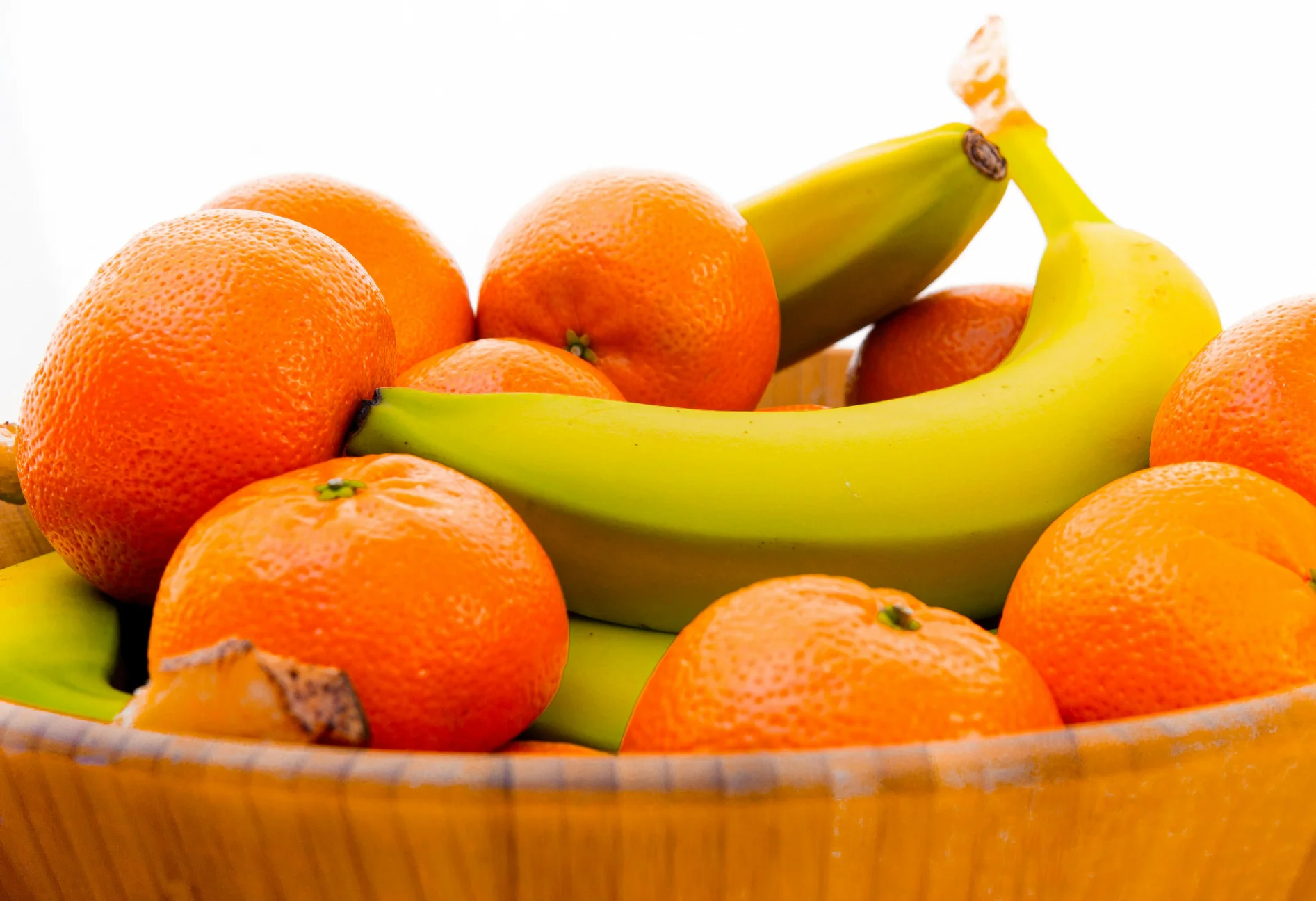
Oranges and other citrus fruits do well on the counter for about a week. They do not ripen further after being picked. Keep them in a well-ventilated bowl away from direct sunlight to prevent the skin from drying out. Keep them away from gassy, ethylene-producing fruits.
For longer-term storage, more than a week, the fridge is a better option, but for immediate use, the counter is ideal for a juicier, more flavorful fruit.
Seasons affect countertop fruit storage because of temperature and humidity variations.
To get rid of fruit flies around a fruit bowl, dispose of overripe fruit immediately. Use a fine mesh cover over the bowl, but know that any eggs already on the fruit will still hatch into larvae.
Consider adding a homemade fruit fly trap nearby. You can make a simple one with a small jug of vinegar and a few drops of dish soap, or put a piece of ripe banana in a jar and create a small paper funnel on top.
It’s best to wash fruit right before eating it, not as soon as you purchase it. Washing it earlier can introduce moisture and encourage spoilage or mold growth, especially with berries.
The exception to this is if you have a fruit fly problem. In that case, wash the fruit as soon as you get it home to remove any eggs that may be on it. Dry it gently with a clean paper towel before storing.

No, you should never store cut fruit on your counter. Once the fruit’s skin is broken, it must be refrigerated in an airtight container to prevent bacterial growth.
If you’re not ready to eat your ripe avocados, move them into the fridge. This will help slow the ripening process for a few days.
To speed up the ripening of fruits like pears, peaches or avocados, put them in a paper bag and fold the top. The bag traps the ethylene gas and accelerates the ripening process. To speed it up further, add a banana or an apple to the bag, but check daily to avoid over-ripening.
Some vegetables should never be stored with fruit. Onions release pungent gases that can affect the flavor of nearby fruit. Potatoes should be stored somewhere cool and dark and not with fruit, because the ethylene from fruit can cause potatoes to sprout prematurely.
Ethylene-sensitive vegetables should not be stored with gassy, ethylene-producing fruits. So keep these vegetables away from your apples, bananas and stone fruits:
By knowing which fruits produce ethylene versus which are sensitive to it, you can easily understand the best way to store fruit on a counter. Seasonal differences also come into play and it’s important to choose the right kind of countertop fruit storage basket. Remember to put cut fruit straight into the fridge, no matter what kind it is.