
We are reader-supported. When you buy through links on our site, we may earn an affiliate commission.
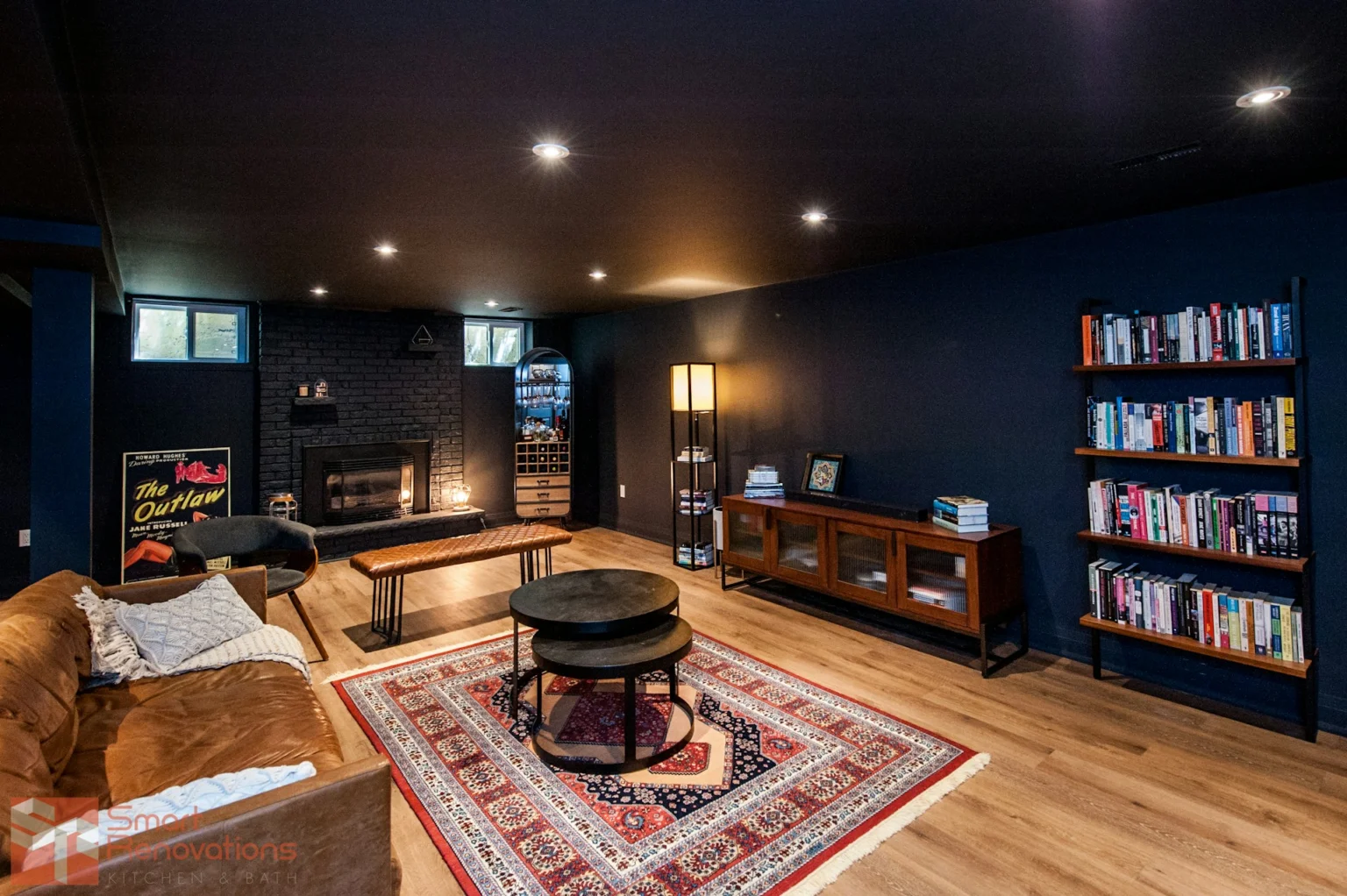
Turning your basement into a functional living space starts from the ground up. The right flooring directly impacts comfort, durability and even indoor air quality. Basements come with unique challenges like moisture, temperature fluctuations and uneven subfloors, but modern materials and installation techniques make it easier to create a space that feels dry, warm and inviting without blowing your budget. Below, you’ll find a curated list of basement flooring ideas that balance performance, style and cost to help you transform your space into a truly livable area.
Luxury vinyl is one of the most popular basement flooring ideas for a reason. It mimics hardwood while offering good water resistance, making it ideal for below-grade environments.
Resilient flooring like vinyl as a top choice for moisture-prone areas due to its durability and low maintenance. You’ll appreciate how easy it is to install, often with click-lock systems that float over concrete. It also feels warmer underfoot than tile and resists scratches, making it perfect for family rooms, home gyms or rental units.
For best results, pair LVP with a moisture barrier or underlayment. This helps prevent vapor from concrete slabs from affecting the flooring over time, a practice recommended in building science research.

Basement concrete flooring ideas are both practical and affordable. Sealed concrete is one of the most budget-friendly options. Basements tend to have higher moisture levels and don’t dry out as easily as above-grade spaces, making dampness management especially important.
Concrete flooring is ideal for this because it is extremely durable and moisture-resistant when properly sealed. It also aligns with sustainable design trends that prioritize the use of existing structural materials rather than adding new ones.
Engineered wood offers the beauty of hardwood with greater moisture resistance. Unlike solid wood, it’s designed with a layered construction that reduces expansion and contraction.
While it’s not fully waterproof, it can work well in basements that are properly sealed and climate-controlled. Engineered wood products are a sustainable option and they’re designed for dimensional stability, making them more suitable for environments with fluctuating humidity. Be cautious with installation. A moisture barrier is essential, so a professional installation may be worth the investment to avoid long-term issues.
Carpet tiles are a practical and versatile solution, especially if you want a cozy feel underfoot. Unlike traditional wall-to-wall carpet, tiles can be replaced individually if damaged by moisture or stains. This makes them a smart choice for playrooms or media rooms. They also provide insulation, helping to make basements feel warmer and more comfortable year-round.
Flooring choices can influence thermal comfort and insulation performance in lower levels of a home, since heat flow can move indirectly through floors, interior ceilings and walls. However, you should avoid carpet in areas prone to water exposure. The EPA warns that materials like carpet can trap moisture and lead to mold if basements are not properly managed.
Epoxy coatings are ideal for basements that serve as workshops, gyms or storage areas. This seamless surface bonds directly to concrete, creating a waterproof and highly durable finish.
Epoxy is resistant to chemicals, stains and heavy traffic. It’s also easy to clean, making it popular among homeowners who want low-maintenance solutions. You can customize epoxy with colors, flakes or metallic finishes to elevate the look beyond a basic utility space.

Laminate flooring has come a long way in recent years, offering realistic wood and stone visuals at a lower price point. It’s one of the more accessible, cheap basement flooring ideas for homeowners on a budget. That said, not all laminates are suitable for basements.
Look for water-resistant or waterproof options specifically designed for below-grade use.
When installed correctly, laminate can deliver a polished look without the higher cost of engineered wood or hardwood.
Tile is one of the most durable basement concrete flooring ideas, especially in spaces where moisture is a concern. You’ll benefit from its longevity and wide range of styles, from wood-look planks to sleek modern finishes.
Porcelain tile has very low water absorption, making it ideal for below-grade installations. The main drawback is that tile can feel cold. However, pairing it with radiant heating or area rugs can help improve comfort.
Rubber flooring is often overlooked but highly effective in basements. It’s commonly used in home gyms, play areas and utility spaces due to its shock absorption and slip resistance. This material is naturally water-resistant and can handle temperature fluctuations without cracking or warping.
It provides sound insulation, which is helpful if your basement sits below active living areas. Also, slip-resistant surfaces are an important factor in reducing injury risks in residential spaces. Interlocking rubber tiles make installation simple and allow for easy replacement if you need it.
Raised subfloor systems create a barrier between the concrete slab and your finished flooring, allowing air to circulate and reducing moisture. This option is especially valuable in older homes where moisture intrusion is more common.
The United States Environmental Protection Agency (EPA) emphasizes that controlling moisture is key to preventing mold and maintaining a healthy indoor environment. Once installed, you can add almost any type of flooring on top, from vinyl to laminate, with added confidence in long-term performance.
Whether you’re looking for cheap basement flooring ideas or more expensive options, the best choice depends on how you plan to use the space. A home gym will have very different requirements than a guest bedroom or rental unit. You should always start by evaluating moisture levels, insulation and subfloor conditions before selecting materials.
Too much indoor moisture doesn’t directly cause health problems, but it can create conditions that do. Apart from encouraging mold and dust mites, excess moisture may also cause building materials and furniture to release chemicals that can be harmful to anyone living in that space.
If you’re planning to resell, choosing the best flooring for the space and deciding how to remodel are key. Adding an extra bedroom, for example, can boost your home’s value, and you can typically recover about 53% to 75% of the cost when you sell.
Balancing durability, cost and comfort will help you narrow down the right flooring solution. In many cases, investing more in moisture-resistant materials can save you repair costs later.
Transforming your basement into a livable area is one of the most impactful upgrades you can make. With the right basement flooring ideas, you can turn a cold, unfinished space into a comfortable extension of your home. Focus on moisture control first, then choose materials that align with your lifestyle and budget. Whether you go with polished concrete, luxury vinyl or a raised subfloor system, the right decision should improve both functionality and long-term value.