

We are reader-supported. When you buy through links on our site, we may earn an affiliate commission.
Your bedroom is the first space you see in the morning and the last one you experience at night, so its color palette matters way more than you might think. The right wall color combination can influence your mood, improve your sleep quality and even impact how spacious or cozy your room feels. If you’re planning a renovation, staging a home or simply refreshing your space, this guide will help you choose bedroom wall color combinations that look beautiful and feel even better.
Below you will find versatile color combinations based on color psychology and theory, so you can find the best color for your bedroom walls. Each idea includes some tips to help you bring them to life.

Source: https://pin.it/5CFbCjYih
This combination mimics the sky and creates a serene, airy feel. Blue reduces stress, while white reflects light and keeps things fresh. Since light colors make spaces seem larger, this bedroom wall color combination is great for small to medium bedrooms. You can also use blue on the feature wall behind the bed, add white bedding and sheer curtains for cohesion, and incorporate natural wood for warmth.

Source: https://pin.it/4yBJXQiqj
These warmer tones work together to create a cozy, inviting feel without making the room seem too heavy or dark. Warm neutrals naturally feel grounded and timeless. To keep the space from looking flat, layer in different textures like linen, wool or wood for added depth and interest. You can also use a slightly darker beige on one wall to create subtle contrast and add a more dimension without straying from the soft, cohesive look.

Source: https://pin.it/6h2cjmYzC
This bedroom color idea is a sophisticated mix of bold and soft that instantly adds personality to a bedroom without feeling over the top. The contrast between the deeper tone and the softer pink creates visual interest while still keeping the space balanced and easy on the eyes. To keep it feeling polished, stick with a muted pink rather than anything too bright or saturated, and layer in metallic accents like gold, brass or wood tones for a subtle touch of warmth.
Source: https://pin.it/3iCFXT2Wk
Navy brings depth and a slightly dramatic edge, while cream softens that intensity and keeps the space feeling warm and inviting rather than too heavy. This combination is perfect if you’re going for that cozy-but-elevated look you’d expect from a boutique hotel. For this bedroom paint color idea, it’s usually best to stick with navy for one or two walls so the color doesn’t take over the entire room. To balance it out, bring in cream through bedding, curtains or larger furniture pieces.

Source: https://pin.it/3g39oQieg
Lavender helps you relax without feeling as cool as blue, which gives this combination a soft, cozy and slightly romantic feel, making it perfect for a bedroom retreat. This palette works especially well if you want something soothing but still more interesting than basic neutrals. Layer in soft textures like velvet, cotton or linen to add warmth and comfort, and keep the decor simple if you’re going for a clean look. You can also mix in subtle metallics or light wood to add a bit more depth.

Source: https://pin.it/78KOcqAjr
Green naturally promotes relaxation, while gold adds a sense of warmth and understated luxury, making this a bold yet grounding combination. It works especially well in larger bedrooms where deeper tones can really stand out without overwhelming the space. To keep the look balanced, use gold sparingly through lighting, frames or decorative accents, and pair it with neutral bedding to soften the overall effect. If you want a more cohesive and immersive feel, you can also carry the green into the bed through linens or pillows.

Source: https://pin.it/405ZfMKy1
This is definitely a modern classic. It’s clean, simple and works in almost any space. The neutral palette gives it a timeless, minimalist feel that appeals to a wide range of styles, making it an especially smart choice for rentals or resale properties where versatility matters. It also creates a bright, uncluttered backdrop that can easily be updated with different decor over time. To keep the look from feeling too flat or sterile, layer in texture through rugs, throws, cushions and curtains, and mix different shades of grey to add depth and dimension. Small details like wood accents or soft lighting can also help warm up the space and make it feel more inviting.

Source: https://pin.it/1QYfKh8E6
This combination strikes a nice balance between soft and structured, giving the room a look that feels both cozy and put-together. Since both colors have muted undertones, they blend easily and create a smooth, cohesive vibe that still feels modern. A good way to use this pairing is to keep pink as your main wall color to brighten things up, then bring in navy through furniture, an accent wall or decor for a bit of depth and contrast without making the space feel too heavy.

Source: https://pin.it/3eF9eAbiq
Green is associated with balance and calm, while white brings in light and a clean, airy feel, making this an easy, nature-inspired combination for a bedroom. Together, they create a space that feels fresh, relaxing and effortlessly put together. To really lean into that natural vibe, pair the palette with plants, wood furniture and organic materials like linen or cotton. You can also add matte finishes to walls or décor to give the room a more modern, updated look without detracting from its soft, calming feel.

Source: https://pin.it/FD0NYQkyz
Terracotta brings in warmth without feeling overly bold or stimulating, making it a great choice if you want an earthy, inviting atmosphere rather than a purely calm one. This combination works especially well when paired with natural materials like rattan, clay or linen, which enhance its organic appeal. To keep the space from feeling too heavy, incorporate touches of white through walls, textiles or decor to keep balance and brightness.

Source: https://pin.it/10HZczJTF
Teal blends the calming qualities of blue and green into a bold, expressive shade, while light brown introduces warmth and an earthy balance. Together, they create a look that feels fresh with just the right amount of drama. To keep the space from feeling too intense, incorporate light wood furniture to soften the overall effect and add plants or natural elements to tie everything together and enhance the cohesive, organic feel.

Source: https://pin.it/mj6CcRyK7
Taupe blends gray and brown to create a versatile, nuanced shade that adds depth without feeling overpowering. Because both tones are naturally muted, they work together to create a cohesive, well-balanced look that feels calm and polished. This pairing is ideal if you want a sophisticated, understated atmosphere. Use taupe as your main wall color to establish a warm, neutral foundation, then layer in blue through accents, textiles or a single feature wall to add soft contrast and visual interest.

Source: https://pin.it/1d9SsttmX
This combination feels rich and dramatic without becoming overwhelming because you can create good contrast, as the soft white helps balance the burgundy’s depth and intensity. It’s a great option if you want to add character while still maintaining a sense of openness. To keep the look refined, go for lighter furniture and bedding to create contrast. Consider using burgundy on a single accent wall, or even the ceiling, for a more subtle, controlled statement rather than a saturated space.

Source: https://pin.it/81o1w3bEy
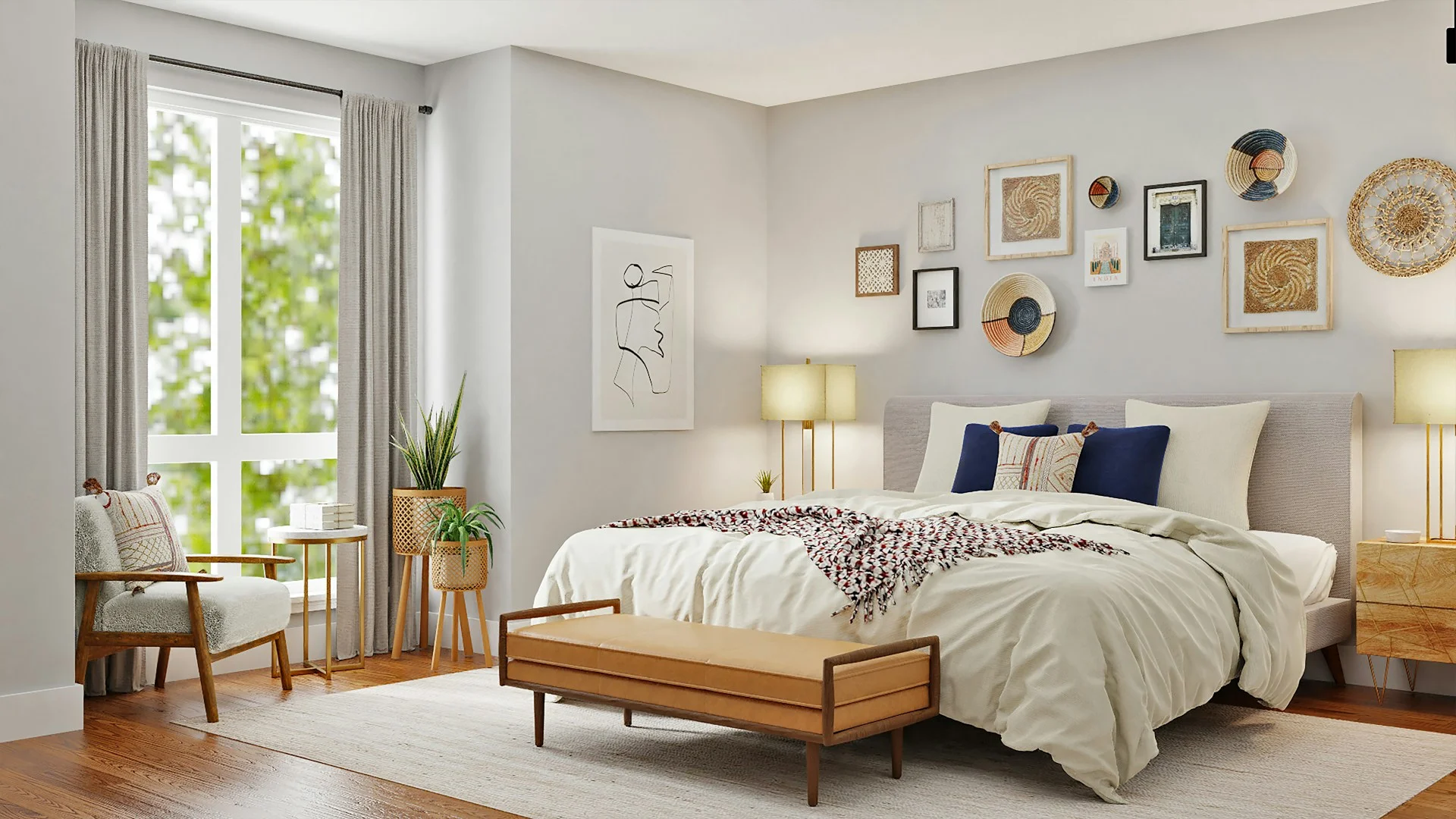
This soft, nature-inspired bedroom palette draws from the calming tones of the outdoors, creating a space that also feels effortlessly inviting. It’s especially well-suited for everyday bedrooms where comfort is key. Use beige on larger surfaces like walls or flooring to keep the room feeling light and grounded, then layer in pale green through accent walls, textiles or decor. Adding real plants or botanical elements can help you enhance the organic feel and bring the entire look to life.

Source: https://pin.it/18Eawctc0
These colors mirror the natural balance of earth and sky, helping the room feel both grounded and open. Brown adds warmth and stability, while light blue introduces a sense of calm and airiness, helping the space avoid feeling too heavy. Consider incorporating brown through furniture, wood finishes or an accent wall, then balance it out with light blue in your paint, bedding or decorative textiles.
If you don’t know where to start, pick your favorite color and find its complementary color, which is the one directly across from it on the color wheel. Purple and yellow are two of the most popular examples. Then, you can pick the shades you prefer best.
Color theory can help you. To choose bedroom color schemes and create combinations, you should take these main components into account:
Before jumping into specific combinations, it’s important to understand why certain colors work better in bedrooms.
Colors directly affect your mood and physiological responses. Cool tones like blue and green are associated with feelings of calmness and relaxation, while overly bright or warm tones can increase energy levels. This is something you should avoid when trying to unwind. However, it’s up to you.
A well-balanced bedroom typically includes 60% of the dominant color on the main walls, 30% of the secondary color on the accent walls or large decor and 10% of accent colors in textiles or accessories. This keeps the room visually cohesive without feeling overwhelming.
Softer colors reflect more light, so small rooms can benefit from lighter combinations, which make them feel larger. Bigger rooms, on the other hand, can handle darker accent walls for coziness. You also need to consider that natural light affects how colors appear throughout the day.
While trends like earthy tones and layered neutrals are popular, timeless combinations remain strong because they’re adaptable and widely appealing. You should ultimately go with your gut. It’s your bedroom at the end of the day, so you’re the one who should like it.
If combining colors is not your thing, try a monochromatic palette. Using the same color in different shades helps reduce visual conflict and unify everything. Since all the colors are closely related, they naturally work together. These palettes create visual harmony and take some effort off your shoulders.
Choosing the right color combination is important, but so is applying it to bring your bedroom together. Factors like lighting, room size and existing furniture can change how colors look and feel in your space. A shade that looks perfect in a photo might feel too dark, too bright or mismatched once it’s on your walls. By paying attention to some practical details, you can ensure your color palette works beautifully in your everyday environment:
The best bedroom wall color combination is one that aligns with how you want to feel in your space. Whether you prefer calming blues, grounding neutrals or bold statement shades, the key is balance. Choosing combinations rooted in color psychology and timeless design principles allows you to create a space that supports better rest, improved mood and long-term satisfaction. When you wake up tomorrow, make sure it’s in a room you truly love.