
We are reader-supported. When you buy through links on our site, we may earn an affiliate commission.
The kitchen triangle rule still shows up in modern design, but it’s no longer the rigid blueprint it once was. Designers treat it as a guideline, not a rulebook. Today’s spaces do more than merely support cooking — they host conversations, power smart appliances and adapt to how you live. That shift has changed how the classic kitchen work triangle fits into real homes this year.
The kitchen triangle connects three core areas — the refrigerator, sink and cooktop. The goal is simple. It reduces steps and streamlines the workflow.
Traditionally, each side of the shape follows these guidelines:
| Guideline | Measurement |
| Total distance | 13-26 feet |
| Each leg minimum | 4 feet |
| Each leg maximum | 9 feet |
These measurements balance accessibility and movement. Too tight a section can feel cramped, but when too spread out and it slows everything down, especially when you’re trying to move a heavy, hot casserole to the island or sink area. The catch? These numbers were designed for a single-family cook in an enclosed area, which doesn’t always translate well to a multifamily home or an open floor plan where areas are combined.

Even if the structure has evolved, the guiding principle hasn’t changed. A thoughtful layout still improves how your kitchen works day to day.
A well-planned space can:
The function is also directly tied to the value. According to the 2025 Cost vs. Value Report by the Journal of Light Construction, a minor kitchen remodel returns about 113% of the investment costs at resale. That kind of return often comes from smart layout updates, not major overhauls.

The traditional kitchen triangle rule struggles in some modern layouts for a few reasons.
You’re not the only one using the kitchen. Family members, guests or kids often share the space at the same time, which requires more careful planning than working off three points.
Microwaves, air fryers, wine fridges and coffee stations may require more surface than a three-point system.
Large, open kitchens spread out activities, making a tri-approach impractical. These may require multiple functional zones.
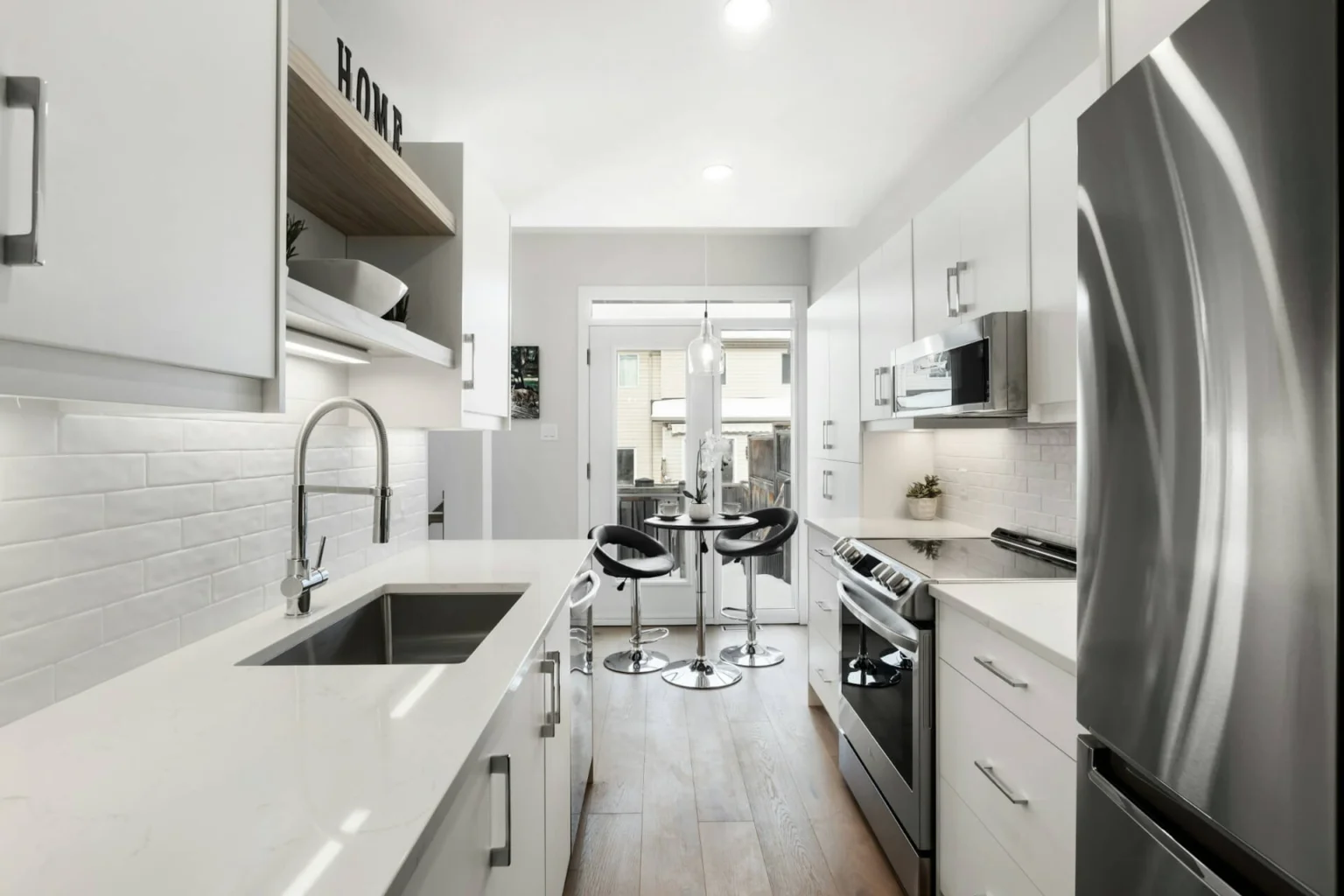
In spaces like galleys, focusing on three-point access may not work at all, especially when all functional sections are positioned on a single wall. In a narrow workspace with multiple appliances, a linear workflow makes more sense. Smart appliance placement and storage become the priority.

According to the National Kitchen and Bath Association (NKBA), designers should think in terms of zones instead of a single shape.
A zone-based approach might include the following:
| Included Areas | Features and Changes |
| Prep zone | Counters, the sink and waste bins unite, while storage becomes integrated into privacy cabinets or pantries. |
| Cooking area | Stove, oven and nearby utensils and appliances, such as microwaves and kettles. |
| Storage zone | Fridges move to pantries while cabinets become specialized for unique solutions. |
| Cleaning section | Sinks and a dishwasher integrate with drying areas and offer unique functionalities, such as cleaning sponges and washcloths. |
This approach builds on the same idea as the triangle, with efficiency applied in real-world use. According to Tricia Zach, Director of Research for NKBA, modern kitchens now connect the home, blending function with lifestyle. Features like open layouts, smart appliances and personalized setups reflect how people actually use the space today.
Design professionals haven’t abandoned the classic shape and have reframed it instead. The concept still remains popular with today’s homeowners and renovation professionals alike, but subtle changes creep in.
Studio Dearborn mentions that typical consultations include questions about optimizing layout, refrigerator placement, improving flow and where to place appliances like microwaves. The focus of any renovation should be on how you live and move through a functional area.
Billotta Kitchen & Home states that appliances are the new driving force in the home’s culinary heart. Selecting cooktops, steam ovens and other unique items shapes the layout and influences all decisions from the start of each project. The consensus is that while the triangle still matters and can make things more functional, flexibility is what really changes things.

You need not follow strict rules to design an efficient culinary heart for your home. Just find a layout that supports how you use the space.
Think about what you do most often and mark the areas where those activities transpire. Do you make coffee every morning, prep meals nightly, entertain on weekends or bake over vacations? Your routine shapes your layout.
Place the fridge, sink and cooktop in positions that feel natural. Then build around them with supporting zones.
The distance between different zones matters. Rocabu Designs suggests walkways of at least 36 inches if you live alone, or up to 48 inches when you have a large family or a multifamily household. The distance between the counter and the island should be 42 inches or more, while the dishwasher should be within easy reach of the sink.
Picture yourself moving through the space. If paths feel blocked or awkward, adjust the placement. Efficiency comes from flow, not strict geometry.
The kitchen work triangle hasn’t disappeared. It’s evolved.
Designers still use it as a foundation for efficiency, especially in smaller or more traditional layouts. But in larger, open or multiuse kitchens, zoning offers a more practical approach. If you’re planning a renovation or redesign, focus less on following a perfect shape and more on how your interactions in this room support your daily life. That’s what modern design is really about.