
We are reader-supported. When you buy through links on our site, we may earn an affiliate commission.
While granite countertops once defined the modern dream kitchen, homeowners have more surface options than ever today, from quartz and quartzite to butcher block and recycled glass. That doesn’t mean granite has disappeared from stylish kitchens. Design preferences have just become more selective.
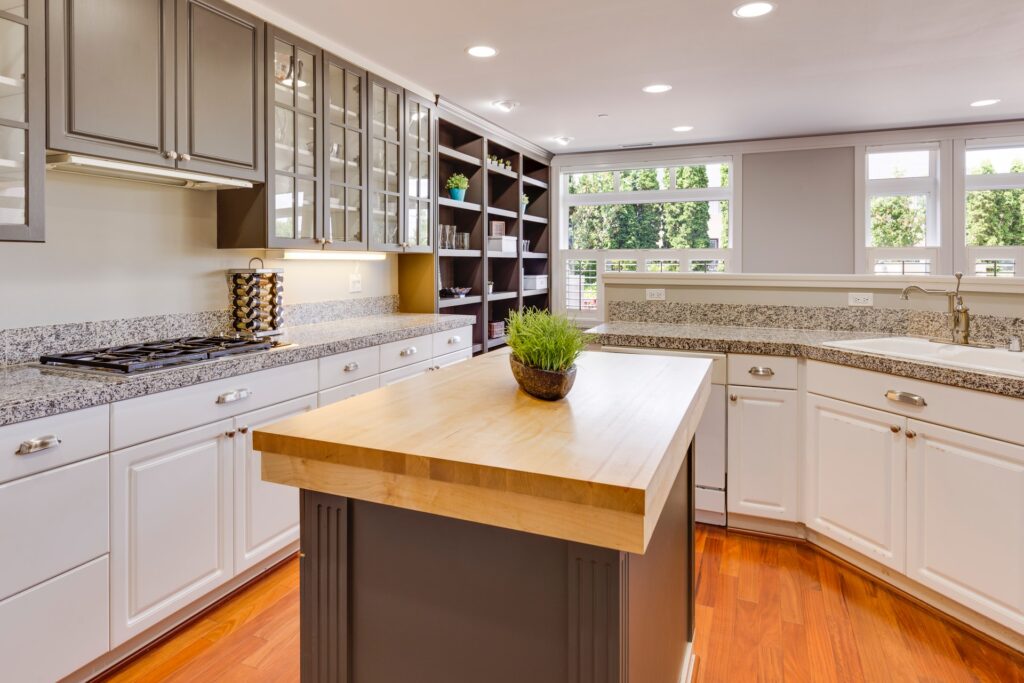
In the early 2000s’ housing boom, granite countertops were the definitive kitchen staple. They were considered an ultra-luxury premium feature for new residential construction. Television networks like HGTV and home remodeling magazines also highlighted granite as a symbol of modern homeownership. Many contractors used granite as a major selling feature to attract first-time buyers.
Granite became more accessible because of global production and shipping. In January 2026, Brazil led the charge with its record-breaking exports of the natural stone, despite the heavy tariffs in the U.S. Italy, India and China are also major suppliers.
Granite can still look stylish in the right kitchen. The material’s appeal comes from its natural variation, durability and heat resistance. How stylish it is depends on the slab, color, edge profile and surrounding design.
Granite looks more current when paired with updated cabinets, simple backsplashes and modern hardware. However, it may look dated when paired with older cabinet stains, ornate backsplashes or very busy patterns.

Granite doesn’t go out of style as a category, but some visual cues make certain installations feel older. A kitchen setup can sometimes look dated due to the combination of granite and older design choices around it. Consider these countertop choices.
During the early 2000s and 2010s, many contractors used high-contrast natural stone as a statement feature in many builder-grade and remodeled kitchens. These slabs often include competing colors, such as black, cream, brown, gold, gray and burgundy.
Excessively busy patterns next to veined stone can create chaotic visuals, especially on large kitchen islands or full perimeter countertops. Speckled granite may compete with patterned backsplashes, wood grain cabinets, decorative tile and other design elements.
Plus, current countertop trends often lean toward calmer surfaces, softer veining, honed finishes or more intentional dramatic movement. A busy slab can make it harder to update the kitchen with modern colors because the palette has to work around many tones in the stone.
Dark brown, tan, beige, gold-heavy or red-toned granite can feel less current when paired with other warm finishes common in older kitchens. These stones were popular because they added depth and coordinated well with cherry, espresso, honey oak or dark maple cabinets. However, when every major surface in the room is warm or dark, the kitchen can feel heavy.
Plus, warm brown and gold-heavy granite is often associated with Tuscan-inspired or traditional kitchen styles from earlier renovation trends. The dark slabs can also absorb light and make the space feel smaller, especially in kitchens with limited natural light.

Granite still feels modern when it works with the rest of the kitchen rather than dominating it. Modern granite choices usually have a clearer design purpose, whether that’s quiet, neutral movement or bold natural drama. They tend to use balanced color palettes, cleaner surrounding finishes and less visual competition. Here are some examples.
Soft neutral granite supports the calmer, more natural kitchen palettes many homeowners prefer today. Instead of highly speckled patterns with several competing colors, these slabs often lean into white, cream, beige, gray, greige, taupe or soft black tones. The movement may be subtle, cloudy, linear or lightly veined rather than busy.
Neutral stone is also easier to pair with updated cabinets, backsplashes, floors and hardware. Its softer patterns create visual texture without overwhelming the room, while its light or muted tones can make a kitchen feel brighter and more open. Neutral tones also support various design styles, from modern and transitional to organic and minimalist kitchens.
Some homeowners are moving away from plain surfaces and using stone as an artistic focal point. Granite with bold veining, strong contrast or unusual mineral movement can work well when the rest of the kitchen is simplified.
Natural stone has one-of-a-kind movement that engineered materials may imitate but not fully duplicate. Statement stone works well with simpler cabinets, minimal hardware and understated backsplashes. Bold granite can also make the kitchen feel custom rather than generic.
Quartz became popular as homeowners started looking for cleaner, more consistent countertop surfaces. It offers more controlled designs because it is manufactured, which means contractors can match patterns easily across a large kitchen. It also pairs well with contemporary, minimalist, transitional and modern farmhouse styles.
Because it’s less porous and less likely to stain, quartz is easy to clean and maintain. While granite can still be practical, owners must still comply with sealing and care requirements to keep it in great shape. It handles heat better than quartz, though.

If you’re not sold on granite or quartz, explore other countertop materials for your project. You can choose one or mix different surface types for a unique look. Consider these alternatives:
Here’s a quick guide to what material works well with what setup or surface to give you inspiration for your home countertop project.
|
If your kitchen has… |
Consider… |
Why it works |
|
Dark cabinets and limited natural light |
Soft neutral granite, quartz, quartzite or light butcher block |
Lighter surfaces can brighten the room and reduce visual heaviness. |
|
White cabinets and simple finishes |
Granite, marble-look quartz, quartzite or dramatic natural stone |
A simple cabinet palette gives the countertop room to add movement and character. |
|
Warm wood cabinets |
Cream granite, soapstone, quartzite or butcher block accents |
These materials can complement the warmth without making the room feel too heavy. |
|
A busy backsplash or patterned flooring |
Quartz, soft neutral granite or a simpler solid-toned surface |
A quieter countertop helps prevent too many finishes from competing. |
|
A modern or minimalist design |
Quartz, porcelain, stainless steel or honed black granite |
Cleaner surfaces and simple finishes support a streamlined look. |
|
A colorful or eclectic kitchen |
Recycled glass, butcher block, soapstone or neutral quartz |
These surfaces can either support bold color or become a playful focal point. |
|
A large island |
Dramatic granite, quartzite, butcher block or a contrasting quartz |
The island can carry a statement surface without overwhelming the whole kitchen. |

If your granite countertops are in good condition but the kitchen still feels dated, look at the finishes around the stone before replacing it. Cabinets, backsplash, lighting, wall color and decor all influence how granite reads in the room. You might be able to achieve a more cohesive look with these tips.
If the stone has warm brown, cream or gold tones, softer cabinet colors like warm white, mushroom, taupe, muted green or natural wood can help the counter feel more intentional. For granite with gray, black or white movement, clean whites, charcoal, navy, pale gray or light wood may make the surface feel more updated.
Busy granite can look even more dated when paired with patterned tile, mosaic strips or tumbled stone. A simpler backsplash gives the countertop room to breathe. Consider plain subway tile, handmade-look tile, slab backsplash or another understated option that pulls from one of the quieter tones in the granite.
Ornate knobs and pulls can make granite feel more traditional, while cleaner hardware can make the kitchen feel fresher. Brushed nickel, matte black, brass, bronze or simple stainless finishes can all work depending on the granite’s undertones and the cabinet color.
Replacing granite is a bigger decision than swapping hardware or repainting cabinets, so it helps to separate style concerns from functional ones. Some granite countertops are worth keeping and designing around, while others may no longer support the kitchen you want.
Replace the granite if it has cracks, major chips, deep stains, unstable seams or structural issues. An update may also be ideal if the countertops clash with the cabinets, flooring, backsplash or your overall design plan.
Keep the granite if it’s still in good condition, and it complements your home’s style. Assess your entire kitchen before deciding. Cabinets, backsplash, flooring, appliances and lighting all affect how the countertops look. A dated backsplash or dark cabinet color may be making the granite seem older than it really is.

Here are the answers to common questions about granite countertops.
Granite countertops are not always outdated, but some colors, patterns and pairings can make a kitchen feel less current. The answer depends on the slab, edge profile, finish, cabinets, backsplash and lighting around it.
Soft neutral granite, subtle veining, dramatic natural movement and slabs that work with the rest of the kitchen instead of competing with it are still on trend.
Quartz may be better for homeowners who want a consistent look and easier routine maintenance. Granite is ideal for those who want a countertop that can outlast most materials, thanks to its superb durability and heat resistance. The better option depends on the kitchen and the homeowner’s priorities.
Granite can still be a beautiful, practical choice when it supports the rest of the design rather than competing with it. Now, whether you want it in your home is all up to you. While it’s totally fair game if you love granite, it’s always good to know your other options, too. Go for quartz, reclaim some old wood or stick with old reliable. Your kitchen is your domain.
Note: This article was first published on February 26, 2021, and was revised on June 30, 2026 to reflect the most current information.