
We are reader-supported. When you buy through links on our site, we may earn an affiliate commission.
While open-concept kitchens are popular, they often leave clutter and meal-prep mess on full display. Imagine hosting a dinner party. The main course is almost ready, but your countertops are covered with used bowls and serving platters, leaving you no space to actually plate the food. Or picture your morning routine, where making a cup of coffee requires pulling three different appliances out of cluttered cabinets. A butler’s pantry offers a smart solution for both scenarios.

A butler’s pantry differs from a typical pantry in terms of function, features and location.
| Aspect | Butler’s Pantry | Normal Pantry |
| Function | It’s both an active workhorse and a transitional space for preparing ingredients, plating meals and storing dishware and appliances. | It’s a passive storage area for dry goods and non-perishables. |
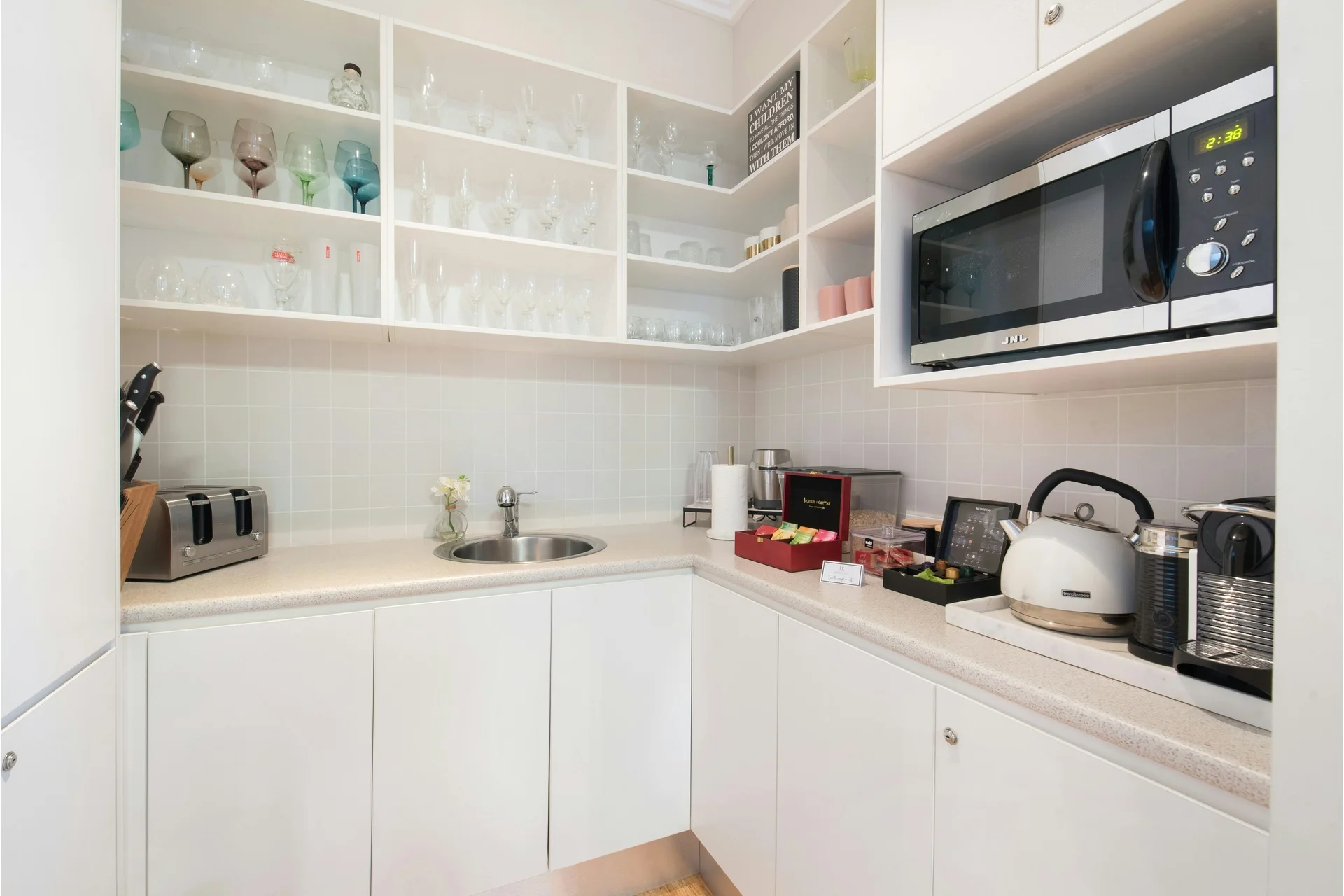
| Features | It’s similar to a mini kitchen, often featuring countertops, custom cabinetry, task lighting, a sink and space for appliances. | It typically only contains simple wood or wire shelving. |
| Location | It’s often a “pass-through” that’s strategically located between the kitchen and the dining room to create a seamless flow of serving and cleaning. | It can be a closet or a small room that you walk in and out of. |
Traditionally, butlers used this functional pantry to manage the valuables they controlled, such as silverware, fine china, crystal glassware and table linens. The lock-and-key aspect for safeguarding these precious items may have faded, but its core function as a space for overflow food items is more relevant than ever in today’s homes.

The best use of a butler’s pantry depends on your needs. So, before you design the space, ask yourself what would make your life easier. Consider these ideas.
You can also define areas for different purposes in your butler’s pantry to get as much functionality as you can from it. For example, it could include a coffee station, a dedicated food prep area and a small appliance zone.
Whether you’ve decided on a butler’s pantry that’s dedicated to a single purpose or several, you’ll need to translate your vision into functional design. Follow these tips to create a space that’s both beautiful and practical.

Start with the fundamentals before you fall in love with a design. Get the precise measurements of your space, and note its existing doors, windows, and electrical outlets or plumbing.
If you’re integrating the classic kitchen “work triangle” into your pantry, think about your primary tasks. For example, the triangle for a beverage station may involve the fridge, coffee maker and sink. For prep, it might be a storage cabinet, countertop and compost bin. Arranging these in a close, efficient triangle will make the place intuitive to use.
Explore different layouts. Galley style works best for pass-through spaces, while the L-shape provides a good amount of continuous counter area for a corner location. The U-shape maximizes storage and counter space, but it also requires a wider room to avoid feeling claustrophobic.
Pay close attention to the clearance. The walkway should have at least 36 inches of open space. However, 42-48 inches is the ideal, as this distance allows two people to pass each other and lets you open cabinets and drawers without feeling cramped.

Make everything inside your cabinets visible and accessible. Invest in accessories that bring your shelving’s contents closer to you and make organizing easier. Here are some smart storage ideas:

How you plan to use your butler’s pantry dictates its ideal countertop and backsplash. What works for a simple storage area may not be right for a high-traffic prep zone.
Choose a durable, nonporous and scratch-resistant material like quartz or granite for heavy-use surfaces. They can handle hot plates, spills and chopping with minimal wear and tear. For lighter-use pantries, like a beverage station, a high-quality laminate is a great, budget-friendly option.
Don’t forget to invest in a backsplash to protect your walls from spills and stains. Popular choices include:

Make your butler’s pantry more functional and inviting with a layered lighting plan. Use an overhead feature like a stylish flush mount or small pendant to provide overall illumination. Ensure the light bulb matches the fixture’s recommended wattage to prevent fire hazards. Then, install under-cabinet LED strips to light up your countertops so you can clearly see what you’re doing.
For appliances, focus on what would support the space’s purpose. A small secondary dishwasher drawer can be a game-changer for entertaining, while a built-in coffee machine offers the ultimate luxury for a beverage station.
Finally, enhance the “jewelry” of the room. Updating hardware like cabinet pulls and knobs can have a huge impact on your pantry’s look. Consider replacements with finishes like brushed brass, matte black and polished nickel, which work well with both modern and traditional styles.
A butler’s pantry is the perfect support system for your main kitchen. It can optimize your lifestyle, simplify your routines and bring a sense of order and ease to your home. Take the first steps to designing one today. Sketch out your ideal zone in a notepad, measure an underutilized nook or closet and start a mood board. Turn your ideas into a plan to create a space that will leave you wondering how you ever lived without it.