
We are reader-supported. When you buy through links on our site, we may earn an affiliate commission.
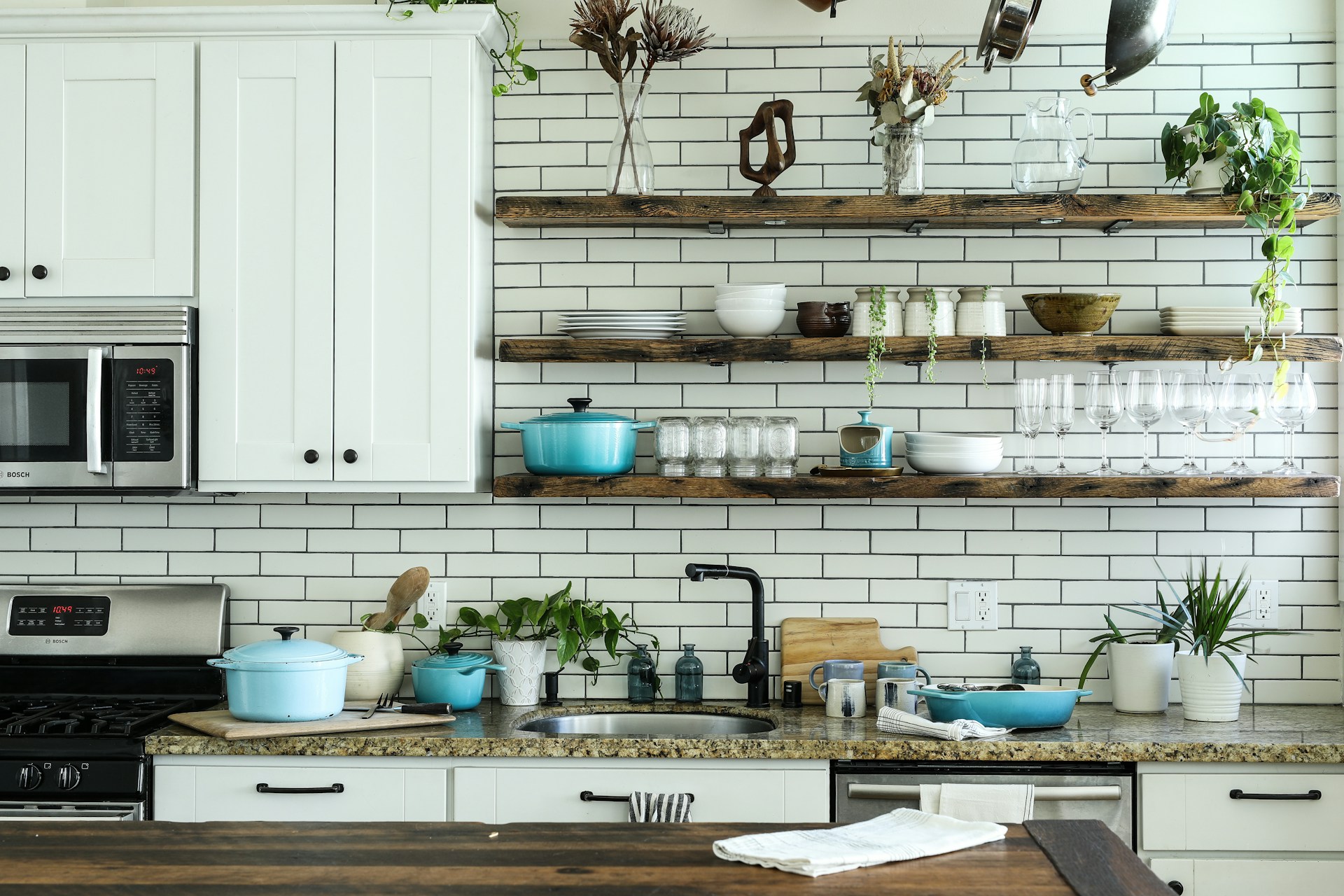
Open shelving has been marketed as a way to display as many items as possible. They’ve crept into almost every kind of room design, including kitchens. Unfortunately, it may be time to take the limelight off this trending storage option and become a little more practical.
Open shelves are still prominent in many households. The global open-shelf storage market is expected to reach $27.52 billion by 2033, and it’s not difficult to see why. Applications like open bookcases and floating shelves for picture frames and decor can be staples.
As such, more and more home designers thought of taking it a step further. Adding them to bedrooms, bathrooms, and more felt like it made sense. But personally, putting them in kitchens has become a step too far.
Open shelving in kitchens is one of the worst trends thus far. Here are just a few reasons why:
Open shelving can create plenty of visual clutter for its occupants. In a space like the kitchen, where there are too many items in unique containers, different-sized cookware and numerous appliances, it can be overwhelming to see them all out in the open.
If you’re in the kitchen cooking or cleaning, it can be a nightmare to see the chaos from shelf to shelf. Now, imagine having to face that kind of sight every single day.
Kitchens are notorious for getting messy. The cabinets are common spots for oil splatter and dust accumulation. Unfortunately, open shelving lacks proper doors to help block airborne grease and dirt from getting into the items.
Think of all the plates and utensils just out and ready for those contaminants to stick onto. It’s even worse when you realize that you have to eat off of that potentially dirty dinnerware.
Open shelves are usually floating shelves, which means they rely on only one side of the wall for support. This restriction means you have to respect a limited weight capacity. Either you risk breaking your dishes or you store only a few items.
Because you’d choose safety, that means you’d need multiple open shelves to hold all your belongings. And frankly, that tends to eat way too much wall space.

Open shelving irks all kinds of people, including:
As annoying as open shelving could be, it is beneficial for some people, like:

Open shelving can still have its perks now and then. However, it may be best not to lean into its use too much, or at least modify how you add them to the kitchen. Here are several suggestions.
Closed cabinetry with glass-front cabinet doors is like an upgraded version of regular open shelves. You still get all the benefits of visibility without worrying about bacteria getting onto your cookware. Plus, it can make the space feel much more put-together while keeping it light.
There’s also plenty of design opportunities. For example, stained-glass cabinet doors can add color and vibrancy to your kitchen. If you want a more minimalist look, white or frosted gray glass can achieve the perfect look.
Just because you want open shelves doesn’t mean that that’s the only storage option for your kitchen. Consider incorporating a mix of cabinetry types to keep some items, like sharp knives or clunky appliances, hidden.
You can also be more intentional with the storage solutions. For example, one designer created open cubbies for produce while adding closed cabinetry for other pantry items. Have pull-out racks for oven trays and sheets, while displaying your finest china on floating shelves.
Less is more in interior design, and the same principle applies to open shelves. Only add a few of them, and be mindful about what you want out in the open. Less-frequently used items are ideal, so you don’t have to do too much cleaning. That said, you can also add regularly used cutlery or appliances, such as the coffee machine, if you’re keen on cleaning frequently.
You can also incorporate unique ways to emphasize them. For instance, line the bottom of them with lights or sandwich it with decor.
Floating shelves can seem a little more unstable, which raises concerns if you have heavier items to display or if you want to stack cutlery. To combat this, consider having built-in open shelves. These fit in more snugly and while providing practicality.
I still think open shelving in kitchens is an annoying trend that will be around for a good while. That said, there are ways you can still have them without fully facing the consequences of visual clutter and higher maintenance. Get creative if you truly want them in your space.