
We are reader-supported. When you buy through links on our site, we may earn an affiliate commission.
Homeownership is arguably the most expensive of all the American Dreams. If there’s a cap on the amount you wish to spend on a property, you should choose carefully between constructing your dream home from scratch and bidding on a listed house, which begs the question — is it cheaper to build or buy a house?
Answer this million-dollar question from every angle to make the right decision and be a homeowner in 2026 without spending more than you should.
The short answer is that it isn’t usually cheaper to build a house than to buy one. Although the prices of existing homes soar when real estate markets become hot, new builds are subject to the fluctuating costs of building materials.
The prices of imported products can be volatile due to supply chain disruptions. The chronic labor shortage means homebuilders face prolonged project times, while the current pool of construction workers and various tradespeople earn higher wages due to less competition.
To give you an idea of the complete costs to build vs. buy a house in 2026, compare the estimated sale prices, main cost drivers and timelines of both options.
The sale price of a speculative single-family home comes from the National Association of Home Builders’ 2024 Cost of Construction survey. On the other hand, the median sale price is based on the values of houses for sale listed on Homes.com in January 2026, which was slightly higher than in January 2025.
Erik Leland, a real estate broker at Realty First in Lake Oswego, Oregon, is the source of the new construction timeline. He also highlights that new builds are not only more time-consuming but also more expensive to finance. “Construction loans run one to two percentage points higher [than 30-year fixed mortgage rates], currently landing in the 7% to 9% range,” Leland adds.
| Method | Sale Price | Primary Cost Drivers | Timeline |
| Building a home | $665,298 | Customization Site work Materials Labor Construction loan down payment size |
Nine to 18 months |
| Buying a home | $374,900 | Market-specific housing supply and demand After-sales renovation or repair costs |
A few weeks to six months |
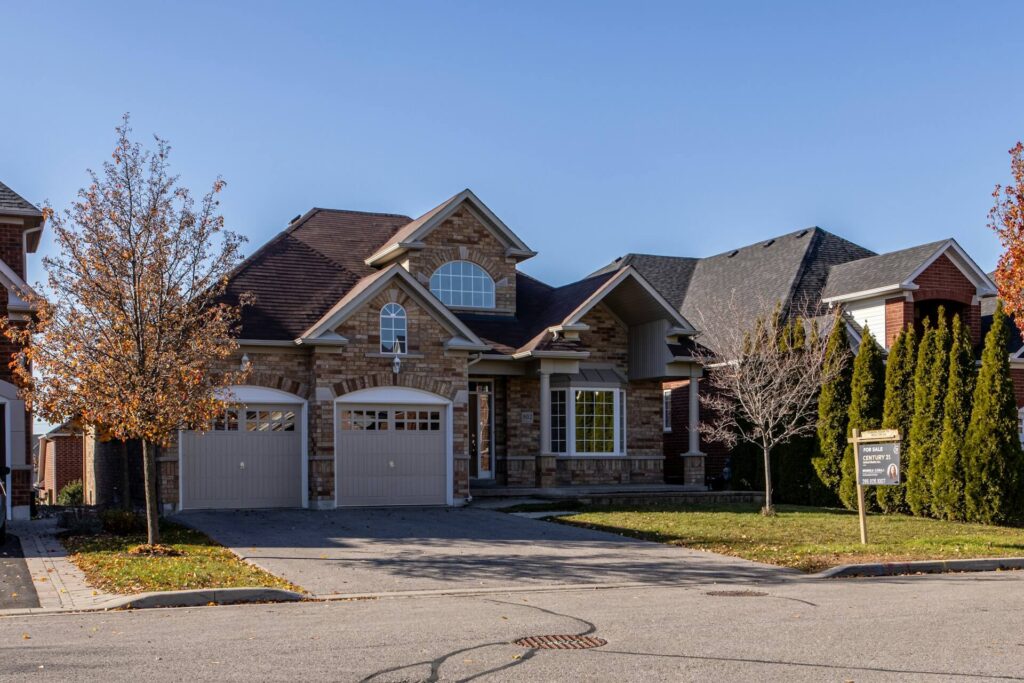
The costs of building vs. buying a house can vary from state to state. The table below should give you a clue as to where it may be cheaper whichever direction you wish to take.
The housing affordability grades and median listing prices come from Realtor.com®’s State Report Card, which rates states based on housing provision, the percentage of a median earner’s share of income spent on a median-priced listing and the permit-to-population ratio.
Meanwhile, the ranges of ZIP-code-specific construction costs per square foot for states — excluding Washington, D.C. — are based on data from Home-Cost, a conceptual home-cost-estimating tool.
The construction cost figure for the nation’s capital comes from Angi, which the team derived from thousands of real-life projects and fact-checked third-party research.
| State/Federal District | Housing Affordability Grade | Median Listing Price | Construction Cost per Square Foot |
| Alabama | B- | $328,950 | $150-$270 |
| Alaska | C- | $417,738 | $215-$315 |
| Arizona | C | $499,982 | $160-$280 |
| Arkansas | B | $296,829 | $150-$260 |
| California | F | $756,185 | $215-$430 |
| Colorado | C | $599,104 | $160-$280 |
| Connecticut | F | $517,849 | $200-$350 |
| Delaware | C+ | $491,463 | $190-$330 |
| Florida | C+ | $445,826 | $150-$270 |
| Georgia | B | $392,678 | $160-$280 |
| Hawaii | F | $822,065 | $215-$450 |
| Idaho | C | $571,023 | $170-$260 |
| Illinois | C | $316,613 | $200-$320 |
| Indiana | B+ | $293,021 | $170-$290 |
| Iowa | A- | $294,600 | $160-$280 |
| Kansas | C | $303,891 | $160-$280 |
| Kentucky | C+ | $304,296 | $150-$270 |
| Louisiana | B- | $278,215 | $150-$270 |
| Maine | C | $440,523 | $170-$290 |
| Maryland | C | $416,558 | $165-$290 |
| Massachusetts | F | $781,758 | $200-$350 |
| Michigan | C | $284,762 | $170-$290 |
| Minnesota | B- | $394,042 | $180-$320 |
| Mississippi | C- | $291,262 | $150-$250 |
| Missouri | C | $298,696 | $170-$300 |
| Montana | D | $634,523 | $160-$280 |
| Nebraska | B | $350,229 | $160-$280 |
| Nevada | C- | $492,789 | $180-$315 |
| New Hampshire | C- | $572,784 | $175-$300 |
| New Jersey | C- | $563,048 | $215-$370 |
| New Mexico | C- | $392,571 | $160-$250 |
| New York | F | $664,622 | $200-$350 |
| North Carolina | B+ | $408,663 | $180-$300 |
| North Dakota | C | $359,034 | $160-$280 |
| Ohio | C+ | $269,130 | $170-$300 |
| Oklahoma | C+ | $297,540 | $150-$260 |
| Oregon | F | $563,896 | $190-$330 |
| Pennsylvania | C | $306,740 | $175-$300 |
| Rhode Island | F | $537,521 | $200-$340 |
| South Carolina | A | $354,429 | $180-$310 |
| South Dakota | B | $380,391 | $160-$280 |
| Tennessee | C | $433,987 | $150-$270 |
| Texas | A- | $370,663 | $150-$270 |
| Utah | C | $602,230 | $160-$270 |
| Vermont | C- | $493,716 | $180-$310 |
| Virginia | B- | $434,711 | $180-$310 |
| Washington | C- | $636,445 | $185-$320 |
| Washington, D.C. | C- | $610,723 | $125-$650 |
| West Virginia | C | $240,954 | $170-$260 |
| Wisconsin | C+ | $381,282 | $180-$310 |
| Wyoming | C- | $465,295 | $160-$270 |
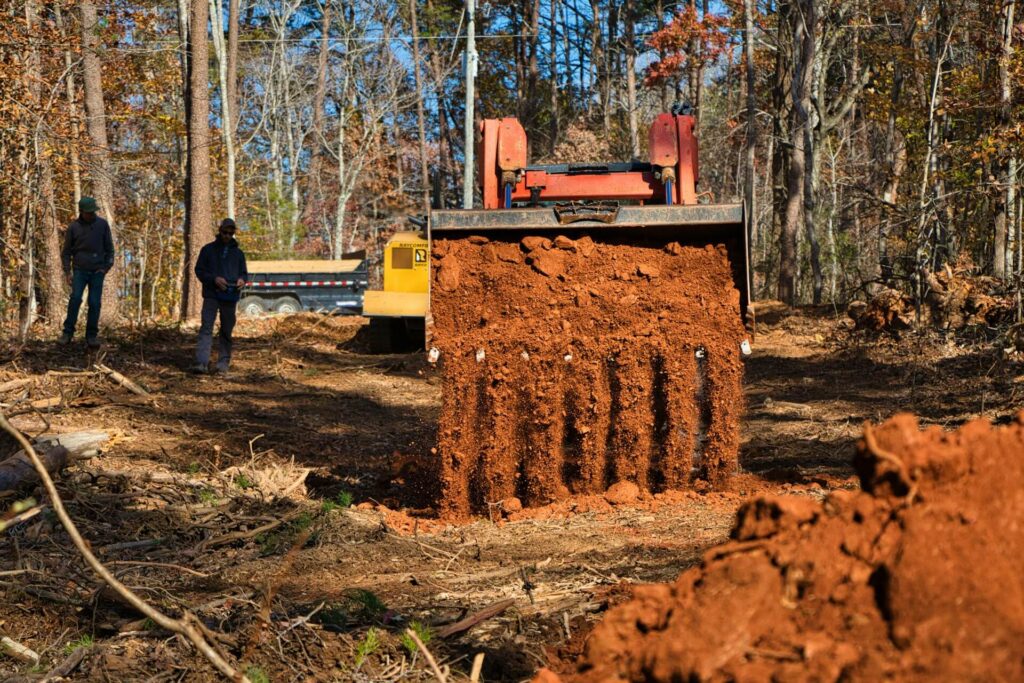
Building a house can be cheaper than buying one when you already own the land, especially in a place where home prices are inflated due to excessive demand, scarce supply or both. Simplifying your property’s design and getting your hands dirty also helps minimize construction costs.
Investing sweat equity requires skill, time, patience and perseverance. Married couple Ian and Sarah Schwandt of southeast Wisconsin had these qualities. The Schwandts aimed to build a 2,750-square-foot custom high-performance home on their family farm and to keep expenses to $100 per square foot. Ultimately, they spent $124.34 per square foot and 3,000 hours of work.
Ian Schwandt is a production manager at TDS Design Build, yet he and his wife still went over budget by a quarter. This case study underscores the value of a contingency fund. Setting aside at least an additional 10% of your original budget is essential to absorb expenses due to unforeseen circumstances.
Dusty Lamance, owner and founder of Lamance Construction, explains that customization is the primary reason why people would rather build than buy. “If an owner wants an office, workshop, reading nook, or any other particular customization, it’s as easy as saying so.”
However, Lamance acknowledges that convenience and affordability are two great advantages of buying over building. “The biggest reason is speed, and the ability to skip a potentially year-long build process. Buying a house is straightforward, and you’re less likely to run into unexpected delays. Additionally, many existing neighborhoods have mature trees, close proximity to city centers, and unique architectural character that you just can’t build new. Finally, buying a home is normally more price competitive than building one, and there’s less unexpected costs.”
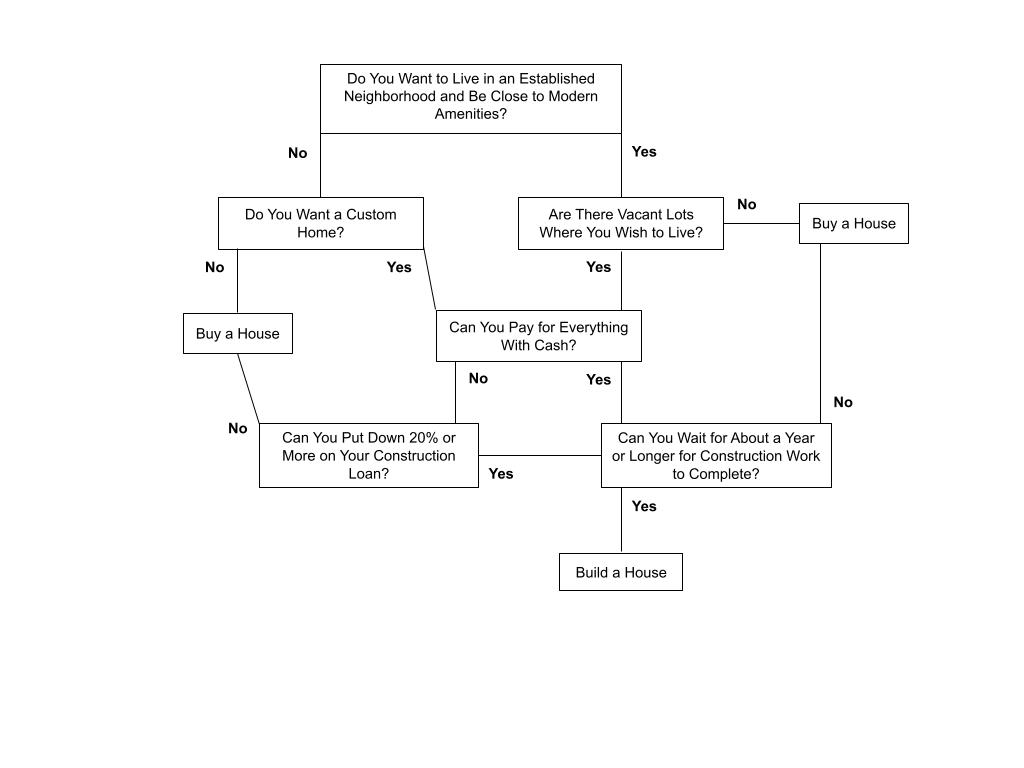
Nevertheless, deciding whether you should build or buy a house is more complicated than choosing between customization and convenience. Here’s a handy flowchart to help you make the right choice.
It’s generally cheaper to buy a house than to build one from the ground up. A preexisting property may cost more to maintain due to wear and tear and to power due to outdated features, but you can handle essential improvements gradually over time.
Still, there are exceptions to the rule, which vary by location. While median sale prices and cost drivers change all the time, regularly monitor them to know which direction to go when you take the next step toward homeownership.
Here are the answers to other common questions asked about building and buying a house in the United States.
Based on the most affordable median sale prices from Realtor.com’s State Report Card, the low end of Home-Cost’s estimated construction costs and the average American home size in 2024, which was 2,647 square feet, it’s cheaper to buy a house than to build one in these states:
According to the low end of Home-Cost’s estimated construction costs, the 2024 average square footage of an American house — the finished floor area of living spaces — which was 2,647 square feet, and the least affordable median sale prices from Realtor.com’s State Report Card, it’s cheaper to build a house than to buy one in these states:
Buying a house isn’t inherently better than building one. However, the former is more affordable and more convenient than the latter in most areas.
A new build makes more financial sense when the local median sale price is high relative to the local median household income. The smaller the property and the less complex its design, the less costly it is to construct per square foot.
In places where it’s cheaper to build than to buy a house, it may not be affordable because of high down payment requirements. Be prepared to spend a considerable amount out of pocket to construct your future residence from scratch.