We are reader-supported. When you buy through links on our site, we may earn an affiliate commission.
For over a decade, open-concept living dominated residential design. Walls were removed in the name of light, sightlines and sociability. Kitchens blended into dining rooms, which flowed directly into living areas in one continuous sweep of space. The aesthetic photographed beautifully and aligned with the aspirational homes popularized on shows like Fixer Upper, where demolition symbolized progress.
Now, homeowners are rethinking how they use space and open living often prioritizes appearance over function. In its place, zoned living has emerged as the more practical, psychologically sound and design-forward approach.
Zoned living creates defined areas within a home, each with a specific purpose, while preserving flow and light. It reflects how people actually live now, working remotely, raising families, entertaining selectively and seeking refuge from an overstimulating world.
Why Open-Concept Layouts are Losing Relevance
Open-concept design was built on the promise of flexibility and togetherness. However, shifting lifestyles and evolving expectations have exposed its limitations in everyday life.
Constant Noise and Sensory Overload
Without walls to buffer sound, every activity competes for attention. Cooking, television, phone calls and conversation all occupy the same acoustic plane. Over time, this creates a subtle but persistent sense of overstimulation.
In households where multiple activities happen simultaneously, open layouts amplify distraction rather than connection. What was intended to feel expansive often decreases productivity levels and feels chaotic.
The Collapse of Work-Life Boundaries
Remote and hybrid work have fundamentally changed how homes function. When the dining table doubles as a desk and the living room becomes a meeting backdrop, boundaries erode quickly.
Without spatial distinction, it becomes difficult to mentally transition between professional and personal roles. The absence of defined zones encourages constant overlap, which contributes to fatigue and diminished focus.
Visual Clutter Is Always on Display
Open layouts demand a high level of visual discipline. Because the kitchen, dining and lounge areas are fully exposed to one another, disorder in one zone disrupts the entire space.
There’s no opportunity to close a door on a temporary mess or isolate an unfinished task. The result is a heightened awareness of clutter, which can subtly increase stress levels.
A Lack of Privacy and Retreat
Even in well-designed open homes, opportunities for peace and quiet are limited. Family members may share the same large area while engaging in different activities, yet still feel as though they’re intruding on one another.
Humans require connection and refuge. Open-concept layouts prioritize the former while often neglecting the latter.
What Zoned Living Actually Means
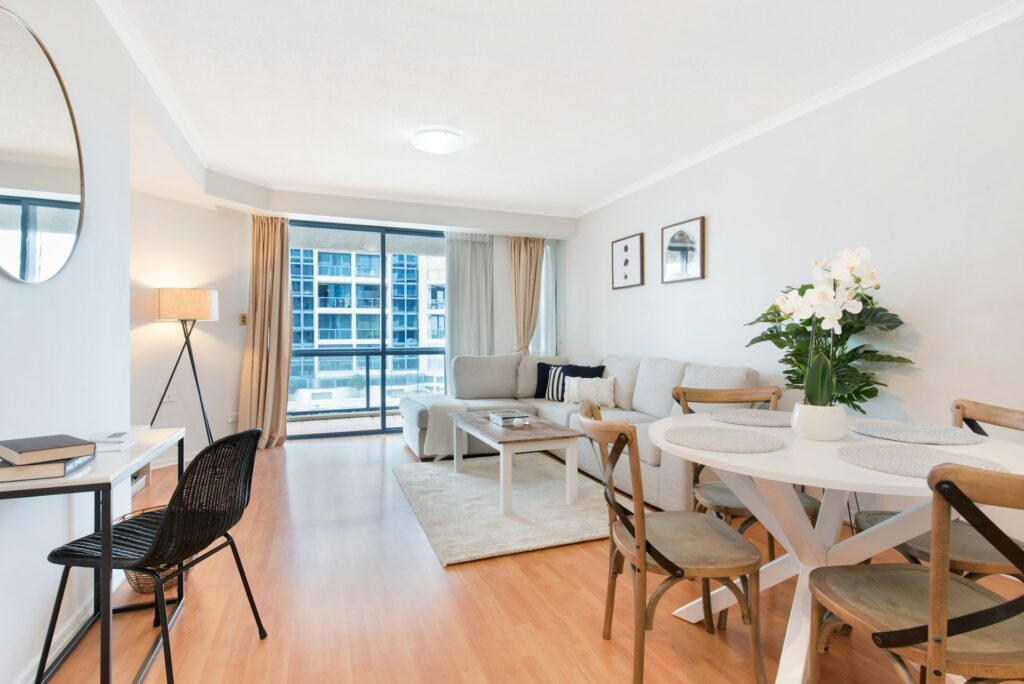
Zoned living is the strategic organization of space into clearly defined functional areas within an existing footprint. These divisions may be architectural, visual or material, but they’re always intentional.
A zoned home distinguishes between a workspace and a relaxation area, a dining zone and a lounging zone, a transitional entry space and the main living area. Each section serves a specific purpose, and that purpose is reinforced through design choices.
Importantly, zoning doesn’t require full-height walls. It relies on deliberate cues such as furniture placement, lighting differentiation, textual shifts and partial dividers to signal function. This results in a home that feels structured without feeling segmented. Movement remains fluid without containing activity.
The Psychological Case for Zoned Spaces
Spatial boundaries influence behavior. When environments lack distinction, mental transitions become more difficult. Working at a dining table blurs the line between productivity and rest, while relaxing in a space associated with deadlines undermines true recovery.
Zoned living supports cognitive clarity by aligning physical space with intended activity. Over time, these environmental cues reduce decision fatigue and promote a greater sense of control.
Design theorists, including biophilic design advocate, Stephen Kellert, have emphasized the importance of environments that balance openness with refuge. Humans thrive in spaces that offer visibility and containment. Zoned living achieves this equilibrium without sacrificing aesthetic cohesion.
How to Implement Zoned Living Effectively
Transitioning from an open layout to a zoned one doesn’t necessarily require structural renovation. It requires clarity of intention and disciplined execution.
- Reposition Furniture to Establish Boundaries
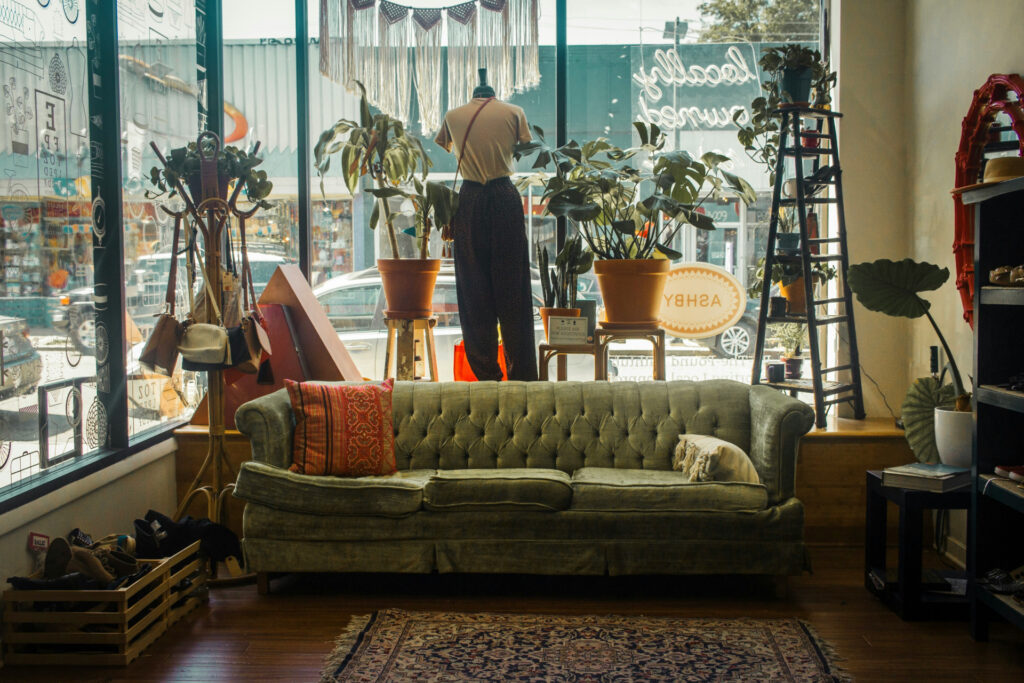
Furniture should function as spatial architecture rather than decorative filler. Floating a sofa away from the wall immediately creates a boundary between a lounge area and an adjacent zone. Placing a console table behind that sofa reinforces the division while maintaining openness.
Dining tables should align with lighting fixtures to anchor their territory. Armchairs arranged perpendicular to primary traffic flow create conversational pockets that feel distinct from circulation paths. These adjustments interrupt the visual sweep of a room while preserving light and flow.
- Differentiate Zones Through Lighting
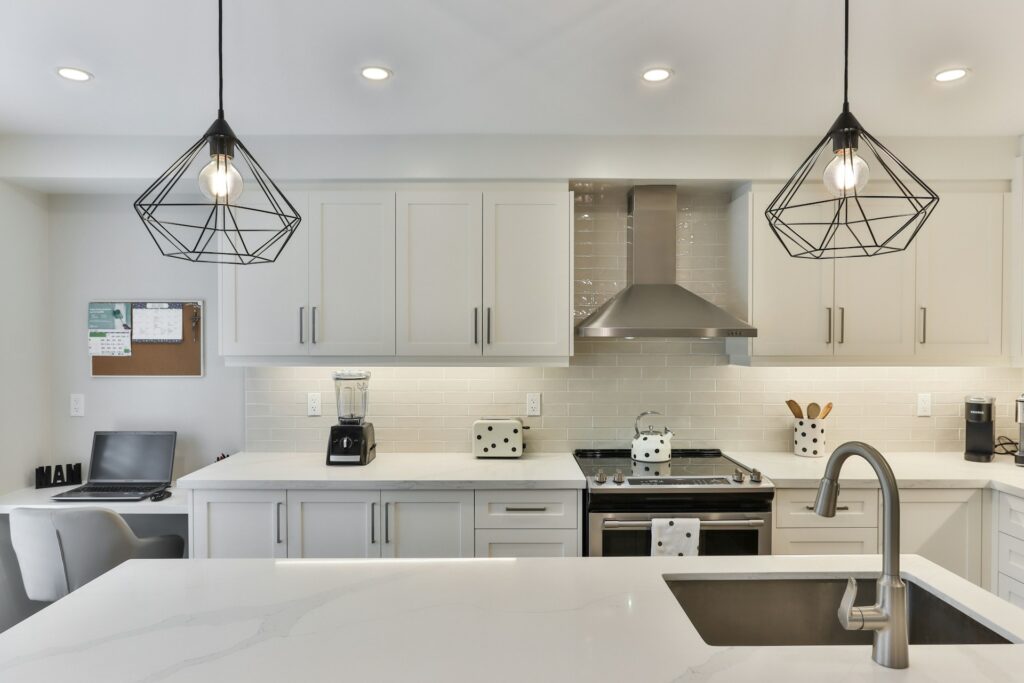
Lighting is one of the most effective tools for spatial definition. Instead of relying on a single central fixture, layer lighting to correspond with function.
A pendant centered over a dining table signals gathering. Task lighting at a desk communicates productivity. Floor lamps in a reading area introduce intimacy. When each zone has its own lighting hierarchy, the space reads as composed and intentional.
- Introduce Partial Dividers
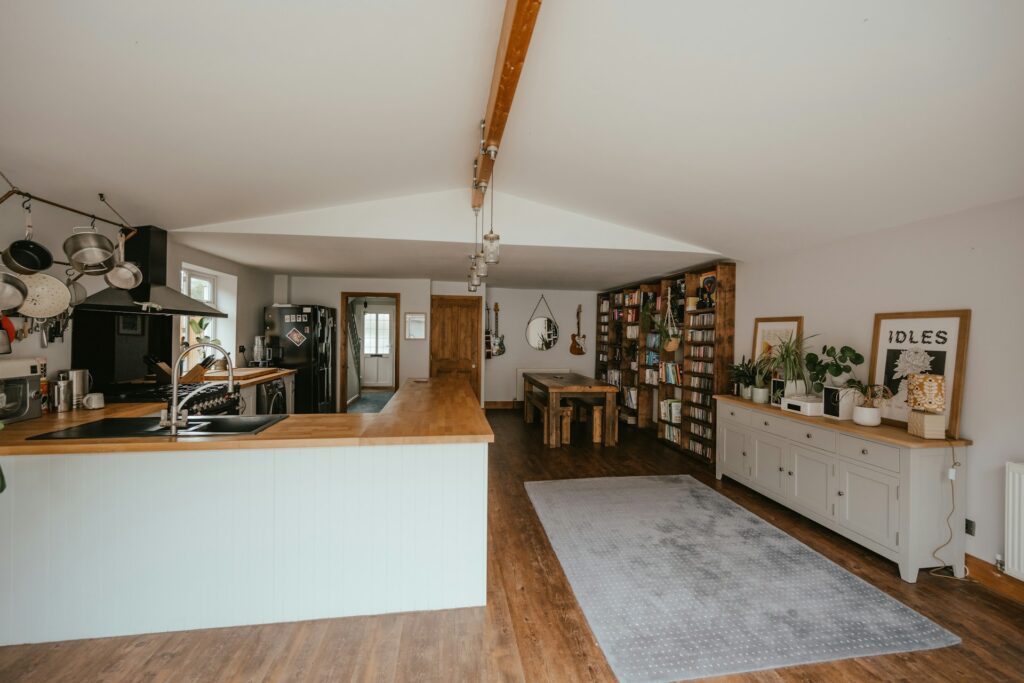
When greater separation is required, partial architectural elements can define boundaries without enclosing them entirely. Open-backed bookcases provide storage while maintaining transparency. Slatted wood screens create rhythm and texture without blocking light. Glass partitions preserve sightlines but reduce sound transmission. These interventions establish degrees of separation rather than rigid barriers, which is precisely what contemporary living requires.
- Use Material and Color Transitions Intentionally
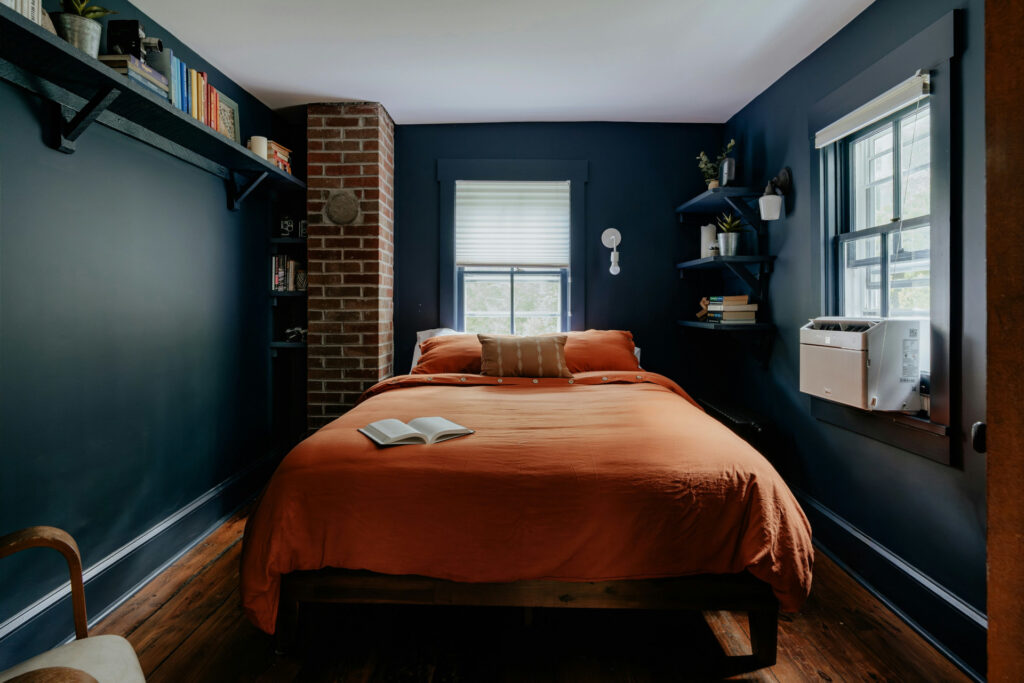
Subtle shifts in material or tone can delineate zones without constructing new walls. A change in flooring between kitchen and living areas signals transition. A deeper paint color behind a workspace creates visual containment. Textural variation, such as a woven rug beneath a lounge area, anchors furniture and establishes territory.
Consistency within each zone reinforces its identity. Repetition of finishes, fabrics or tones ensures cohesion rather than fragmentation.
- Reclaim the Entry as a Transitional Space
Open layouts frequently eliminate meaningful entryways, causing visitors to step directly into the main living area. Zoned living restores this threshold.
A defined entry zone may include a console table, mirror, bench or dedicated storage. Even distinct lighting and flooring can demarcate arrival from inhabitation. Recognizing transitions enhances function and experience.
- Establish a Dedicated Work Area
In contemporary households, a defined workspace is essential. Even in smaller homes, a desk should occupy a specific zone that’s visually differentiated from leisure areas.
Positioning the desk against a contrasting wall, installing shelves above it or introducing a slim partition behind it creates necessary separation. The objective is to prevent professional responsibilities from visually and psychologically infiltrating spaces intended for rest.
The Future of Residential Design
Open living responded to a particular moment in design history, but 2026 demands greater nuance. Homes must accommodate simultaneous activities without sacrificing calm or clarity. Zoned living introduces structure without rigidity and privacy without isolation. When design aligns with lived reality, it’s a more intelligent way to inhabit a space.
About The Author
Peter is an associate editor for Renovated with over 5 years of experience writing in the home improvement and real estate sectors. He grew up learning woodworking and DIY skills from his grandfather, giving him a unique perspective on home renovation and maintenance. His personal interest in business has also led to him becoming a well-informed voice in the real estate world. He specializes in offering insightful, practical advice to new homeowners, guiding them on how to maximize their ROI.
When Peter has downtime, you'll find him at the top of a mountain, enjoying a scenic view. He also spends a lot of time cultivating his vegetable garden and tinkering in his woodshop.