We are reader-supported. When you buy through links on our site, we may earn an affiliate commission.
A clogged gutter is not a minor inconvenience. It can contribute to foundational damage and basement flooding if water pools at the base of your home and the ground becomes oversaturated. The stagnant water can also cause roof rot, while decaying leaves are five-star hotels for various pests. Prevent these issues and keep your roof in great condition by knowing how often to clean gutters.
The Standard Gutter Cleaning Schedule
For most homes, clearing the gutters twice a year is usually enough. While there are no rigid rules regarding when to clean your gutters, it’s a task best done in late spring and late autumn.
Cleaning your gutters before spring ends is for more than removing leftover winter debris. It clears out sticky pollen, “helicopter” maple seeds, flower blossoms and other organic matter that can create dense plugs and sprout weeds in your roof’s drainage system.
Late autumn is the most critical gutter cleaning for most homeowners. The goal is to clear out the bulk of fallen leaves after trees are mostly bare. This ensures that winter rain and melting snow can flow freely, preventing the formation of destructive ice dams.
Factors That Change Your Cleaning Frequency

The standard schedule is only a starting point. You’ll need to tailor it to your specific property by looking at these factors.
Your Home’s Landscaping
How often gutter cleaning is necessary can change based on whether there are trees near or around your home. Depending on how many and what type, you may need to clear the channels along your roofline three to four times a year.
- Pines: Their needles fall year-round and are notorious for slipping through guards and creating stubborn clogs deep within downspouts.
- Oaks, maples and sycamores: These trees drop huge volumes of large leaves, catkins and seeds that can fill gutters in a matter of weeks.
- Birches: These trees shed not just leaves but also small twigs and bark.
If you have these trees, check your roof’s drainage after strong winds and rainstorms, as these weather events can knock down the most debris.
Your Regional Climate
You may need to inspect and clean your gutters more frequently if you live in an area where the following conditions are not uncommon:
- Heavy rainfall: Roof drainage must be clear to handle the sheer volume of water during the rainy season. A clog during a downpour can cause damage in minutes.
- Hurricanes: These can damage not only the channels along your roofline but the roof itself as well. Check and clear gutters before and after major storms.
- Heavy snowfall: When a clogged gutter fills with snow and freezes, melting snow from the roof has nowhere to go. It pools, backs up under your shingles and then refreezes, creating a dam of ice that can tear off rain channels and cause roof leaks.
How to Reduce Your Gutter Maintenance Duties
If you find yourself on a ladder more often than you’d like, gutter guards offer a long-term solution. They act as a filter over your roof’s drainage, letting water in while keeping large leaves and debris out.
While they’re low-maintenance, they’re not upkeep-free. Fine sediment, shingle grit and small seeds can still accumulate on top of the guards and eventually block water flow. Clean your gutter guards once or twice a year to keep them working efficiently.
How to Clean Your Gutters Safely

Gutter cleaning can be a dangerous household chore. In 2023, fall-related injuries caused numerous nonfatal emergency visits in America. Around 47,000 died from falls at their homes and workplaces in the same year, accounting for 21% of all preventable fatalities in America. To avoid being part of these statistics, follow these safety tips when you clean your roof’s drainage system.
Gear Up for the Job
Here’s what you need to have and wear to reduce the risk of accidents while working on your roof.
- Sturdy ladder with a stabilizer that provides a wide, more secure base
- Thick, nonslip gloves to protect your hands from sharp metal, screws and bacteria in decaying debris
- Safety glasses to prevent debris or water from spraying into your eyes
- Nonslip, thick-soled shoes to ensure a secure footing on ladder steps
- Gutter scoop and bucket to collect debris efficiently
Ensure Ladder and Height Safety
For every four feet of height you have to climb, move the base of the ladder one foot away from the wall. To keep the ladder stable, ensure all its legs are braced against the ground. If you need to set up scaffolding, ensure it has guard rails to prevent falls.
Always keep either two hands and one foot or two feet and one hand on the steps. Also, never lean your body far to the side to maintain balance.
Bonus — Put Your Gutter Water to Good Use
Once you’ve mastered gutter cleaning, why not turn your functional drainage system into a source of free, high-quality water for your yard using a rain barrel?
Set up rain barrels to collect roof water for later use and reduce the amount of runoff in your home. Benefits include:
- Lowering your utility bills by reducing your reliance on municipal water for outdoor tasks
- Providing chlorine-free, naturally soft water that gardens and houseplants love
- Reducing stormwater runoff, which prevents local erosion and pollution
However, check local regulations before setting up rain barrels, as some municipalities have rules regarding rainwater harvesting.
Frequently Asked Questions
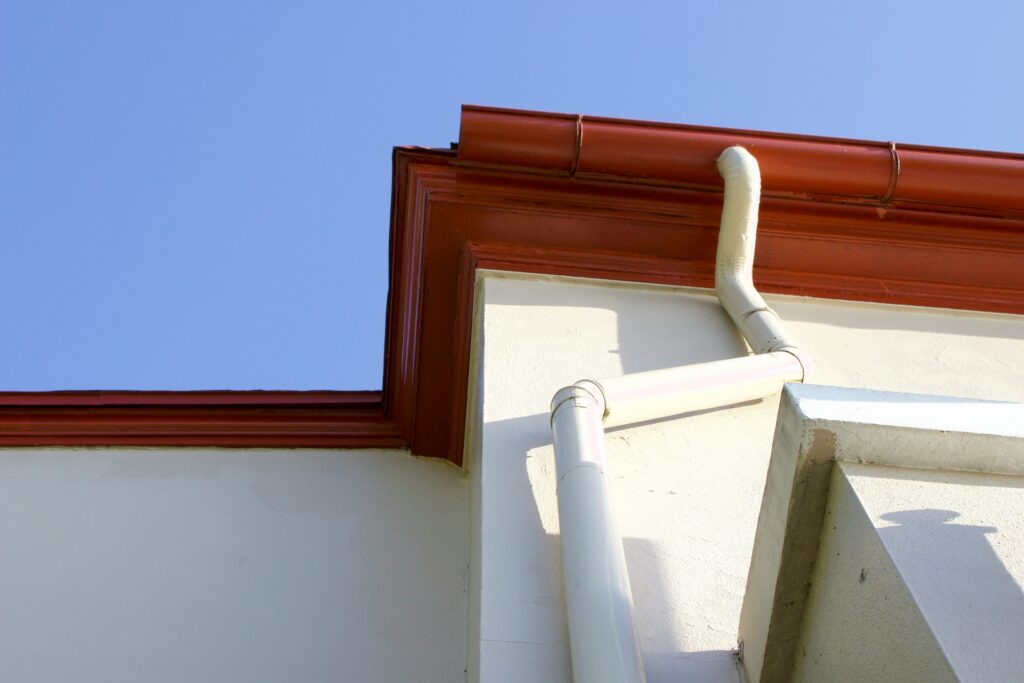
Here are the answers to common questions about gutter maintenance.
What Are the Signs of a Clogged Gutter?
Check your gutters for blockage if you see these signs:
- Water spilling over the sides like a waterfall during rain
- Sagging or pulled-away gutters
- Water stains or peeling paint on your siding
- Eroded garden beds directly below the gutter line
- Birds, squirrels or insects frequently congregating at your roofline
Can You Clean Your Gutters Yourself?
It depends on your home and comfort level. It’s generally a manageable DIY task for a single-story home with a low-pitched roof. However, it’s usually best to hire a professional if you have a multi-story place, a steep roof or are not comfortable working at heights.
How Much Does It Cost to Have Your Gutters Professionally Cleaned?
There’s no single, fixed price, as it varies based on several factors:
- Home height: Gutter cleaning for a two- or three-story home costs more than a single-story ranch due to the increased risk, time and equipment required.
- Total gutter length: The price is often calculated per linear foot, so a large home with a more complex system will cost more.
- Condition and debris level: If your roof’s drainage has not been cleaned in years and is packed with heavy, decomposed sludge and plant growth, you might have to pay more for the labor-intensive cleaning.
- Gutter guards: Some crews have additional charges for removing, cleaning and reinstalling existing gutter guards.
- Accessibility: Difficult-to-reach sections of your roof can also add to the final price.
Stay on Top of Your Gutter Maintenance
A clean gutter is a small detail that provides significant protection for your entire home. Clearing your gutters twice a year is a great starting point, but it also pays to inspect them seasonally and after major storms. Also, remember that a clean gutter is never worth a life-altering injury. When in doubt, call a professional. Make this task a priority to actively preserve your home’s value and ensure it stays a safe, dry and healthy place to live for years to come.
About The Author
Peter is an associate editor for Renovated with over 5 years of experience writing in the home improvement and real estate sectors. He grew up learning woodworking and DIY skills from his grandfather, giving him a unique perspective on home renovation and maintenance. His personal interest in business has also led to him becoming a well-informed voice in the real estate world. He specializes in offering insightful, practical advice to new homeowners, guiding them on how to maximize their ROI.
When Peter has downtime, you'll find him at the top of a mountain, enjoying a scenic view. He also spends a lot of time cultivating his vegetable garden and tinkering in his woodshop.