We are reader-supported. When you buy through links on our site, we may earn an affiliate commission.
There’s absolutely nothing wrong with a happy and peaceful garden — unless, of course, you would rather be walking amid your blooms under the moonlight instead of daylight, marveling at mystery and the macabre instead of sunlight and simplicity. Ready to trade cute garden gnomes for beastly gargoyles? Then it might be time to set your sights on a goth garden.
What Is a Goth Garden?
Traditional gothic gardens incorporated themes of death and decay. However, modern ones take inspiration from the gardens of the Victorian era, which had hidden corners that promoted seclusion and provided a sense of escape. They’re a beautiful, if haunting, twist on the traditional flower bed.
Instead of making your property pop with color, a goth garden is an appreciation of the interplay between moonlight and shadows. From brooding blooms to vintage planters, this type of garden creates an atmosphere that’s both eerie and charming, lush yet melancholic.
Goth gardens are more about contrast and tone, whereas ordinary ones are celebrations of life and light. So, don’t be afraid to work with shadows, textures and hues. A goth garden isn’t about morbidity — it’s a Tim Burton dreamscape of drama and mood.
Choosing Your Goth Garden Plants
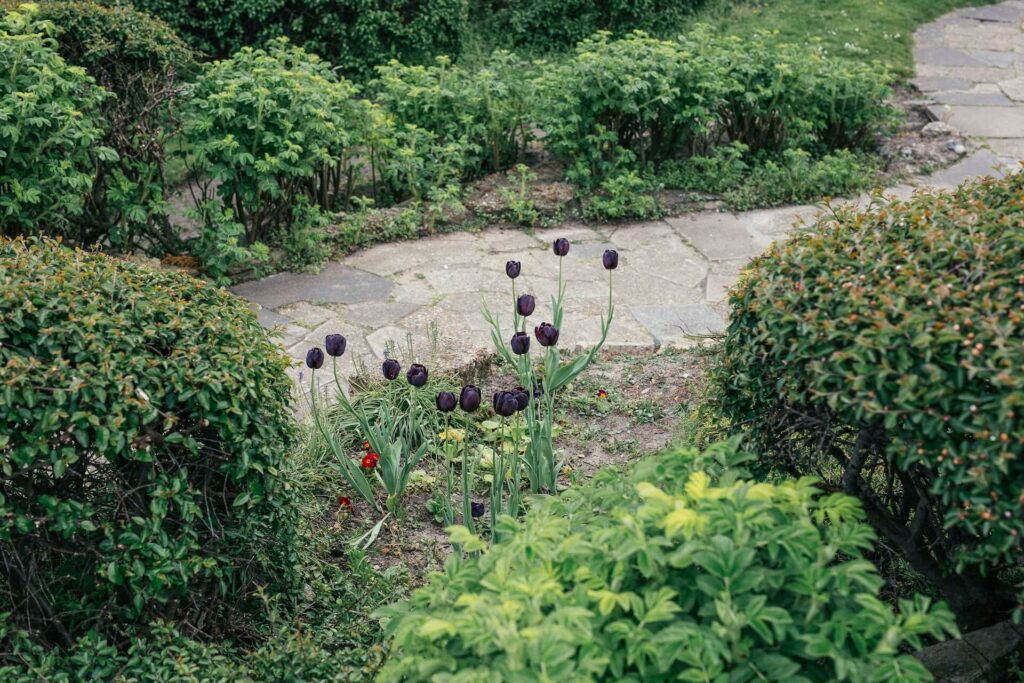
A goth garden is a work of art, and like many such worthy pursuits, it begins with a palette. Cheerful yellows and pastel pinks have no place here — your garden should be home to deep purples, moody blacks, and blood-red or ghostly silver accents.
Remember that you want the shadow as much as the substance, and these darker hues should be a mainstay of every brushstroke. Here are bewitching options to bring your midnight masterpiece to life.
Goth Flowers
The blooms are the main attraction. Your choice of flora is the most impactful, although some can be toxic. Here are some of the most dramatic options:
- Black rose: The quintessential goth flower. It’s mysterious, elegant and just a little dangerous.
- Queen of the Night tulip: Their velvety petals look like they’ve absorbed the night sky. They can be poisonous to animals, especially to dogs and cats.
- Black calla lilies: Sleek and sculptural, these creepy plants lend a sense of high drama to borders or planters.
- Black hellebore: Also known as the Lenten rose, these winter bloomers emerge when everything else fades. It’s perfect for a garden that embraces the off-season.
- Bat flower: Exotic, strange, and absolutely hypnotic, this goth flower’s petals resemble the nocturnal mammal’s wings and whiskers.
If you’re looking to add some variety, check out some plants with dark petals, such as burgundy, dark blue or deep purple. And for accents, try Amaranth and other goth flowers with deep red hues.
Creepy Companion Plants
While only some goth garden plants can be the star, there’s a supporting cast you can’t do without. Add some heft and fill boring spaces with these companion plants.
- Black mondo grass: Deep obsidian leaves provide a bold contrast against paler plants.
- Deadly nightshade: This lethal plant is off-limits in most gardens because of its toxic fruit, but it’s pure gothic poetry.
- Wormwood: Silvery-gray foliage adds a ghostly gleam, plus a reputation as an ingredient in old-world potions.
- Ghost ferns: Ethereal fronds shimmer under low light, perfect for shaded corners.
- Carnivorous plants: Venus flytraps, sundews and pitcher plants add a deliciously sinister twist and help handle your insect problems.
Pale Counterpoints
You appreciate darkness, but you also want that play on shadows. Achieve that with a touch of light. Pair your deep, moody flora with goth garden plants that glow under the moon:
- Lamb’s ear: It’s an excellent addition for its soft, silvery leaves.
- Dusty miller: This creepy plant’s ghostlike shimmer nails the perfect Halloween tone.
- White bleeding hearts: Also called moonflowers, they open at night and release a heady fragrance.
Together, these choices create a layered, textured landscape both haunting and harmonious.
Layout and Atmosphere
A goth garden isn’t just about what you plant — it’s about how you stage it. The layout should evoke mystery and discovery. Avoid straight, boring lines. Think winding paths, overgrown corners, and hidden details that reveal themselves slowly, like a plot twist in an M. Night Shyamalan thriller. Set the mood with these ideas:
- Curved pathways made of stone or gravel: These encourage wandering and make the space feel timeless.
- Dense plantings: Ferns, ivy and climbing vines add a sense of wild beauty and decay.
- Arches and trellises draped in dark foliage: Think black lace elderberry or chocolate vine to create natural frames for your darker goth flowers.
- Contrasting textures: Rough bark, smooth petals and feathery grasses will make every step visually rich.
A good goth garden invites exploration. It’s less about neat rows and more about the art of overgrowth, where nature is a little untamed and every corner feels like a secret waiting to be uncovered.
Finishing Touches

A goth garden should feel like it’s been there forever, tended by candlelight and moonbeams. Turn it from spooky to sublime with these elements:
- Ironwork and statues: Rusted gates, curling trellises and weathered statuary, such as angels and gargoyles, evoke a deliciously haunted vibe.
- Stone markers: Obelisks and small faux headstones add a playful touch of mystery.
- Lanterns and candles: Black or red candles in vintage holders cast a flickering, funereal glow. If fire is a concern, use solar lanterns with amber bulbs.
- A focal point: A stone birdbath, a crumbling fountain or even a wrought-iron bench makes the space feel intentional.
Don’t shy away from imperfection. Cracks, moss and rust only make your garden look more authentically ancient. If you must paint, prefer black and other dark hues.
Lighting

Daylight reveals your landscape and hardscape, but moonlight lends them soul. Good goth gardens come alive at dusk, so artificial lighting is essential.
Avoid harsh lighting. Instead, use soft, indirect sources to highlight textures and create silhouettes. Purple-toned and amber bulbs will help you achieve that warm and intriguing glow.
String lights are also a good option. Drape them loosely across tree branches or tuck them into ivy to twinkle like fireflies. Mark your calendar for full moon evenings, when you can let nature’s spotlight do the work.
Scent, Sound and Sensation
True goth gardens engage every sense. Choose creepy plants that release their perfume after dark, such as night-blooming jasmine, moonflowers or nicotiana. Their scent lingers in the cool air, evoking a dreamlike calm.
Add a small fountain or wind chimes to layer in subtle sound. A low, trickling flow or a gentle metallic clink sets the tone for an evening ritual. You can also install garden speakers. If you’re hosting a Halloween gathering, play ambient sounds — ghostly breezes and rustling leaves — to enchant your guests.
Don’t forget touch — think soft petals, cool stone, rough bark and velvety moss underfoot. Every surface contributes to the mood.
Seasonal Magic
Goth gardens stay charming year-round, not relying on summer warmth and showers. In autumn and winter, when most gardens fade, yours only grows more atmospheric. Bare branches, fallen leaves and frost all add to its spectral charm.
In the spring, your dark blooms return with renewed contrast, like life emerging from shadow. It’s a reminder that the gothic aesthetic isn’t about gloom — it’s about the poetry of cycles, where beauty thrives even in decay.
Create a Spellbinding Goth Garden
Goth gardening is a philosophy, not just decor. It invites you to find wonder in the overlooked and elegance in imperfection. With these tips, you can build an enchanting garden that can bewitch anyone who dares to look and explore.
About The Author
Rose is the managing editor of Renovated and a dedicated freelance writer with over six years of experience in the home and garden industry. Her passion for landscaping and sustainable practices is deeply rooted in her upbringing — growing up in a family of contractors, she was exposed to the world of construction and design from a young age. This hands-on experience fostered her love for nature and gardening, giving her a green thumb and a keen eye for creating beautiful outdoor spaces.
Throughout her career, Rose has honed her expertise in researching and writing about sustainable construction practices, focusing on innovative technologies that enhance the built environment while minimizing environmental impact. She is particularly interested in green roofing, water-efficient landscaping, and integrating native plants in design, all reflecting her commitment to sustainability. Rose's work has appeared in various publications, where she shares valuable insights and practical tips for seasoned professionals and novice DIY-ers.
In addition to her writing, Rose enjoys collaborating with landscape architects and contractors on projects that emphasize eco-friendly design and sustainable materials. She believes that every garden has the potential to be a vibrant ecosystem and works to inspire others to create spaces that are not only beautiful but also environmentally responsible.