How to Install a Whole-House Water Pressure Regulator for Consistent Showers


We are reader-supported. When you buy through links on our site, we may earn an affiliate commission.
Few things ruin your morning faster than weak water pressure, or worse, showers that blast like a fire hose. If your home’s water pressure feels inconsistent, the solution might be simpler than you think. Installing a whole-house water pressure regulator can protect your plumbing, extend the life of your appliances and finally give you those consistent showers your Monday mornings have been missing.
What Is a Whole House Water Pressure Regulator?
A water pressure regulator is a small but powerful plumbing device installed on your home’s main water line. Its job is to simply control the pressure of water entering your house so it stays within a safe, steady range.
Also known as a pressure regulator valve or pressure control valve, this device reduces high municipal water pressure to a manageable level, which is typically between 40 and 60 pounds per square inch (PSI). Without one, pressure can spike unexpectedly, putting strain on pipes, fixtures and appliances. With kitchens and bathrooms being the most popular rooms for renovations — making up 28% and 25% of projects — protecting those new investments from damage is critical.
Think of it as a shock absorber for your plumbing system. Instead of water blasting through your pipes at full force, a water pressure regulator for your house ensures everything flows smoothly and consistently.
Signs You Need a Water Pressure Regulator for Your House
If you’re not sure whether or not you need a water pressure regulator, your home may already be sending you signals. Common signs include:
- Water pressure is low in some fixtures, but extremely strong in others
- Banging or knocking pipes
- Leaking faucets that won’t stop dripping
- Toilets that constantly run, which can be extremely costly and waste 180 gallons of water each week.
- Appliances are wearing out sooner than expected
High water pressure is often the hidden culprit. Anything consistently above 80 PSI can stress your plumbing system and even shorten the lifespan of your water heater and washing machine. If you’ve noticed fluctuating pressure or rising plumbing repair costs, installing a water pressure regulator for your house can help stabilize your system and prevent long-term damage.
Tools and Materials You’ll Need
Before you get started, gather everything in one place. Having the right tools makes the installation smoother and safer. You will likely need a pipe wrench, an adjustable wrench, plumber’s tape, a pipe cutter, a bucket and towels, and soldering tools if working with copper and push-to-connect fittings.
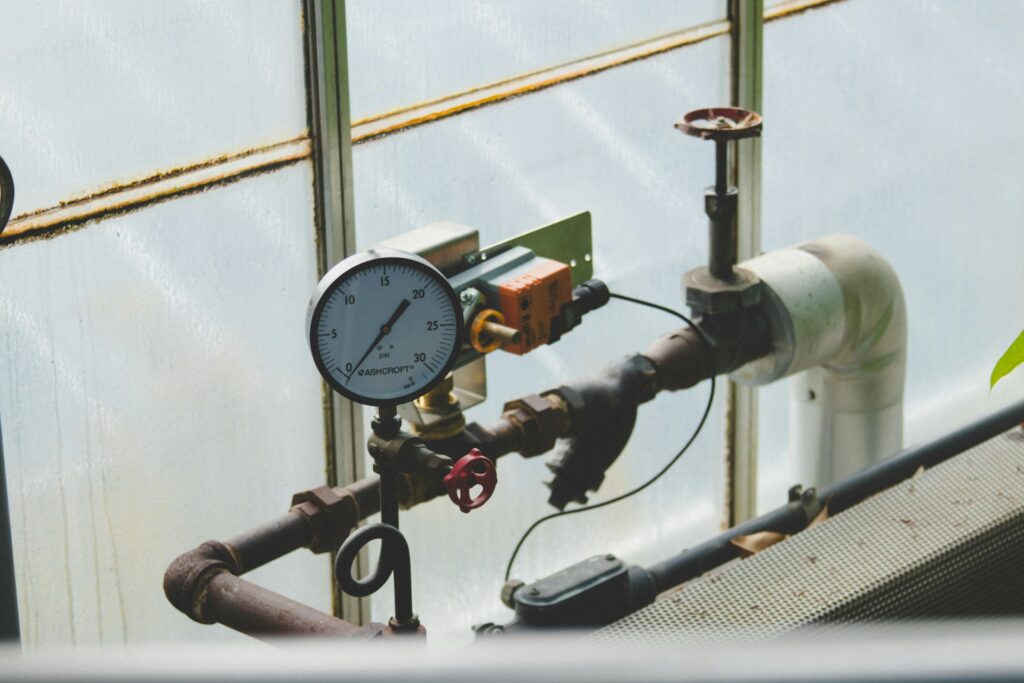
You will also need to test your pressure beforehand using a water pressure gauge. And of course, you’ll need a reliable whole-house water pressure regulator valve sized to your pipe diameter. Choosing quality components ensures your new pressure control valve performs properly for years to come.
How To Measure Your Home’s Water Pressure
Before installing a new water pressure regulator, it’s important to know your starting PSI. Here’s how to check it:
- Screw a water pressure gauge onto an outdoor hose bib or laundry sink faucet
- Turn the water on fully.
- Read the PSI on the gauge.
If your reading is above 80 PSI, that’s considered too high in many areas and can damage plumbing over time. If it’s below 40 PSI, that may explain why your water pressure feels low in showers or sinks. Testing first ensures you’re solving the right problem and confirms whether a pressure regulator valve is what you need.
How to Install a Whole-House Water Pressure Regulator Step-by-Step
Installing a water pressure regulator for your house is manageable for many confident DIYers. Take your time and follow each step carefully.
1. Turn Off the Main Water Supply
Locate your home’s main shut-off valve and turn it off completely. Open the lowest faucet in your home to drain the remaining water from the pipes.
2. Choose the Installation Location
Your new pressure regulator valve should be installed on the main water line, typically just after the main shut-off valve and before the line branches off to the rest of the house.
3. Cut the Pipe
Measure the regulator’s length and mark the pipe accordingly. Use a pipe cutter to remove the necessary section and keep a bucket nearby for residual water.
4. Install the Pressure Control Valve
Wrap threaded ends with plumber’s tape. Make sure the arrow on the regulator points toward the water flow, which should be toward your house. Tighten all connections securely using wrenches, but avoid overtightening.
5. Turn the Water Back on Slowly
Gradually restore the water supply. Check carefully for leaks at all connection points to ensure the job is done. Don’t skip this check. Even a small drip can lead to water damage and mold growth down the line.
6. Test the Pressure Again
Attach your water pressure gauge again and confirm that the PSI is within the 40-60 range. If needed, you can fine-tune it by adjusting the water pressure regulator.
How to Adjust a Water Pressure Regulator
Even after installation, you may want to fine-tune the settings to achieve your ideal shower pressure. Here’s how to adjust a water pressure regulator:
- Locate the adjustment screw on top of the regulator.
- Loosen the locking nut if present.
- Turn the screw clockwise to increase pressure.
- Turn it counterclockwise to decrease pressure.
- Make small adjustments with one to two turns at a time.
- Re-test PSI using your gauge after each adjustment.
Small changes make a big difference here. Your goal shouldn’t be maximum pressure, but rather a consistent and controlled flow. Knowing how to adjust a water pressure regulator properly helps prevent future plumbing stress.
Don’t Let Your Plumbing Crack Under Pressure
Installing a whole-house water pressure regulator may not be the flashiest home upgrade, but it’s one of the smartest. With steady PSI, protected appliances and consistent showers, your plumbing system can operate exactly the way it was designed to. A little pressure control can prevent major headaches down the line.
About The Author
Peter is an associate editor for Renovated with over 5 years of experience writing in the home improvement and real estate sectors. He grew up learning woodworking and DIY skills from his grandfather, giving him a unique perspective on home renovation and maintenance. His personal interest in business has also led to him becoming a well-informed voice in the real estate world. He specializes in offering insightful, practical advice to new homeowners, guiding them on how to maximize their ROI.
When Peter has downtime, you'll find him at the top of a mountain, enjoying a scenic view. He also spends a lot of time cultivating his vegetable garden and tinkering in his woodshop.