

We are reader-supported. When you buy through links on our site, we may earn an affiliate commission.
The minimum washer and dryer space requirements depend on the machines’ configuration. For a stacked setup, the minimum is 30-32 inches wide, 32-34 inches deep and 75-80 inches high. For a side-by-side layout, it’s 50-60 inches wide, 32-34 inches deep and 36-40 inches high. These dimensions account for the clearance needed for safety, inflow and hookups.
Many homeowners want an in-home laundry but have limited square footage. For some, the only space they can spare is a narrow hallway closet, an awkward corner of the kitchen or even a small alcove in a bathroom. Bridging the gap between the convenience of a small laundry room and the reality of only having three feet of space can be tricky. It can feel like a game of inches, where one wrong measurement could lead to you getting stuck with an expensive mistake.
The space you need depends on the appliance dimensions, configuration and clearance space.
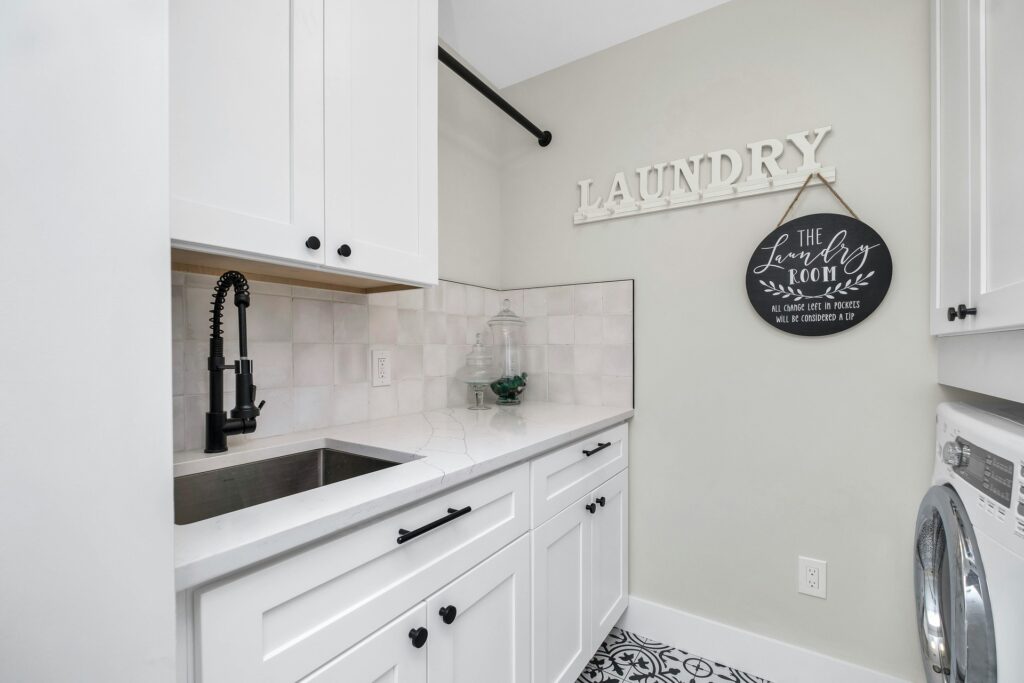
The dimensions of a compact washer and dryer are approximately 24 inches wide, 24-26 inches deep and 33-35 inches high. A 24-inch wide compact washer is around the same width as a standard interior door, which means it can fit into a narrow closet.
Standard appliances are typically 27 inches wide. Choosing a compact pair instantly saves about six inches of horizontal space compared to a standard match. Compact models are ideal for apartments, condos, second-floor laundry closets, guest suites and even tiny homes or RVs.
Choosing a smaller size doesn’t mean sacrificing modern features or efficiency. ENERGY STAR-certified appliances use roughly 30% less water and 20% less energy compared to regular washers. This adds up to significant savings over time.
Your available space dictates the best washer and dryer configuration, which, in turn, has unique demands. Consider the following setups and their requirements.
The minimum dimensions needed for a side-by-side setup are 56-60 inches in width and 32-34 inches in depth. For example, the sum of a 24-inch washer, a 1-inch space between, a 24-inch dryer and a 1-inch clearance on each side is 51 inches. This indicates the minimum machine footprint, with 56 inches being a comfortable target.
A side-by-side configuration creates a usable countertop surface above the machines for folding clothes and storing supplies. It also keeps both appliances at an easily accessible height. The downside is that it requires the most horizontal floor and wall space, making it unsuitable for narrow closets.
The minimum stackable washer and dryer space requirements are 30-32 inches in width, 32-34 inches in depth and 75-80 inches in height. For example, the sum of a 35-inch washer, a 35-inch dryer, 1-2 inches of the stacking kit and 3-4 inches of top clearance for heat dissipation is roughly 75 inches of minimum height. Remember that product dimensions can vary per brand and model, so always double-check measurements.
The stacked arrangement is the floor space saver, as it cuts the footprint in half. It’s ideal for vertical spaces like hallway closets. The trade-off is that it requires significant unobstructed vertical height, and the top dryer controls can be difficult for shorter people to reach and see.
Also, you cannot stack any two machines. You need a compatible front-load washer and dryer pair and a stacking kit designed to connect them safely.
The space requirements of an all-in-one washer-dryer combo are approximately 24-26 inches wide and 26-28 inches deep. This single unit performs both the wash and dry cycles, eliminating the need for a second appliance.
This appliance has the smallest possible footprint, and it typically only requires a 120V outlet and one set of water hookups. The trade-off is that continuous wash-and-dry cycles can take 4-6 hours. Its load capacity is also smaller, and most models use ventless drying technology, which is efficient but can leave clothes feeling slightly damp.
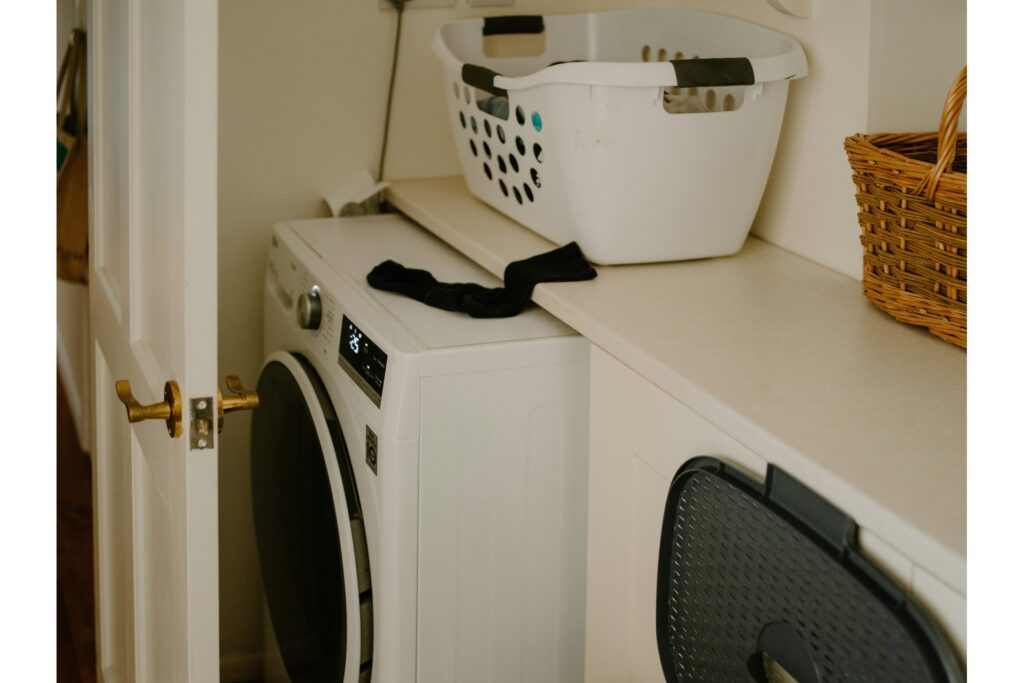
Clearance is an essential part of washer and dryer space requirements because it affects safety, fire prevention, appliance performance and longevity, as well as installation and maintenance.
Without adequate space for air to circulate, the heat a dryer generates can build up and create a dangerous situation. Proper clearance keeps the hose from being crushed, which would trap lint and heat.
Dryers also need to pull in ambient air to tumble and dry clothes. They’re forced to work harder and longer in cramped spaces, leading to higher energy bills and less effective drying. For washers, the side clearance helps dissipate heat from the motor and prevents excessive noise and damage from vibrations against the walls or other appliances.
Clearance also makes it easier to install the appliances. It provides the necessary room for hands, tools and the utilities themselves. Dryer vents are bulky, while water hoses are often stiff and need room to bend without kinking.
Consider these tips to make the most of your limited space:
Here are the answers to common questions about small laundry rooms.
How to fit a washer and dryer in a small space involves measuring your space precisely, choosing the right appliance type for it and selecting the best configuration for the available space. Don’t forget to factor in the required clearance space for safety and function before you buy.
The smallest depth for a functional laundry closet is roughly 32 inches deep. While a compact machine might only be 24-26 inches deep, you must account for the additional 4-6 inches of clearance required behind the unit for the dryer vent, water hoses and power cord.
Yes, you can set up a mini laundry setup in your bedroom closet, provided that it meets several essential conditions. The closet must have all the minimum space and clearance requirements. A ventless dryer is ideal to avoid the complexity of running ductwork. Finally, consider installing louvered or bifold doors to allow for proper air circulation, as a solid, tight-fitting door can trap heat and moisture.
With careful planning, you can achieve a functional laundry space, no matter how small. Assess your available space, choose the right configuration for it and include clearance space in your final measurements. So take that tape measure out one last time — not with uncertainty, but with a clear plan. That convenience in-home laundry space is well within your reach.