

We are reader-supported. When you buy through links on our site, we may earn an affiliate commission.
Finding unexpected wood damage and winged insects in your home can be stressful. If you suspect pests have moved into your walls, determine whether you have a termite or ant infestation. One is a nuisance, while the other can threaten your home’s structural integrity. Learning how to differentiate them is a critical first step, as it’ll help you determine the best ways to deter or get rid of them.
Swarming termites and flying ants look similar from a distance. Their differences become more apparent with a closer examination. Refer to this comparison table to identify the type of bugs that have invaded your home.
| Termites | Ants | |
| Body shape | Termites have a more uniform body shape. Their heads and bodies look fused together with no visible “cinched” waist. | Ants have an “hourglass” figure, with three distinct body segments and a narrow constricted waist between the thorax and abdomen. |
| Antennae | Termites have straight antennae that look like tiny strings of connected beads. | Ants have antennae that are “bent” or “elbowed.” They look like they have a sharp joint or corner partway up. |
| Wings | Termites have two sets of wings that are equal in size. Their fragile wings can break off easily and are often found in small piles near baseboards or on windowsills after a swarm. | Swarming ants have two sets of wings. The front pair is longer than the back pair. |
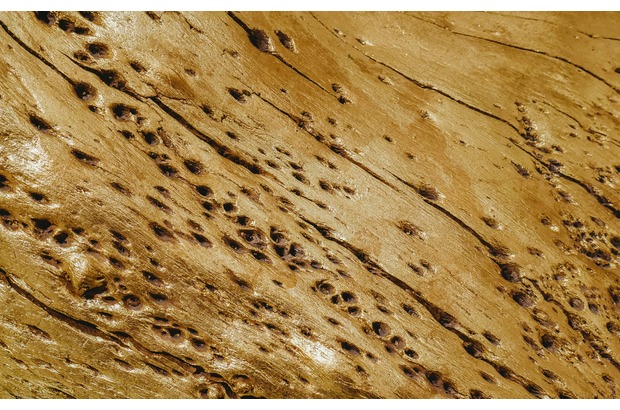
If you can’t get a close look at your unwanted houseguests, the evidence they leave behind is just as telling. Investigate the “crime scenes” to determine whether you have a termite or ant problem.
Americans spend millions of dollars annually to manage carpenter ant infestations. These insects nest in trees, stumps, logs and often enter homes through cracks, vents or tree branches that touch the house. Their presence can be a sign of an underlying moisture problem. Common signs they’re in your home include:
Termites cause billions of dollars of damage annually. They can weaken the structural integrity of properties and increase health risks, as their tunnels can promote fungal growth and their droppings can trigger respiratory issues. These bugs might be eating your home if you spot these red flags:
Once you know what’s destroying your home, take steps to evict your unwanted tenants immediately. How to get rid of flying ants vs. termites depends on the severity of the infestation. Getting expert assistance is non-negotiable in the following scenarios:
Professional management is always a must when you have a termite problem. Colonies often contain millions of termites, with deep underground nests that would require specialized, regulated products and equipment to eliminate. DIY methods are rarely effective.
If you’re dealing with widespread ant activity or if you can’t locate the primary nest, leaving the job to experts is your best option. They have the tools and knowledge to find hidden nests and ensure complete colony collapse.
Small ant problems that clearly center around a satellite nest, such as a single, damp window frame, are more manageable for homeowners. The key is to fix the underlying moisture problem and replace the damaged, infested wood. Simply spraying visible ants with insecticides is a temporary solution.
According to a Forbes survey, 46% of respondents reported dealing with structural damage due to a pest infestation. Avoid becoming part of that figure by making your home uninviting to ants and termites with these prevention tips:
The earlier you spot the signs of a pest problem, the easier it’ll be to manage them, so keep an eye out for them. If you spot red flags, call a professional for a more thorough inspection. The fee is a small price to pay compared to the potential costs of dealing with a full-blown termite or ant infestation. Once the dust settles, implement preventive maintenance to keep your home pest-free.