
We are reader-supported. When you buy through links on our site, we may earn an affiliate commission.
When I picked my first fence, I thought I’d done enough research. The price seemed reasonable, the style suited my home, and I assumed a fence was something you installed once and barely thought about again. Three years later, I realized I’d overlooked the factors that actually determine whether you’ll be happy with your investment. If you’re choosing fence material, my experience may help you avoid the mistakes I made.
Like many homeowners, I focused almost entirely on how the fence would look. I wanted something that complemented my landscaping and boosted my home’s curb appeal without stretching my renovation budget.
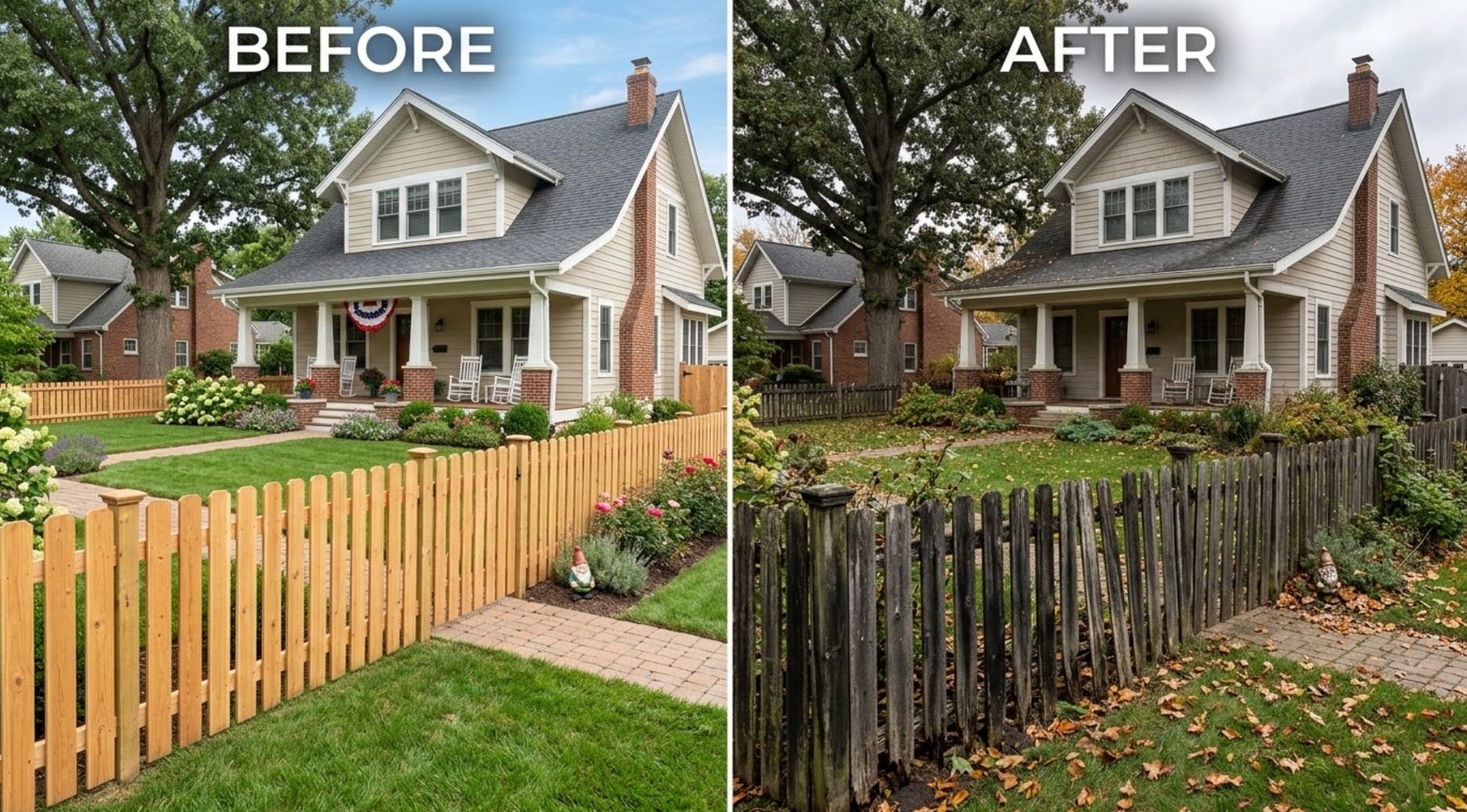
I spent hours reading reviews and comparing prices, but I didn’t spend nearly enough time researching how different materials perform after years of exposure to the elements. The fence looked fantastic during the first year. At that point, I couldn’t imagine I’d be questioning the decision just a couple of years later.
The biggest surprise was the amount of fence maintenance involved. I hadn’t expected to spend so much time cleaning, staining, inspecting boards, replacing damaged sections and making small repairs that seemed to appear every season.
I wasn’t alone in this decision, though. Clint VanRossun, owner and contractor of VanRossun Contracting, reveals a common mistake many homeowners make: “Selecting material based on aesthetics without considering environmental factors.”
The weather quickly became my biggest challenge. Heavy rain left me worrying about moisture, intense summer sun caused fading and strong winds loosened boards that had once seemed perfectly secure.
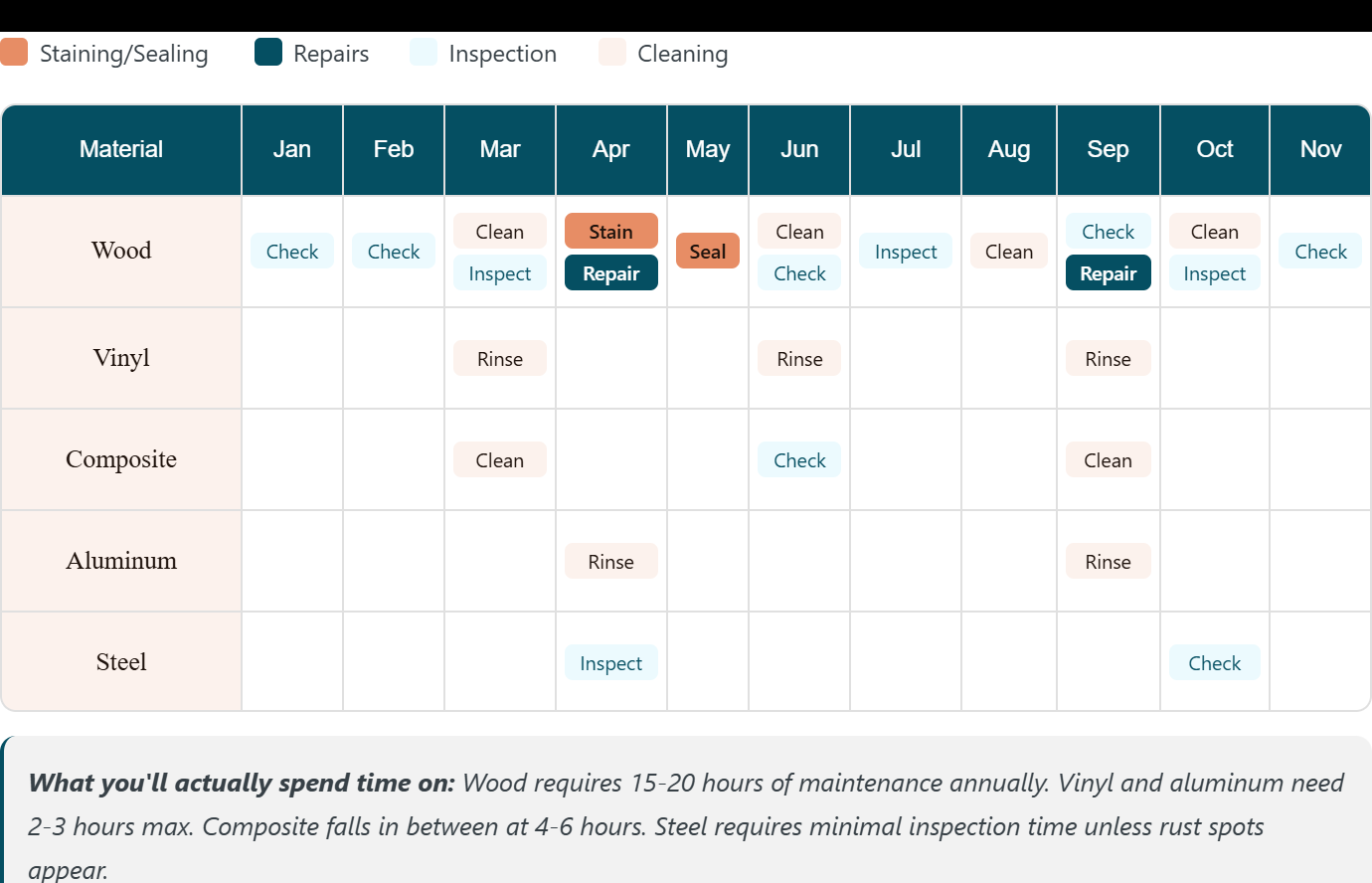
If I’d seen a calendar like this before choosing my fence, I would have made a very different decision:
Most contractors provide accurate information about the projects they install. However, marketing naturally focuses on the strengths of each material rather than what living with it is actually like years later. Contractors may explain maintenance requirements, but it’s only after spending a weekend sanding, staining or resealing a fence that you truly understand what those requirements mean.
Still, it’s always better to involve a professional, especially 811. According to Sarah Magruder Lyle, president and CEO of the Common Ground Alliance, “Many home projects, like fence installations, involve digging into the ground. But most homeowners or their contractors have no idea where pipes and utility lines are buried on their property. Fencing and landscaping work is actually the No. 1 cause of damage to buried utilities when 811 isn’t contacted first.” Ensure you follow the correct processes when doing any work to your home or yard.
Once I began researching alternatives, I realized every fencing material comes with strengths and compromises. There isn’t one perfect choice, but some materials would have suited my property far better than the one I selected.
| Material | Appearance | Maintenance | Lifespan | Typical Cost |
| Wood | Natural and traditional | High | Moderate with proper care | Moderate |
| Vinyl | Clean and consistent | Low | Long | Moderate |
| Aluminum | Modern and elegant | Very low | Very long | Higher |
| Steel | Strong and highly secure | Low | Excellent | High |
| Composite | Wood-like appearance | Low | Excellent | High |
This fence material comparison completely changed how I evaluate fencing products. I now understand that the cheapest option up front isn’t always the least expensive over the life of the fence.
Not sure which direction to go? Use this decision tree to narrow down your options based on what matters most to you.
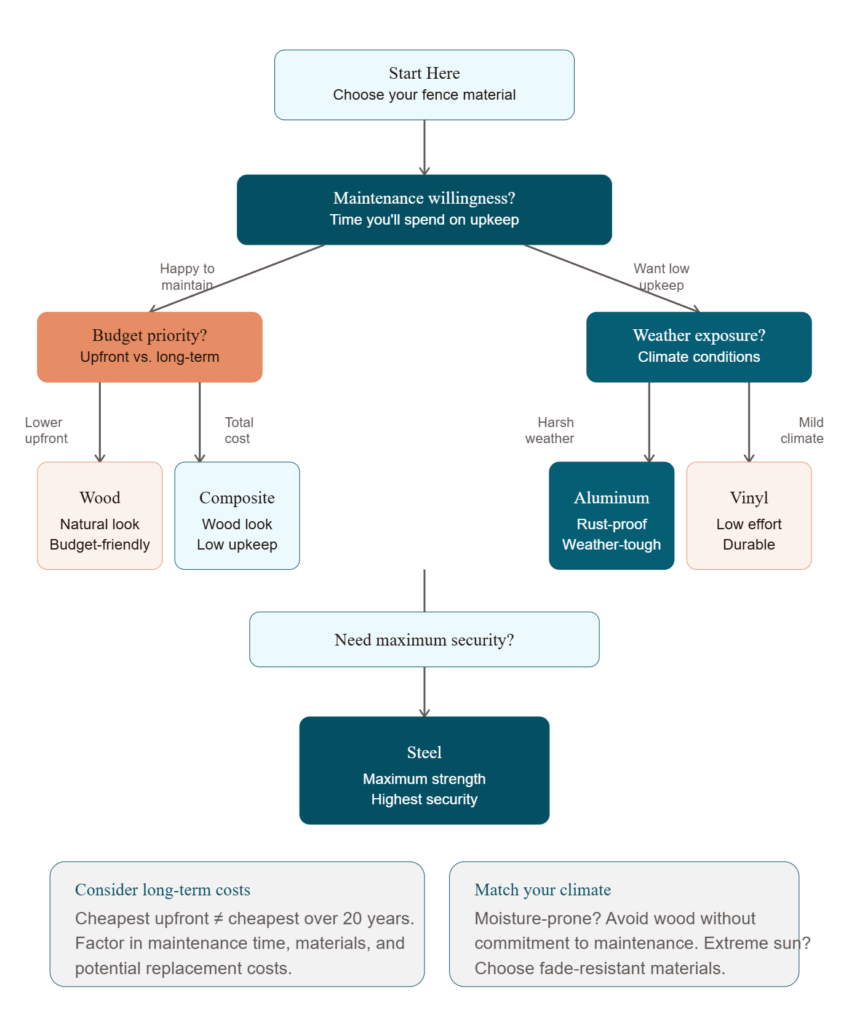
Before owning a fence, I thought this decision came down to personal taste. After living with one, I realized maintenance plays a much bigger role than appearance.
A wood vs. vinyl fence comparison highlights two very different ownership experiences. Robert Corrao, president of Jan Fence, advises, “Wood offers timeless curb appeal, but it requires ongoing maintenance and can be affected by the sun, snow and moisture if the property has poor drainage. Vinyl provides a low maintenance solution for many homeowners, while aluminum is an excellent choice because it resists rust and corrosion and performs well in a variety of weather conditions.”
Wood is also prone to damage and fading as a result of direct sunlight. Vinyl generally requires far less maintenance while maintaining a neat appearance for many years. Vinyl is great for moisture-prone areas due to its durability and low effort. According to Akron Canton Commercial and Residential Fencing, “If you’re looking for a cheap, durable and stunning fence that will last for generations, vinyl is an investment worth making.”
Pros include:
Cons include:
Pros include:
Cons include:
Neither is objectively better for everyone. The right choice depends on whether you’re happy spending weekends maintaining your fence or would rather install it and spend your free time elsewhere.
Vinyl generally won’t rot, attract insects or need refinishing. Aluminum resists corrosion exceptionally well, while composite provides excellent resistance to weathering without requiring the same level of upkeep as wood. Wood can last for decades, but only if you’re willing to keep up with regular maintenance.
According to Jeff Kelly, president at the Peerless Fence Group, “The best way to avoid fence regret is to think beyond today’s budget and consider how the fence will perform over the next 15 to 30 years. Working with an experienced fence contractor who understands your property’s conditions and your long-term goals can help ensure you choose a fence that looks great and performs well for years to come.”
Additionally, Kenny Gillam, vice president at Allied Fence, advises, “My advice is to think about where your property will be five or 10 years from now, not just today. Spending a little more time planning before installation almost always leads to a better outcome.”
When I first collected quotes, I paid almost all my attention to the fence installation cost. At the time, that seemed like the smartest way to compare contractors and materials.
Ryan Boyett, owner and CEO of B&T Fencing, reveals a mistake he sees often. “The most common mistake I see homeowners make is choosing the cheapest materials to solve the problem quickly instead of investing in long-term value,” he says. “For example, using wood for a privacy fence instead of going with composite or vinyl, which cost more but come with lifetime warranties, so you don’t have to worry about maintenance or repairs in the long run.”
The numbers tell the real story:
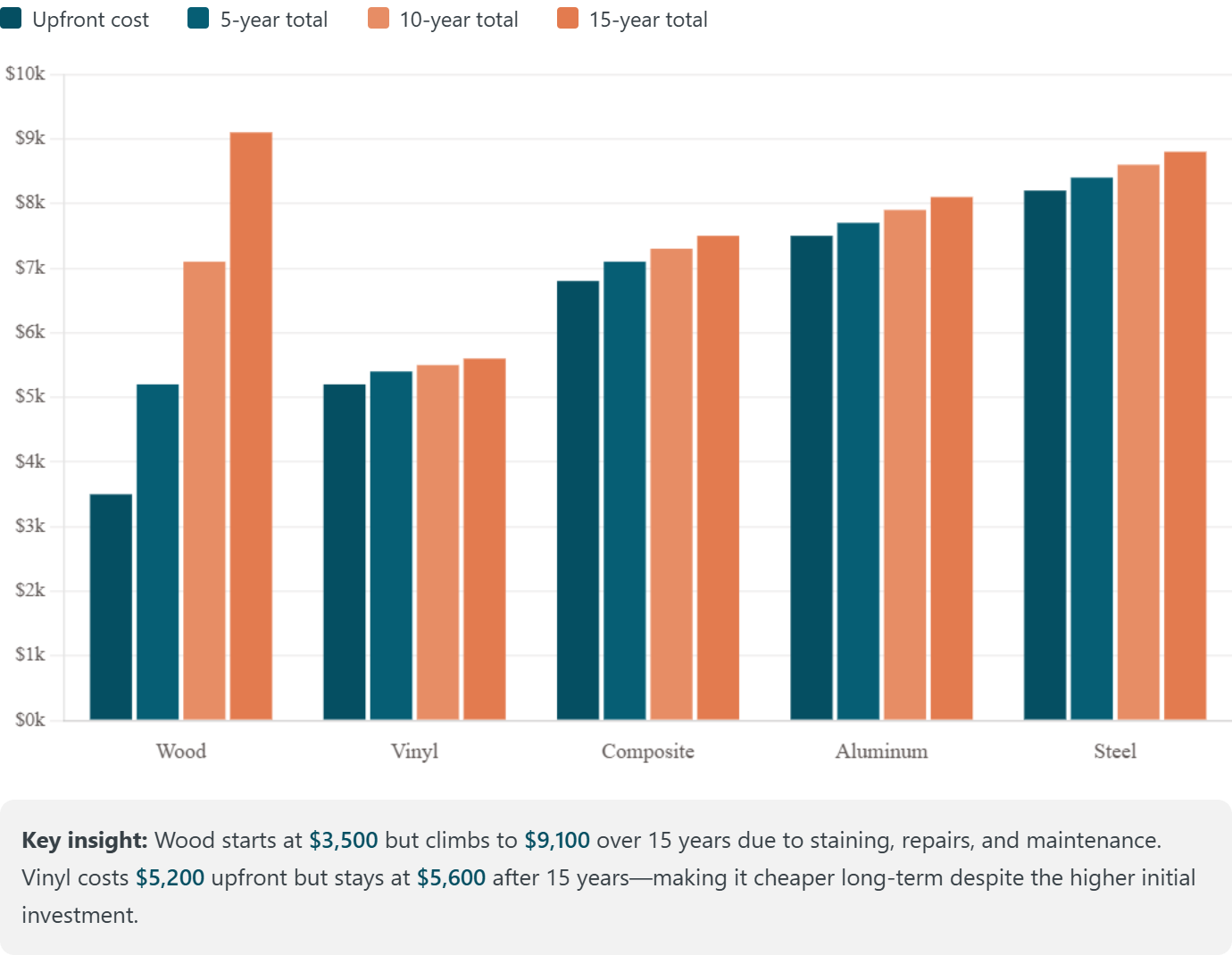
The material you choose also determines how easy it is to replace. For example, Kenny Bowling, director of operations at RC Built Fences, says that “If it is wood, then they can have it refinished. Otherwise, a fence replacement is probably the best option.” For this reason, wood may seem like the easiest option.
If longevity is your priority, some of the longest-lasting fence materials include aluminum, steel, composite and quality vinyl, as all perform exceptionally well when properly installed. They generally require less ongoing maintenance than wood while offering many years of reliable performance. Wood can provide decades of service, too, but only if it receives consistent care throughout its lifespan.
For security, steel is often considered one of the most durable fence materials because of its strength. However, the best option depends on your property’s specific needs.
According to Joe Raboine, vice president of design at Oldcastle APG, “Wood is a common choice, offering a classic aesthetic and approachable budget. However, wood is not known for its longevity and requires a good deal of maintenance. Molded polyethylene fencing, made from a proprietary blend of polyethylene plastic and reinforced with galvanized steel, provides a realistic wood and stone appearance and delivers superior performance without compromising aesthetics. It also typically requires minimal maintenance.”
If you’re still weighing your options, these quick answers may help you choose the right fencing material with greater confidence.
Start by considering your climate, maintenance expectations, long-term budget and how long you plan to stay in your home. Looking beyond appearance will help you choose a fence that fits your property and lifestyle.
Maintenance is one of the biggest differences between the two. Wood offers a classic natural appearance but requires regular care, while vinyl generally needs much less upkeep and maintains its appearance with minimal effort.
Compare more than just the purchase price and installation quote. Consider long-term maintenance, durability, weather resistance, expected lifespan and the amount of time you’re willing to invest in caring for your fence before making your final decision.
After three years of living with the wrong fence, I’ve learned there isn’t a universal “best” material — but there is a best material for your specific situation. The right choice depends on matching four key factors to your property and lifestyle.
Choose wood if you love the natural aesthetic, have time for annual maintenance (15-20 hours per year), want the lowest upfront cost, and don’t mind restaining every 2-3 years. Wood works best in dry climates with minimal moisture exposure.
Choose vinyl if you want minimal maintenance (2-3 hours annually), live in a moisture-prone area, plan to stay in your home long-term, and can afford a higher initial investment that pays off over time. Vinyl typically becomes cheaper than wood after year 7-8.
Choose composite if you want the appearance of wood without the maintenance burden, value durability over initial cost, and need a fence that performs consistently across different weather conditions.
Choose aluminum if you face harsh weather (coastal salt air, extreme temperature swings), want maximum weather resistance, need a fence that requires almost no maintenance, and prefer a modern aesthetic. Aluminum excels in humid or coastal environments where other materials deteriorate quickly.
Choose steel if security is your primary concern, you need maximum strength and impact resistance, or you’re protecting commercial property. Steel costs more upfront but provides unmatched durability and protection.
The biggest lesson from my experience: calculate total ownership cost over 15-20 years, not just installation price. Factor in your realistic maintenance commitment, local climate conditions, and how long you plan to own your home. A fence that costs $2,000 less to install but requires $4,000 more in maintenance over a decade isn’t actually saving you money — it’s costing you both money and weekends you’ll never get back.
Before you commit, talk to homeowners in your area who’ve owned the same material for 5+ years. Ask contractors about warranty coverage and what actually causes callbacks. Most importantly, be honest about whether you’ll realistically maintain a high-maintenance fence, because I thought I would — and I was wrong.