

We are reader-supported. When you buy through links on our site, we may earn an affiliate commission.
American households are facing soaring temperatures and energy bills in 2026. The average residential electricity costs for cooling are projected to jump up to 10.5% this summer, pushing annual AC expenditures to nearly $800 for many families. This spike makes efficient climate control an urgent financial concern, especially as heat waves become more frequent and intense. Unfortunately, humidity can drive indoor temperatures even higher.
Humidity makes indoor spaces feel hotter than the actual air temperature, which forces cooling systems to work overtime. When a room is humid, sweat evaporates more slowly, so people feel sticky even if the thermostat is set low.
Air conditioners and dehumidifiers need to run longer and harder to keep spaces comfortable. Unfortunately, utility rates have surged by 18% in recent years, making it even more important for households to tackle excess humidity and lower AC use.
Sustained high humidity in the house can also contribute to home and health problems. For example, indoor mold thrives in places with more than 60% humidity, as this creates spore-supportive conditions inside walls, carpets and HVAC ducts. Mold can damage household finishes and furnishings. It can also trigger or worsen allergies and respiratory issues for the house’s occupants.
Many of the most effective humidity-reducing solutions require little more than good timing, smart habits and a few simple upgrades. Here are practical ways to keep the air moisture in your home low and turn your dehumidifier into a backup tool.
Strategic ventilation is a cornerstone of efficient humidity control, especially for those who want to avoid relying on mechanical dehumidifiers and air conditioning. Harness outdoor air when it’s driest or when the relative humidity drops below indoor levels. Early morning air may feel cooler, but relative humidity is often highest then because cooler air holds less moisture. That means opening windows first thing in the morning can backfire in humid climates.
Homeowners should compare indoor humidity with outdoor conditions before opening windows. A simple hygrometer can show the indoor reading, while a weather app can provide the outdoor relative humidity or dew point. Open windows when the outdoor air is drier than it is indoors, then close them once outdoor humidity starts climbing again.
For faster results, use cross-ventilation. Open windows or vents on opposite sides of the home and turn on exhaust fans to move humid air out quickly. On muggy days when outdoor humidity stays high, keep windows closed and focus on indoor moisture control instead.
Note that many household activities can increase moisture in your home, such as showering and drying laundry indoors. Structural issues, such as leaks or cold surfaces, can also raise household humidity if left unchecked.
Target what’s letting in or generating moisture to reduce humidity in the house. Consider these often overlooked sources of unwanted dampness and how to manage them:
For eco-conscious households seeking alternatives to plug-in solutions, consider natural dehumidification. Desiccant products, like DampRid, silica gel or DIY rock salt buckets, can draw and hold water from their surroundings. Place these natural dehumidifiers in closets, cabinets, under sinks, in basement corners and in other problem areas.
Silica gel bags can be recharged by baking them monthly, while ready-made products like DampRid can be replaced every quarter for best results. However, be aware that natural dehumidifiers are not for reducing whole-home humidity. They’re effective for small, enclosed spaces or as supplementary moisture management.
Indoor moisture levels between 30% and 50% are the ideal range. Use a digital or analog hygrometer to monitor your home’s humidity conditions and adjust your practices accordingly.
Learning how to lower humidity in a house means assessing the existing HVAC system. Some standard air conditioners are already designed to remove excess moisture while cooling the air.
To maximize the natural dehumidification effect, homeowners can set the air conditioner to “auto” mode rather than “on.” This allows the unit to cool and dehumidify as needed without constantly recirculating potentially humid air. They can also lower the AC’s fan speed to increase the amount of time warm, humid air spends in contact with the cooling coils.
Smart thermostats can also fine-tune AC and heating use to keep ambient moisture low. These devices can learn a household’s schedule and adjust temperatures when people are away or in the house.
On average, a U.S. household spends $1,900 on utility bills, with heating and cooling making up more than half that cost. Prioritizing insulation minimizes temperature swings and helps reduce humidity in the house.
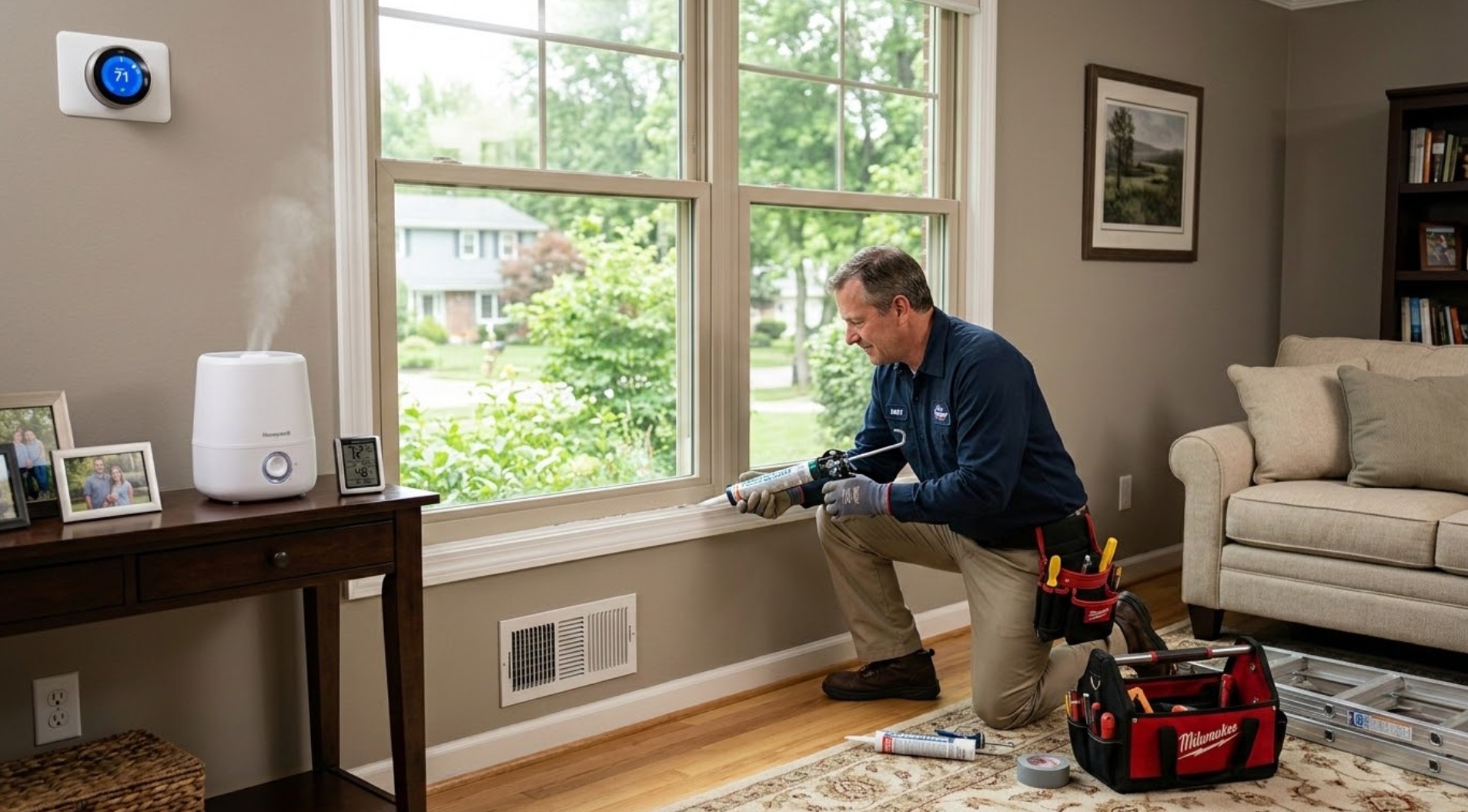
Weather-stripping doors and windows is a cost-effective way to block warm, humid air from seeping in and prevent conditioned air from escaping. Many products are DIY-friendly. You can also insulate cold water pipes to help prevent condensation, which contributes to indoor dampness, especially in basements and utility rooms.
Attic and crawlspace ventilation are other areas where small changes make a big difference. Well-ventilated attics reduce heat and moisture buildup in the summer, which helps keep the rest of the home cooler and drier.
Dehumidifiers are a trusted tool for battling excess moisture, but running them continuously can be energy-intensive. Operate the dehumidifier when indoor humidity surpasses 60% to prevent mold from growing. Set it to maintain humidity at 45% to 50% instead of running in continuous mode, which uses more energy than necessary.
Use the dehumidifier during off-peak hours whenever possible. You’ll save more money in the long run, as many electricity providers offer lower rates for overnight or early morning usage. Clogged or dirty units operate less efficiently and can recirculate mold spores back into the air, so empty and clean your dehumidifier regularly.
Learning how to remove humidity from a home will help you reduce your utility bills. Explore different solutions to keep your indoor air moisture low and use your dehumidifier strategically. With small changes and smart investments, you can stop relying so much on your dehumidifier and still enjoy cooler, cleaner air this summer.