

We are reader-supported. When you buy through links on our site, we may earn an affiliate commission.
Dark, moody interiors have surged in popularity, with charcoal walls, midnight blue accents and richly textured spaces now dominating design feeds and showrooms. Is this just a fleeting trend, or are there deeper psychological reasons why some men gravitate toward these dramatic environments? Here are potential theories behind the appeal and dark bedroom ideas to help you achieve this look in your own space.

The shift toward darker palettes reflects a broader movement, with recent data showing homeowners are increasingly embracing bold and jewel tones across their spaces. For some men specifically, the appeal may run deeper than aesthetics. Here are three potential psychological drivers that might explain why a moody bedroom or study feels instinctively right.
Modern life delivers constant stimulation as notifications ping, emails flood in and the boundaries between work and home blur. Creating a controlled personal environment can counteract this overload. When you design your bedroom with intention, it becomes a deliberate retreat where you can decompress and disconnect from external demands.
These masculine bedroom ideas work equally well in a home office or reading nook where you need focused calm. The need for sanctuary feels urgent, especially considering a 2023 survey revealed 80% of males reported stress in the preceding six months.
Darkness signals your brain to wind down, and while many assume bedrooms should feel light and airy, the opposite can be equally effective. Deep charcoal or navy walls help repair circadian rhythms and stimulate melatonin production since your body naturally associates dim environments with rest.
When you dim the lights in a dark and dramatic bedroom painted in forest green or slate gray, you’re working with biology rather than against it. The result can be deeper and more restorative sleep.

Historical and cultural associations with color play a subtle role, as research suggests gender differences in color perception may influence preferences. Some studies indicate men show higher tolerance for achromatic colors like black, white and gray while being less drawn to lighter tints.
However, studies also indicate that men can react negatively to sterile gray environments, which suggests a desire for rich, atmospheric dark spaces rather than clinical minimalism. Think espresso-stained wood paneling in a home library or gunmetal fixtures in a primary suite.
Understanding why these spaces appeal is only half the equation. If they appeal to you, you’ll want to know how to get the look. Here are three distinct styles that embody the dark and moody aesthetic, each offering a concrete starting point for your own design.
This aesthetic draws inspiration from converted warehouses and urban lofts, where raw materials meet clean lines in a utilitarian framework that feels both functional and sophisticated.
Dark Academia finds its roots in classic libraries and university halls, creating a space that feels intellectual, nostalgic and deeply cozy.
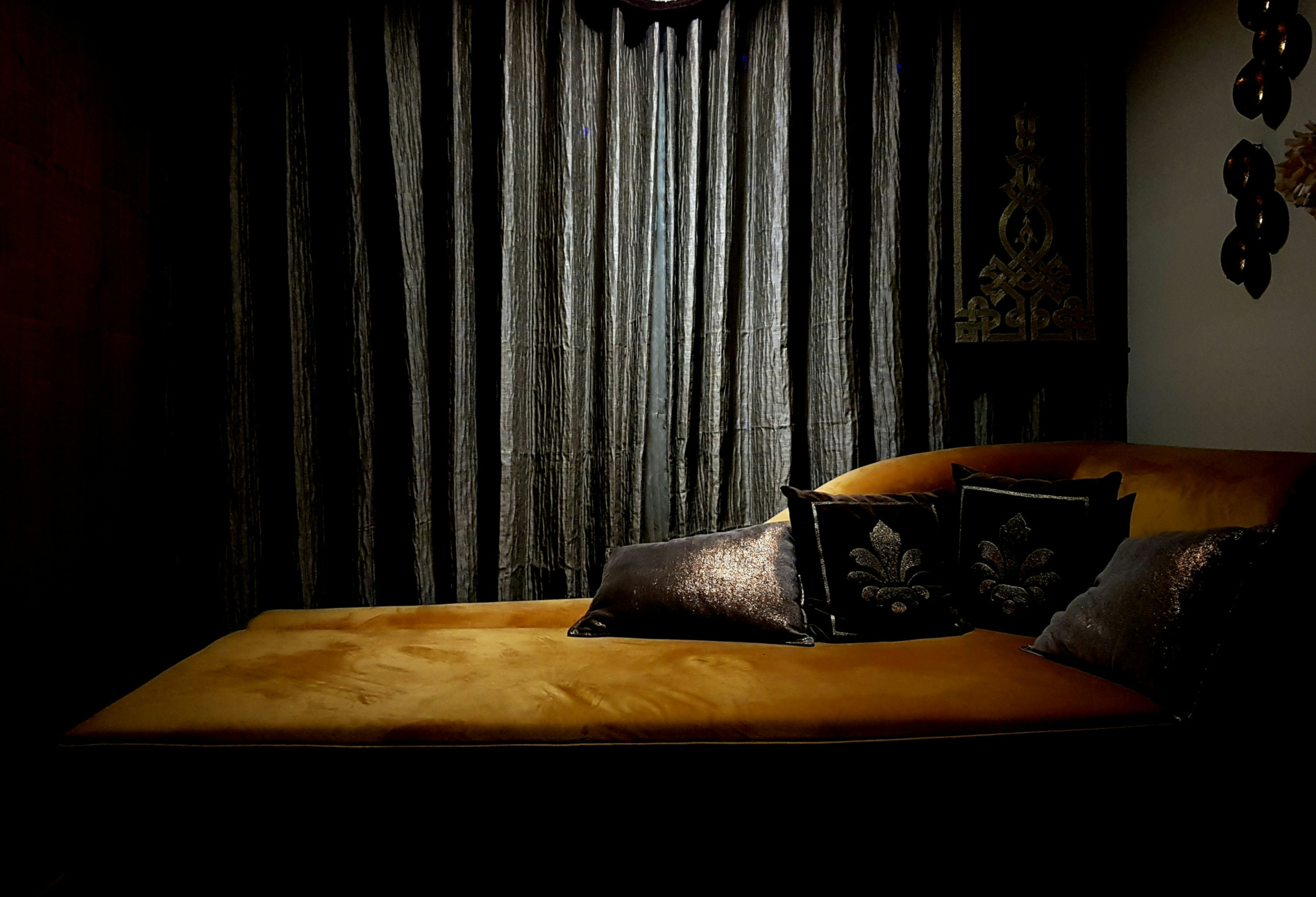
This style leans sensual, luxurious and mysterious, moving beyond traditional masculinity to create an intimate and opulent atmosphere that works beautifully in a primary bedroom.
Getting the details right separates a moody masterpiece from a depressing cave. Here’s how to avoid the most common mistakes.
Paint your ceiling a lighter shade like cream or soft gray to create visual lift, then position large mirrors opposite windows to bounce daylight deeper into the room. Layer your lighting with overhead fixtures, table lamps and accent lights so you can control the mood throughout the day.
Open curtains wide during daylight hours to maximize natural light. When every surface reads dark, spaces can feel flat and lifeless instead of intentionally moody. Strategic contrast prevents this.

Texture transforms a dark room from flat to inviting, so mix smooth leather with nubby linen throws while pairing walnut wood furniture with brushed brass hardware. Add velvet pillows or chunky cable-knit blankets. These dark bedroom ideas work because varied textures catch light differently and create visual interest that paint color alone cannot achieve.
Expert designers emphasize layering with luxurious fabrics to build sophistication. You coud also consider adding depth with 3D wood paneling on an accent wall.
Prevent monotony by introducing carefully chosen accent colors like warm metallics. Brass drawer pulls, gold picture frames or copper pendant lights add richness without breaking the moody palette. Meanwhile, earthy neutrals like cognac leather, olive green plants or camel-colored throw blankets provide organic contrast. These pops of color guide the eye and create focal points that make the space feel curated rather than one-note.
The trend toward dark interiors reflects a desire for sanctuary and personal control in an overstimulating world, but success lies in the balance. Layer your colors thoughtfully, maximize natural light strategically and introduce varied textures throughout. These dark bedroom ideas give you a foundation. Now take them and create a personal space that truly reflects who you are.