We are reader-supported. When you buy through links on our site, we may earn an affiliate commission.
Experts and homeowners alike agree — the kitchen is the most essential space in the house. In fact, many call it the heart of the home. It’s where household members whip up traditional family recipes, parents and children bond at dinner, and kids do their homework. At parties, it’s not unusual for guests to stand around the island or to have multiple hands preparing holiday dishes. That’s why many prospective homebuyers question the average kitchen size and how much room they require to meet their needs.
The size of your kitchen is relative to your home’s overall square footage. Traditional homes may have much smaller kitchens than new construction. Likewise, a 3,500-square-foot home will have a much roomier space than a house that’s 1,600 square feet. As you can imagine, a New York City apartment will have the tiniest kitchen of all.
Amid the ever-changing standard kitchen measurements, you might wonder if the average kitchen size is big enough for you. Here’s a breakdown of what you can expect from the kitchen in different-sized homes.
Less Was More in Mid-Century Kitchens
English country kitchens — depicted beautifully in shows like Downton Abbey — were once drafty, more industrial spaces run by maids and cooks. Across the pond, early American kitchens resembled the European-style cooking space — simple, traditional and built on necessity instead of aesthetics.
However, by the 1920s and 1930s — amid societal changes and a restructuring of gender norms — kitchens became more domesticated in the home. Electric-run appliances replaced wood-burning stoves and fireplaces, while women began incorporating decorative elements to match the rest of the house. Following the start of the Cold War, Americans purchased 20 million refrigerators and 5.5 million stoves — consumerism at its finest.
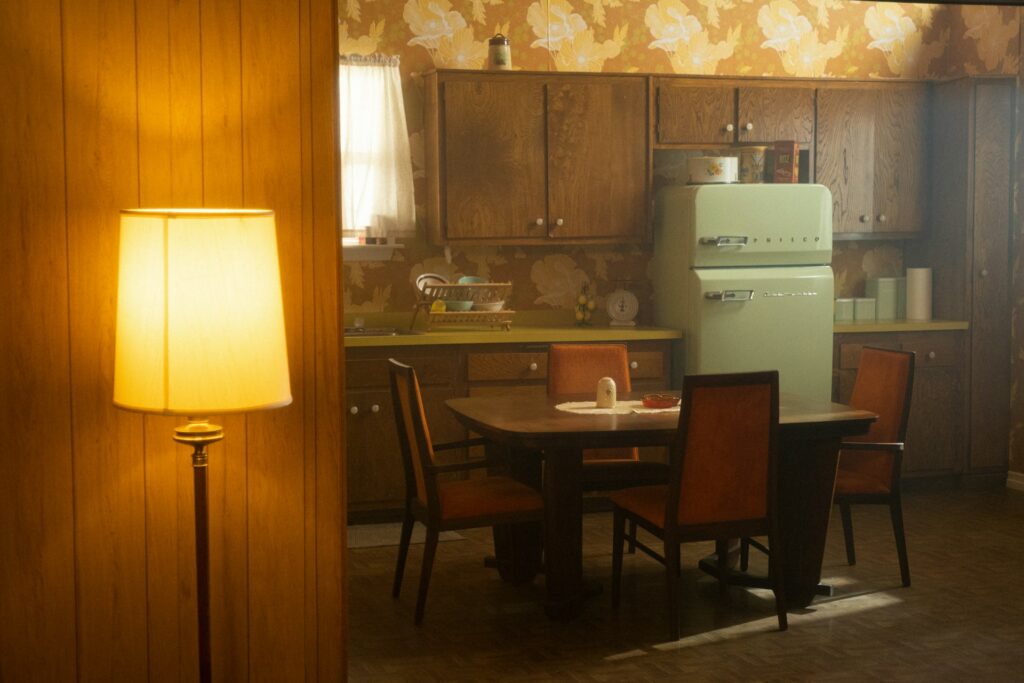
Although some households continued to employ house staff, the kitchen went from a wide-open area to a scaled-down room. Of course, appliances were much smaller back then to fit the U-shape setup.
The average kitchen size was under 100 square feet — sometimes down to 70 square feet, depending on the overall size of the house. Because homes had become much tighter then, cramped kitchens became the norm.
Average Kitchen Size in Today’s Homes
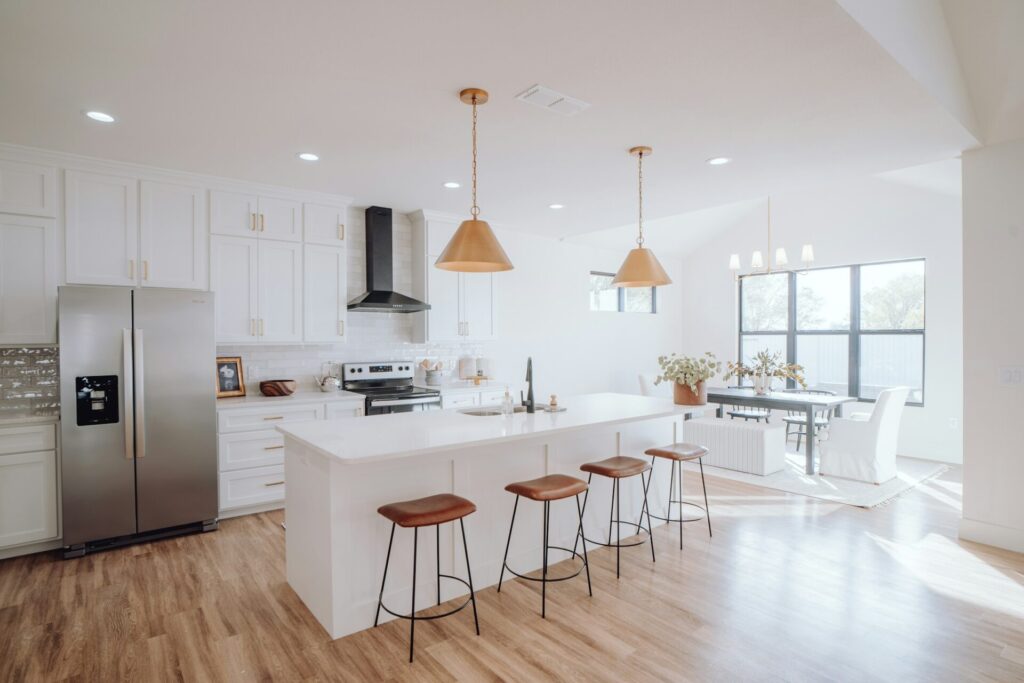
Today, the average kitchen is around 161 to 169 square feet, making up a nearly 13-foot by 13-foot space. This measurement is relative to the overall 1,500 and 4,000 square feet in most new and existing homes in the United States. Of course, the average kitchen size changes depending on whether your house is smaller or larger. Homes under 1,500 square feet usually have a kitchen of about 103 square feet. Meanwhile, you’ll likely find a 238-square-foot kitchen in a home over 4,000 square feet.
Often, layouts vary between U-shape, G-shape, L-shape, single-wall and galley. Many also include a peninsula or kitchen island. Homeowners who live in an older home might have remnants of the mid-century kitchen, which may be frustrating if you like to cook. As appliances have also become bulkier, the standard kitchen shrinks significantly.
People like countertop space, plenty of storage, special nooks and barstool seating, which could take some creativity to fit comfortably. Remember that a kitchen island should only take up 10% of a kitchen’s square footage — meaning a 150-square-foot kitchen should have an island of no more than 15 square feet. If you’re uncertain about the correct island size, put a table in the center of your kitchen and see whether it feels in the way.
Other design trends can make your kitchen feel larger — for example, a coat of white paint on dark cabinets reflects light to make a smaller kitchen feel much grander.
Massive Kitchens in Large Homes
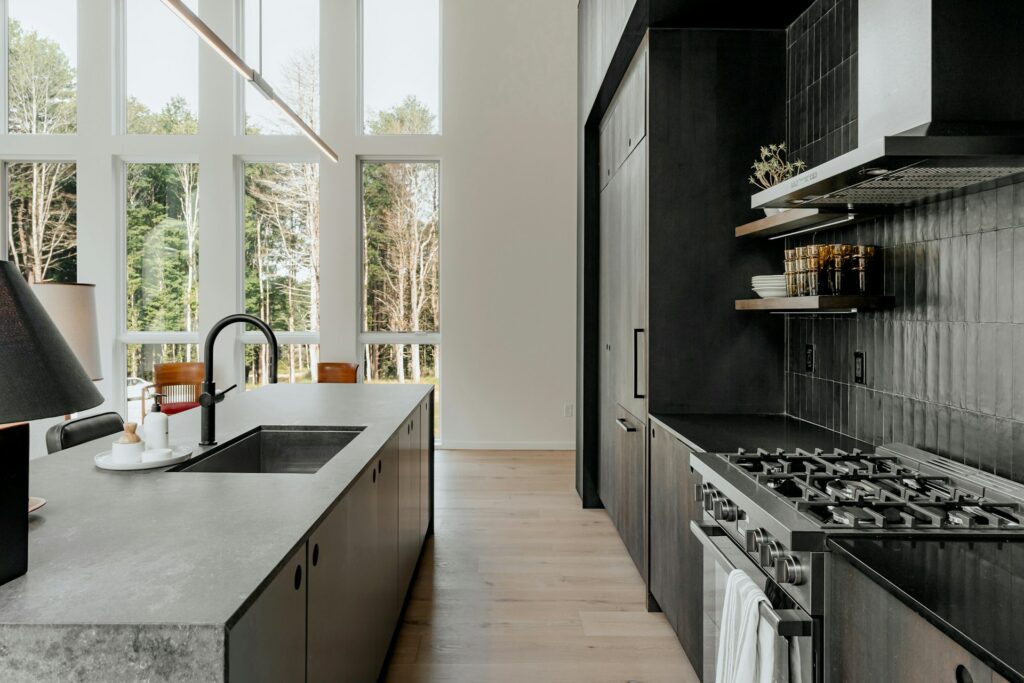
In June 2023, global superstar Rihanna listed her Beverly Hills Tudor-style mansion for $10.5 million — a whopping 5,100 square feet of living space with a single-wall kitchen and an island.
Elsewhere in Beverly Hills, Ben Affleck and Jennifer Lopez recently purchased a mammoth-sized 38,000-square-foot mansion — one can only imagine the size of their new kitchen.
Large kitchens are standard — and intricately embellished with the finest finishes and most upgraded technology — when you live in a big house. Many include a huge cooking area for social gatherings and family downtime. In fact, it isn’t uncommon to see significantly large kitchens as part of open-floor plans in homes.
Will the Average Kitchen Size Evolve Again?
After spending over a year locked in their houses during the pandemic, homeowners grew well-acquainted with their kitchens. Although restaurants reopened nationwide following lockdown restrictions, the time renewed a spark for cooking at home and eating together as a family.
Just a few short years ago, home design experts believed kitchen spaces would evolve to include dining and living areas simultaneously. For example, custom breakfast nooks would become the norm, providing a cozier, more intimate dining room.
The need for ample storage — cabinets, drawers, and pantry space — also caused many to wonder whether you could build functionality without additional square footage. Likewise, smart appliances were only getting bigger as they became more advanced. For this reason, more space seemed necessary.
Interestingly, Realtor.com’s New Construction Insights Report shows that homebuyers are actually in the market for smaller homes. According to the study, the median size of new construction in 2022 was 2,128 square feet. However, the square footage dipped to 1,965 in 2024. The smaller home sizes have led to greater affordability.
Yet, a recent Fixr.com survey also showed that over 60% of experts say kitchen islands are buyers’ top choice, with a preference for built-in storage for organization. The findings correlated with 83% saying storage was a top priority for kitchens in 2024. Likewise, 43% of design professionals said walk-in pantries were the second most desirable feature, with ample shelving available to reduce clutter. So, what does this mean for the average kitchen size?
Do you remember people stocking up on dry goods during the pandemic? It sparked an unprecedented return of the butler’s pantry — a popular upper-class staging and storage area during the 19th and 20th centuries. Additionally, smaller back kitchens — hidden in a small alcove off the central kitchen — are more commonplace in new construction.
Of course, kitchens of this scale demand a lot of room to work with. On the opposite end, as open-floor concepts drop in popularity, designers are showing love for closed-concept spaces again, and a smaller kitchen may suffice for some people.
It’s hard to determine what shifting preferences affect the average kitchen size. However, you can rest assured that the standard square footage will stay the same for now.
The Kitchen Triangle

One thing that will never change is the ideal kitchen layout, known as the “kitchen triangle.” The kitchen triangle considers the sink, refrigerator and stove — three primary workspaces. When placing these appliances and fixtures, professionals typically lay them out in a loose triangle for easy access and functionality.
The general rule of thumb is that the triangle’s sides should be no less than 4 feet or more than 9 feet, and the perimeter should be no less than 13 feet or over 26 feet. Naturally, you’ll want a continuous flow between each point, even with an island in the center of the space.
Only you can decide whether your cooking area is the right size and layout for your household. Fortunately, you can hire a contractor or designer to rework your kitchen setup so it’s comfortable for you and your household.
The Size of Your Kitchen Is Relative
The average kitchen size increases with the size of your home. As such, the standard measurements are strictly relative. There are always methods to make a smaller kitchen feel slightly bigger with lighter finishes.
You likely spend most of your time in the kitchen, so ensure it best reflects your style preferences. Regardless of size, your special decorative touch can transform the room into the kitchen of your dreams. As such, the standard measurements are strictly relative. There are always methods to make a smaller kitchen feel slightly bigger with lighter finishes.
Original Publish Date 7/3/2023 — Updated 1/9/2025
About The Author
Olivia Elsher is a Senior Writer and Editorial Manager at Renovated. She has over 5+ years of experience writing about property related topics such as: real estate, home improvement, renovation, and construction.