
We are reader-supported. When you buy through links on our site, we may earn an affiliate commission.
Some rooms feel calm the second you walk in. Others feel loud, even if nobody’s talking. Japanese researchers recently found that the reason often comes down to one measurable number, which is how much sound a room’s surfaces actually absorb, also known as room acoustics. Hit that number and a space starts to feel settled instead of scattered. Here’s what the research found and how to apply it, room by room.
Researchers at a university in Japan wanted to know why some rooms feel restful and others feel jarring, even at the same noise level. Their answer centered on the sound absorption coefficient, a simple measure of how much sound a surface absorbs versus reflects. The scale runs from zero, a bare wall that reflects nearly everything, to one, a surface so absorbent it swallows sound whole.
The team tested full-scale room models along with real bedrooms, living rooms and dining rooms in Japanese homes. Feelings of harshness eased once absorption climbed past a coefficient of 0.17 and further once it crossed 0.25. Living and dining rooms measured in the actual study mostly fell short of even that first threshold, meaning plenty of ordinary homes sit below the mark without anyone realizing it.

Hard surfaces are the biggest reason rooms miss that threshold. Glass, tile, drywall and bare hardwood all reflect the vast majority of sound that hits them, which is why an empty room with vaulted ceilings and large windows can feel so sharp. Every clap, footstep and conversation bounces around instead of settling.
This is more than a comfort problem inside your own four walls. Ongoing noise exposure links to real health consequences, including disrupted sleep and elevated stress. In offices, similar acoustic conditions also carry a real productivity cost. A 2023 review in Management Review Quarterly studied offices built almost entirely from hard, reflective surfaces and found that productivity losses routinely outweigh the savings companies expect from packing more desks into open floor plans.
Homes with big open floor plans run into the same physics. A bright, airy layout looks great in photos, but when every surface reflects sound, conversations from the kitchen carry straight into a home office on the other side of the room.
Closing the gap between a loud room and a peaceful one usually comes down to four areas, and all four are manageable without a full renovation.
Bare floors are one of the easiest places to start. A thick rug or wall-to-wall carpet with padding underneath does far more to absorb than most people expect. Wool and jute both perform especially well because their fibers trap sound rather than reflect it.
Rugs and carpeting trap roughly 35% of sound waves that hit them, which adds up fast in a room with hard flooring throughout. Renters without the option to install carpet can layer two or three area rugs instead and get most of the same benefit.
Curtains can absorb more sound than most people assume, but only if they’re hung correctly. A flat panel barely outperforms the wall behind it. Hanging drapes gathered to roughly double the width of the window, with a few inches of air gap behind the fabric, noticeably increases the amount of sound the curtain absorbs.
Heavier fabrics and double layers push that number up to eleven. For a bedroom that faces a busy street, swapping thin curtains for a heavier, fully gathered pair often softens both outside traffic noise and indoor echo in the same afternoon.
Bookshelves packed with books, fabric wall hangings and upholstered headboards all chip away at hard wall surfaces without looking like a recording studio. For rooms that need more, fabric-wrapped acoustic panels mounted in corners or behind a home office desk handle the job without dominating the room’s look.
Corners are more important than most people think, since bare corners bounce sound back and forth and create the fluttering echo that makes empty rooms sound hollow.
Furniture placement finishes the job. Upholstered sofas, cushions and even stacks of throw blankets all add soft surface area, and spreading them evenly around the room works better than clustering everything in one corner. A room with soft seating on one wall and bare floor and glass on the rest will still sound uneven, even if the total amount of soft material seems like plenty.
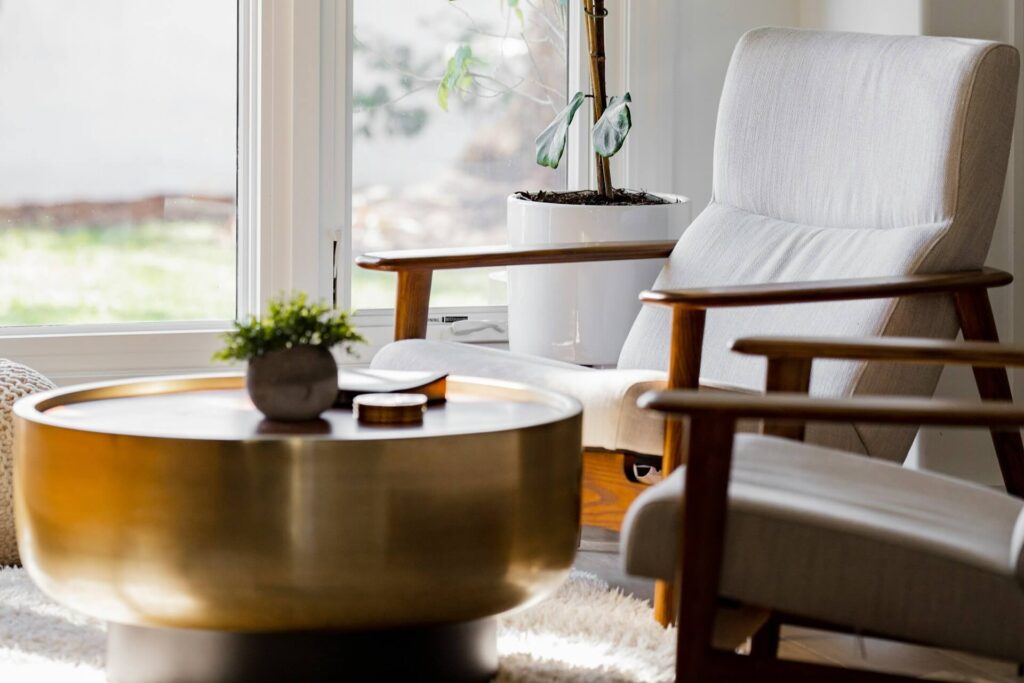
Picture a one-bedroom apartment with polished concrete floors and floor-to-ceiling windows, the kind of finish that photographs beautifully and sounds terrible. Adding a wool area rug under the seating area, swapping thin curtains for full-length gathered drapes and moving a bookshelf against the longest bare wall pushed that room from a sharp, tinny sound to something noticeably calmer without changing the layout or spending on construction.
In a bedroom specifically, that shift also supports better sleep quality tied to lower nighttime noise, one of the health benefits researchers have linked to quieter rooms.
A home office carved out of a corner of an open-concept living room tells a similar story. Hard floors and a nearby kitchen meant every phone call picked up background echo. A jute rug under the desk, a fabric panel behind the monitor and a filled bookshelf along the shared wall cut that echo down within a single weekend, turning a corner that used to sound like a hallway into a space that sounds like an actual room.
A few questions come up often once people start paying attention to how their rooms sound.
Clap sharply in the middle of the room and listen for a ringing echo. A quick bounce that fades instantly usually means the room is doing fine, while a longer ring or hollow feeling points to too many hard surfaces and not enough soft material to absorb the noise.
Plants offer a small absorption benefit, mostly from leaves breaking up sound waves, but the effect is minor compared to rugs, curtains or panels. They work best as a finishing touch alongside the materials above rather than a stand-alone fix.
Not necessarily. A coefficient pushed too high can make a room feel muffled or dead, which is why recording studios balance heavy absorption with some reflective surfaces. For a home, spanning comfortably above 0.25 is enough to feel calm without losing the sound’s natural liveliness.
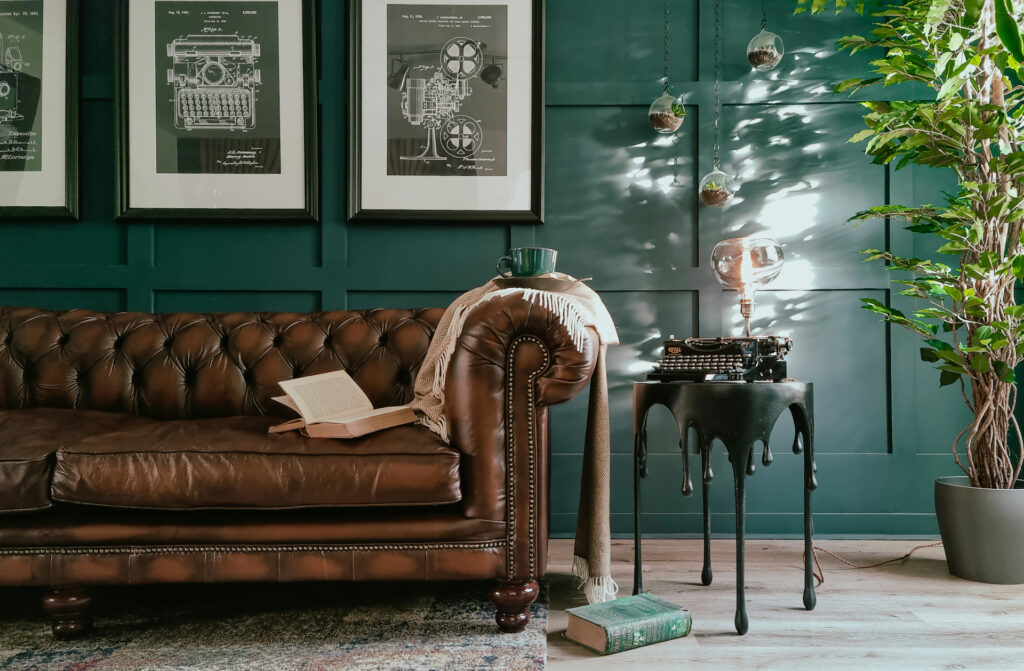
A peaceful room comes from a handful of deliberate choices, not a big renovation budget. Rugs, curtains hung the right way, a few panels and thoughtful furniture placement can carry most rooms past that quiet threshold. Start with the space you use most, make one change and listen for the difference before moving to the next room.