
We are reader-supported. When you buy through links on our site, we may earn an affiliate commission.
Gardening is a fun activity that can reduce stress and improve muscle strength. It provides you with healthy meals as well. Although, if you live in an apartment or smaller space, you have to be more creative. This can include things like figuring out how to hang plants from the ceiling. Here are 10 tips for gardening in small spaces indoors.
Think about how you can use the space most effectively. It can make the process more manageable when you start. Determine which area of your house receives the most direct sunlight and has wider window sills. Then figure out which plants you want to grow, such as tomatoes. Knowing this information will help you plan what supplies you need. Also, research your area’s climate to understand which plants grow best.
Instead of buying planters, shop around your house first, saving you money and time. Plus, then you have fewer items crowding a smaller space. You can grow flowers from a wine bottle, mason jars, or pallets. You can also find recycled containers at thrift shops or garage sales. Consider shopping at your local potter as well. Repurposing items is good for the environment along with your budget.
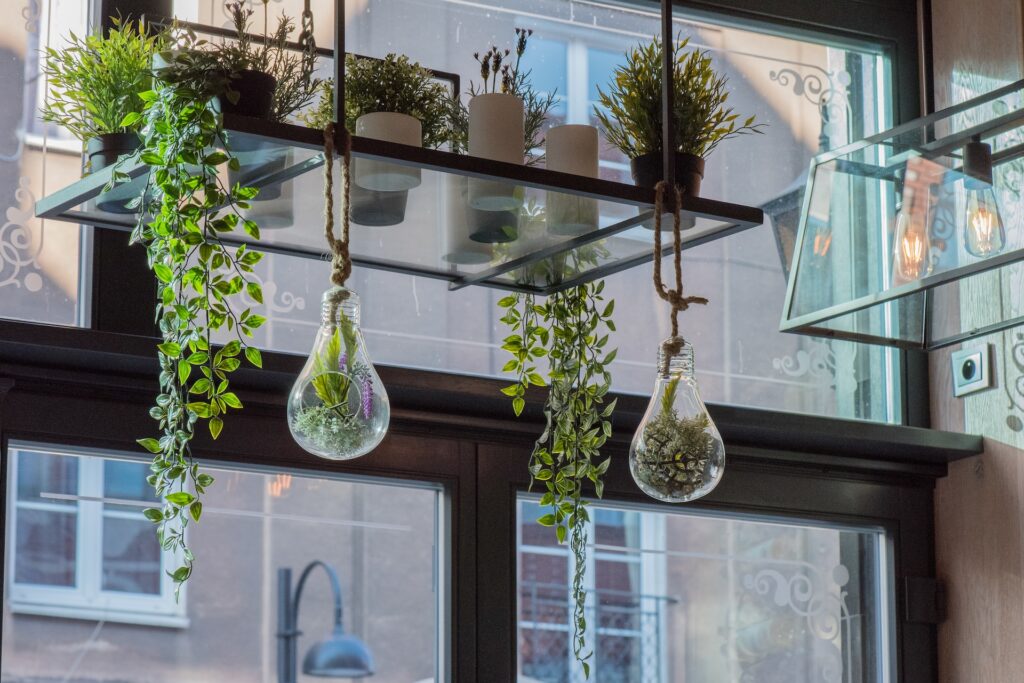
Even if you have less counter space, you can still use the ceiling. Buy hanging containers, which may need a little more water. Another idea is planting on top of bookshelves or dressers. You want to choose a place that gets enough sunlight. If you want to know how to hang plants from the ceiling, look for planters made for vertical growth, like the Polanter. You can even mount some vertical planters on the wall.
When gardening indoors, you need to come up with creative solutions. One thing you can try is stacking pots. When considering how to hang plants from the ceiling, build a hanging herb garden with soda bottles. You can even use old dresser drawers or hang plants on the wall. Check your closet for old shoe boxes as well. To maximize the space, grow some plants together, such as tomatoes and basil. Look for some companion plants that aid in flavor and growth.
Thinking tall and skinny is one of the best tips for indoor gardening in small spaces. They take up more vertical space, allowing you to add more vegetation. Use thin containers that can go on the floor or tabletops. Citrus trees are good options since you can use smaller pots and they have slender trunks. They can also help to brighten up your home.
Consider adding some of these other plants:
Thinking small and compact is another one of the effective tips for indoor gardening in small spaces. Herbs are a good option because they grow in tight bunches and are trimmed regularly. Suppose you’re looking for a low-maintenance plant. Succulents are another excellent choice since they grow slowly.
Here are some excellent smaller plants to add:
Keep in mind expanding your indoor garden outdoors can give you more space. Attach planters to a windowsill or balcony railings. When attaching the containers, you have a few options. For example, you can screw them in place or use over- the-rail brackets.
Suppose you’re looking for an easier method. Straddle-style planter boxes don’t require screws or chains. You can also use exterior walls to hang old rain gutters with shallow rooting plants. Another option is using indoor staircase railings.
Plant stands can make it easy to organize all your vegetation. Place flowers that need the most light closer to the window. Plus, these stands make it easier to vacuum spilled dirt and wipe up the water. You can even buy multi-level ones to save floor space and create more dimension.
Plant stands are functional and create a beautiful focal point for any room. To make the rack more visually appealing, you can add lights or framed photos.
Look for these carts at a thrift shop or antique store. They allow you to save space and create a rustic vibe. You can plant one type of vegetation or add in multiple pots. Plus, then you can easily transport the cart to any room.
If you don’t have a green thumb, you can still use them to hold faux plants. Suppose you have a farm-house style home. A vegetable garden planted in a vintage wheelbarrow can enhance the theme.
Do you have an empty closet collecting dust? If you already have enough storage space, consider filling it with plants. Use the shelves to store small potted flowers. Keep in mind you’ll need a proper ventilation system and light source. Add in a carbon filter and fan inside the closet. You’ll also need to include artificial light, such as adjustable light hangers.
We hope you enjoyed these tips for gardening in small spaces. No matter where you end up living, having a smaller home doesn’t stop you from creating an indoor garden. You just need to get more creative. So, that means knowing how to hang plants from the ceiling, finding the right plants, and learning about soil additives. Follow these tips for indoor gardening in small spaces.