We are reader-supported. When you buy through links on our site, we may earn an affiliate commission.
Wallpaper removal can feel like a never-ending battle. Peeling, scraping, steaming and still staring at stubborn strips that refuse to budge. Whether you’re refreshing a single room or prepping an entire property for renovation, knowing how to remove wallpaper properly can save you hours of frustration, mess and repair costs.
Why Wallpaper Is So Hard to Remove
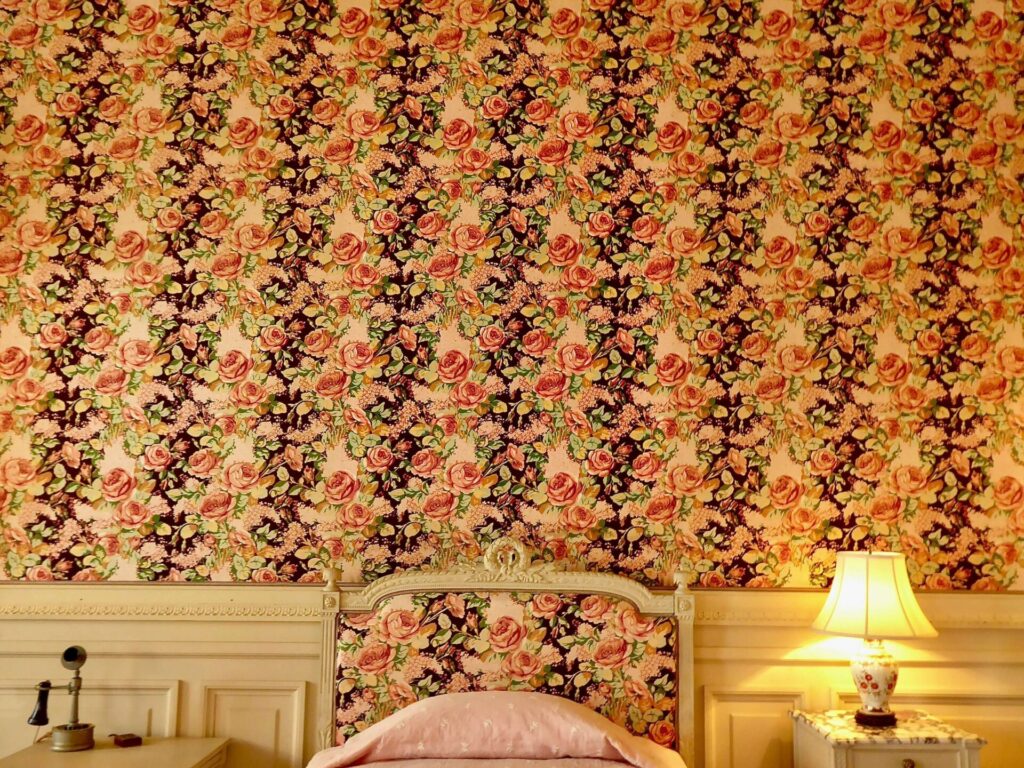
If you’ve ever tried peeling off wallpaper only to end up with torn strips and sticky residue, you’re not alone. Wallpaper becomes stubborn due to a mix of material type, adhesive strength, installation quality and age.
Older homes often have wallpaper installed using heavy-duty adhesives designed to last decades. Over time, these glues harden, bonding tightly to drywall or plaster. Vinyl and fabric-backed wallpapers are especially challenging because their moisture-resistant surfaces prevent water or removal solutions from penetrating easily.
Poor installation techniques can also make removal harder. When walls aren’t properly primed before wallpaper installation, the adhesive can bond directly to the drywall, increasing the risk of surface damage during removal. Multiple wallpaper layers, common in older renovations, compound the issue. This is why many people in temporary living situations, such as college dorms, now opt for removable wallpaper that can be easily changed without damaging walls.
Humidity and temperature play a role, too. Dry environments allow adhesives to cure harder, while fluctuating moisture levels cause wallpaper to shrink and expand, tightening its grip. Understanding these factors helps you choose the best strategy for how to remove old wallpaper without damaging your walls.
Tools and Supplies You’ll Need for Easy Wallpaper Removal
Having the right tools on hand can dramatically reduce both time and frustration. While it’s tempting to grab a scraper and start peeling, proper penetration ensures cleaner results and less wall damage.
Essential Tools:
- Wallpaper scoring tool
- Pump sprayer or spray bottle
- Plastic scraper or putty knife
- Wallpaper steamer
- Drop cloths or plastic sheeting
- Sponges and microfiber cloths
- Rubber gloves
DIY removers typically cost under $5, while commercial products range from $10 to $25 per bottle. If you’re tackling multiple rooms, a DIY solution can significantly reduce project costs without sacrificing performance.
Step-by-Step: How to Remove Wallpaper With Minimal Effort
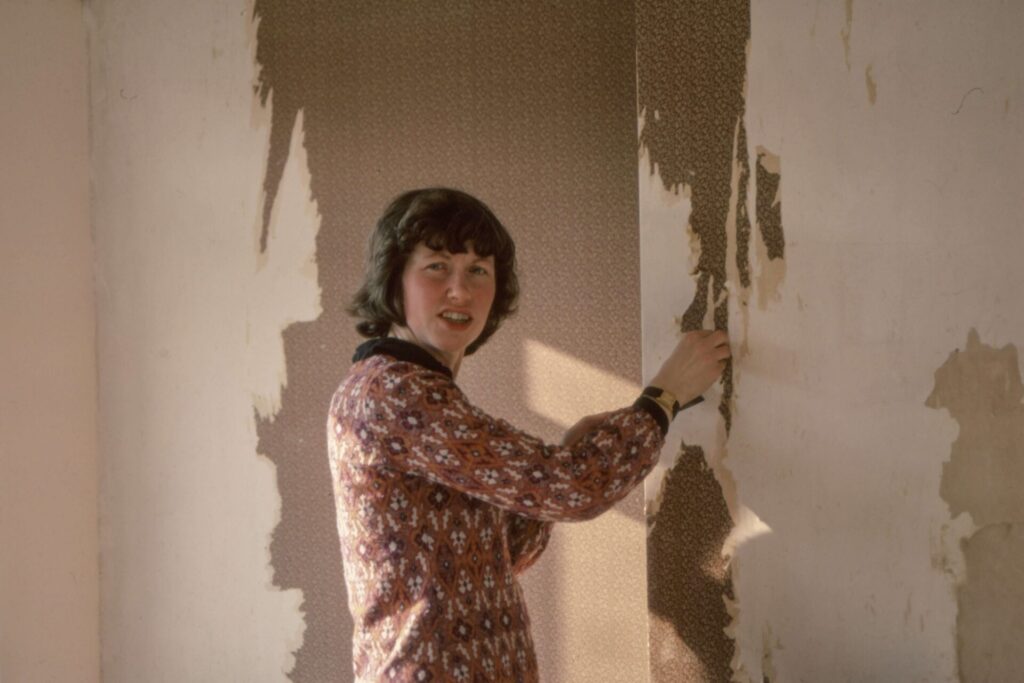
Follow this proven step-by-step method to remove wallpaper efficiently while protecting your walls.
Step 1: Prepare the Room
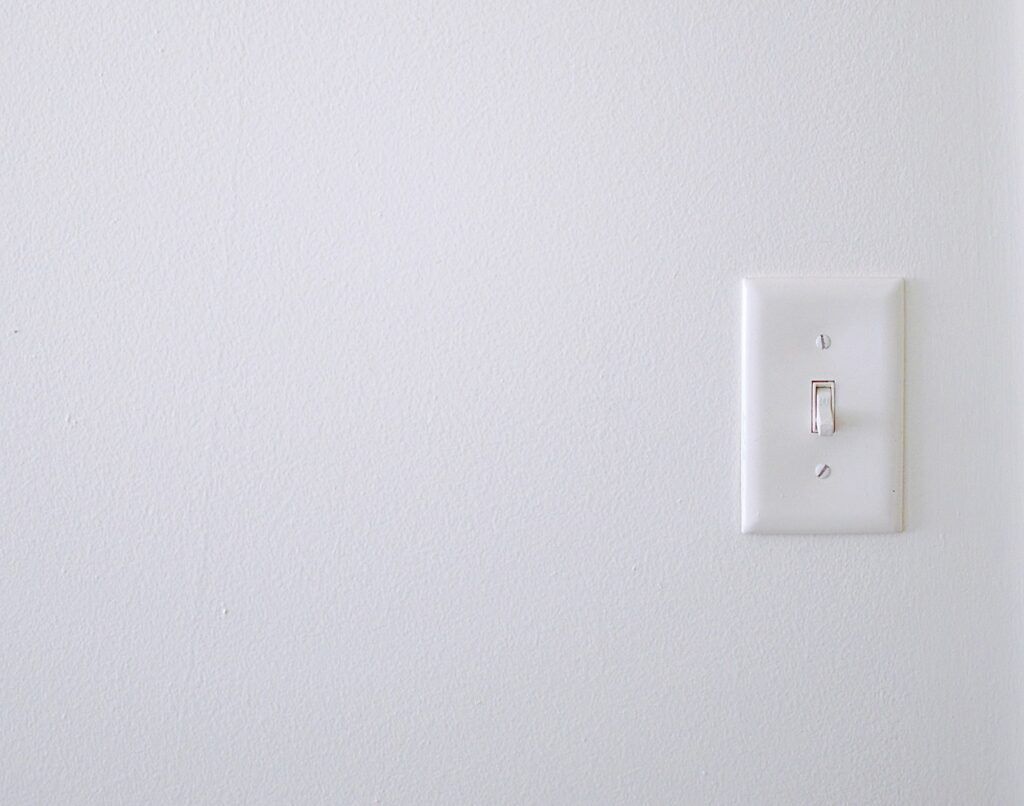
Turn off power to the area, remove outlet covers and cover floors and furniture with drop cloths. Proper prep prevents electrical hazards and minimizes cleanup.
Step 2: Score the Wallpaper
Use a wallpaper scoring tool to gently perforate the surface. This allows moisture and removal solution to penetrate the wallpaper and reach the adhesive underneath, making removal easier. Avoid pressing too hard, as deep scoring can damage drywall.
Step 3: Apply Your Removal Solution
Spray your chosen solution generously across the wall, focusing on seams and corners. Let it soak for 10–15 minutes so it can break down the adhesive bonds.
Step 4: Steam Stubborn Areas
For wallpaper that refuses to loosen, a steamer delivers continuous heat and moisture, quickly softening even the toughest glue. Hold the steamer plate against each section for about 10 seconds.
Step 5: Scrape Gently
Starting at a corner or seam, use a plastic scraper to peel away wallpaper in slow, even strokes. Work top to bottom to prevent tearing and reduce residue.
Step 6: Remove Remaining Glue
Once the wallpaper is removed, sponge the wall with warm water and mild soap to remove any remaining adhesive. For stubborn residue, repeat the solution soak. Proper glue removal ensures smooth walls ready for paint or new wallpaper.
This systematic approach minimizes damage and makes learning how to remove wallpaper glue far less stressful.
Best Methods Based on Wallpaper Type
Not all wallpaper is created equal. Matching your removal technique to the wallpaper type ensures faster results and protects your walls.
How to Remove Vinyl Wallpaper
Vinyl wallpaper resists moisture, so scoring is essential. Once perforated, apply a removal solution and follow up with steaming for best results.
How to Remove Fabric-Backed Wallpaper
These wallpapers absorb moisture easily, making them more cooperative. A hot-water solution typically loosens adhesive within minutes.
How to Remove Wallpaper Border
Borders are often attached with extra-strong glue. Use a scoring tool, then soak thoroughly before scraping. Steamers are especially helpful for removing decorative trim cleanly.
How to Remove Painted-Over Wallpaper
Paint creates a sealed barrier. Score aggressively, apply a hot solution and steam slowly to penetrate the layers. This is the most time-intensive type but yields clean results with patience.
Pro Tips That Save Time, Money and Your Sanity
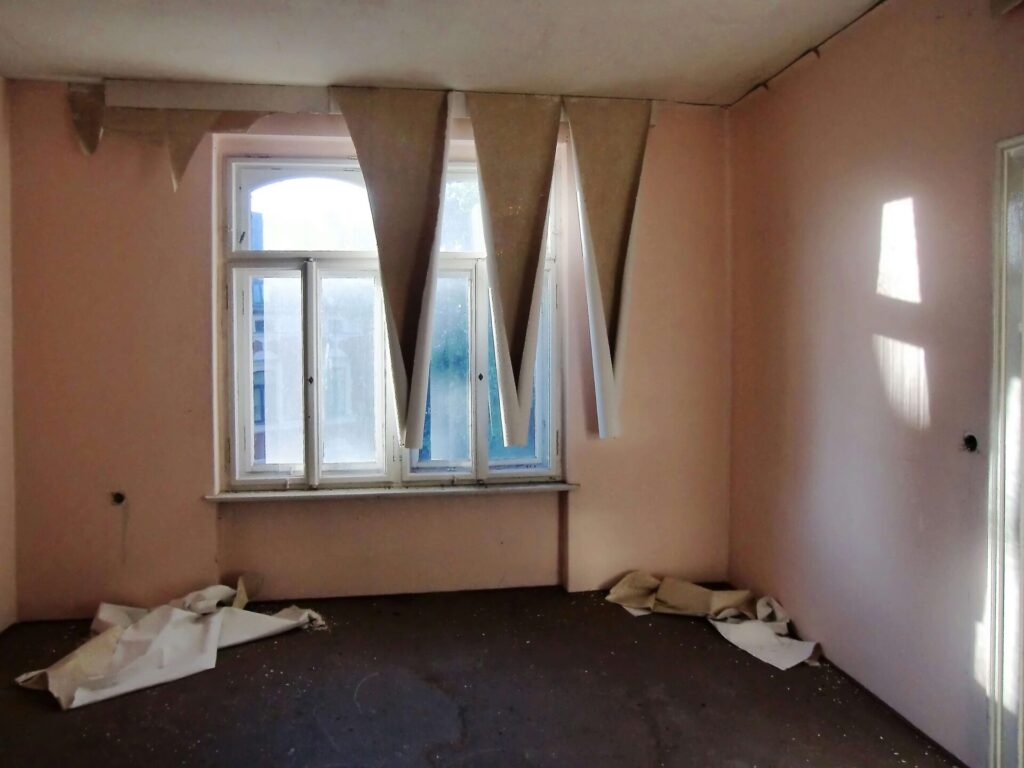
When it comes to wallpaper removal, a few professional tricks can dramatically speed up the process while protecting your walls.
First, always use hot water, not warm. Heat helps soften adhesive faster, reducing soaking time and scraping effort. If you’re working on multiple rooms, a pump sprayer can apply the solution more evenly and efficiently than a standard spray bottle.
Second, work in small sections. Saturating an entire wall at once can cause moisture to evaporate before it has time to penetrate, especially in dry climates. Focus on three- to four-foot sections for best results.
For especially stubborn wallpaper, steaming beats chemicals. Steam penetrates deeper, making it ideal for vinyl, foil and painted-over wallpaper. Professionals often rely on steamers because they minimize wall damage while speeding up the removal process.
Finally, resist the urge to force stubborn pieces. Aggressive scraping can gouge drywall, leading to costly patchwork. Patience upfront saves time and money later.
Common Wallpaper Removal Mistakes And How to Avoid Them
Even experienced DIYers make mistakes when tackling wallpaper removal. Fortunately, most are easy to avoid.
One of the biggest errors is skipping the scoring step. Without proper perforation, moisture cannot reach the adhesive, leading to endless scraping with little progress.
Another common issue is over-scraping, which damages drywall and creates additional repair work. Plastic scrapers are safer than metal blades, especially on older or thinner walls.
Failing to remove all wallpaper glue is another costly oversight. Residual adhesive prevents paint from adhering properly and can cause bubbling or peeling. Always wash walls thoroughly and allow them to dry completely before repainting or re-papering.
Finally, many people underestimate the time required. Wallpaper removal is labor-intensive, so building in buffer time prevents rushed mistakes and uneven results.
When to Call a Professional Instead
While many homeowners can successfully remove wallpaper themselves, some situations call for professional assistance.
If your home was built before the 1980s, there’s a chance that older layers contain lead-based paint, which requires specialized handling. Large commercial spaces, multi-story properties and heavily layered wallpaper also benefit from professional-grade equipment and expertise.
Additionally, if your walls are plaster instead of drywall, aggressive scraping can cause cracking and crumbling. Contractors know how to remove wallpaper while preserving delicate surfaces.
In many cases, hiring a professional can reduce labor time by more than half, making it a smart investment for time-sensitive renovation projects.
Unstick the Stress
Wallpaper removal doesn’t have to be exhausting, messy or overwhelming. With the right tools, techniques and a little patience, you can tackle even the most stubborn wallpaper with confidence. Whether you’re refreshing a single accent wall or preparing an entire home for renovation, these proven strategies make the process faster, easier and far more satisfying. Because when the wallpaper finally comes down, your design possibilities truly open up.
About The Author
Rose is the managing editor of Renovated and a dedicated freelance writer with over six years of experience in the home and garden industry. Her passion for landscaping and sustainable practices is deeply rooted in her upbringing — growing up in a family of contractors, she was exposed to the world of construction and design from a young age. This hands-on experience fostered her love for nature and gardening, giving her a green thumb and a keen eye for creating beautiful outdoor spaces.
Throughout her career, Rose has honed her expertise in researching and writing about sustainable construction practices, focusing on innovative technologies that enhance the built environment while minimizing environmental impact. She is particularly interested in green roofing, water-efficient landscaping, and integrating native plants in design, all reflecting her commitment to sustainability. Rose's work has appeared in various publications, where she shares valuable insights and practical tips for seasoned professionals and novice DIY-ers.
In addition to her writing, Rose enjoys collaborating with landscape architects and contractors on projects that emphasize eco-friendly design and sustainable materials. She believes that every garden has the potential to be a vibrant ecosystem and works to inspire others to create spaces that are not only beautiful but also environmentally responsible.