Termites vs. Ants: How to Recognize and Manage Both Kinds of Home Infestations

We are reader-supported. When you buy through links on our site, we may earn an affiliate commission.
Finding unexpected wood damage and winged insects in your home can be stressful. If you suspect pests have moved into your walls, determine whether you have a termite or ant infestation. One is a nuisance, while the other can threaten your home’s structural integrity. Learning how to differentiate them is a critical first step, as it’ll help you determine the best ways to deter or get rid of them.
Visual Guide to Identifying Termites and Ants

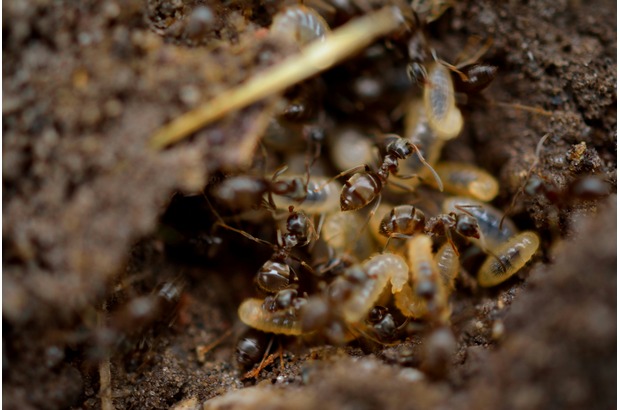
Swarming termites and flying ants look similar from a distance. Their differences become more apparent with a closer examination. Refer to this comparison table to identify the type of bugs that have invaded your home.
| Termites | Ants | |
| Body shape | Termites have a more uniform body shape. Their heads and bodies look fused together with no visible “cinched” waist. | Ants have an “hourglass” figure, with three distinct body segments and a narrow constricted waist between the thorax and abdomen. |
| Antennae | Termites have straight antennae that look like tiny strings of connected beads. | Ants have antennae that are “bent” or “elbowed.” They look like they have a sharp joint or corner partway up. |
| Wings | Termites have two sets of wings that are equal in size. Their fragile wings can break off easily and are often found in small piles near baseboards or on windowsills after a swarm. | Swarming ants have two sets of wings. The front pair is longer than the back pair. |
Flying Ants vs. Termites: How to Identify Them
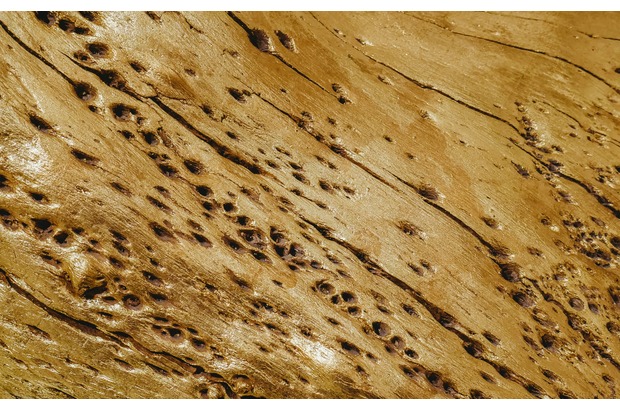
If you can’t get a close look at your unwanted houseguests, the evidence they leave behind is just as telling. Investigate the “crime scenes” to determine whether you have a termite or ant problem.
Signs of a Carpenter Ant Infestation
Americans spend millions of dollars annually to manage carpenter ant infestations. These insects nest in trees, stumps, logs and often enter homes through cracks, vents or tree branches that touch the house. Their presence can be a sign of an underlying moisture problem. Common signs they’re in your home include:
- Frass: These coarse, fibrous wood shavings are often pushed out of small, clean holes in the wood. They may contain parts of dead insects.
- Smooth galleries: Carpenter ants don’t eat wood, but they hollow it out to create galleries for their nests. These have smooth tunnels that look sanded clean inside.
- Moist locations: These ants prefer moisture-softened wood. Prime locations include window and door frames, deck posts and the wood around tubs and sinks.
- Ant trails: Carpenter ants may create visible trails between their nest and food sources. Trails are common along walls, baseboards and areas leading to cracks and openings.
Signs of a Termite Infestation
Termites cause billions of dollars of damage annually. They can weaken the structural integrity of properties and increase health risks, as their tunnels can promote fungal growth and their droppings can trigger respiratory issues. These bugs might be eating your home if you spot these red flags:
- Droppings: Drywood termites push out small, hard pellets from small holes in the wood. These can accumulate in piles that look like dark sawdust.
- Mud tubes: Termites create pencil-sized tunnels made of soil and wood pulp. They use these to travel from their underground colony to your home’s woodwork.
- Wood damage: Termite home damage on wood often includes layers of dried mud and soil within its tunnels. The wood may look fine on the outside, but tapping it creates a hollow or papery sound.
- Structural issues: Termites can leave sagging floors or ceilings, crumbling or blistering wood, warped or difficult-to-open doors and windows, loose floor tiles and other problems in their wake.
Termites vs. Ants: When to Call Professional Pest Control
Once you know what’s destroying your home, take steps to evict your unwanted tenants immediately. How to get rid of flying ants vs. termites depends on the severity of the infestation. Getting expert assistance is non-negotiable in the following scenarios:
Termite Infestations
Professional management is always a must when you have a termite problem. Colonies often contain millions of termites, with deep underground nests that would require specialized, regulated products and equipment to eliminate. DIY methods are rarely effective.
Large Ant Infestations
If you’re dealing with widespread ant activity or if you can’t locate the primary nest, leaving the job to experts is your best option. They have the tools and knowledge to find hidden nests and ensure complete colony collapse.
Small ant problems that clearly center around a satellite nest, such as a single, damp window frame, are more manageable for homeowners. The key is to fix the underlying moisture problem and replace the damaged, infested wood. Simply spraying visible ants with insecticides is a temporary solution.
Proactive Defense Tips for a Pest-Free Home
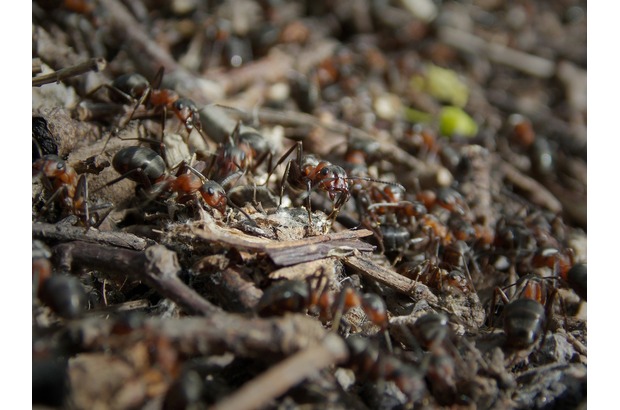
According to a Forbes survey, 46% of respondents reported dealing with structural damage due to a pest infestation. Avoid becoming part of that figure by making your home uninviting to ants and termites with these prevention tips:
- Control moisture: Both ants and termites are attracted to moisture, so limit it around your home. Conduct semi-annual checks for slow leaks in problem areas, such as under sinks, behind toilets and around water hookups for washing machines, dishwashers and refrigerators. Ensure gutters are moving away from your home’s foundation.
- Keep your yard clean and well-maintained: Your home’s surroundings can either harbor pests or deter them. Keep it clear of yard debris, such as leaves and yard clippings, to limit their hiding spots. Also, remove decaying matter, such as old tree stumps and rotting logs. Trim tree branches and shrubs so that they’re not touching your house and acting as “bridges” for pests to climb indoors.
- Reduce soil-to-wood contact. Subterranean termites live in the soil and eat wood, so any wood directly touching the ground can be their highway to enter your home. Walk around your home’s perimeter and inspect your siding, and ensure there’s a gap between its bottom and the ground. Mount deck support posts on concrete footings instead of burying them in the soil.
Winning the War Against Pest Infestations
The earlier you spot the signs of a pest problem, the easier it’ll be to manage them, so keep an eye out for them. If you spot red flags, call a professional for a more thorough inspection. The fee is a small price to pay compared to the potential costs of dealing with a full-blown termite or ant infestation. Once the dust settles, implement preventive maintenance to keep your home pest-free.
About The Author
Rose is the managing editor of Renovated and a dedicated freelance writer with over six years of experience in the home and garden industry. Her passion for landscaping and sustainable practices is deeply rooted in her upbringing — growing up in a family of contractors, she was exposed to the world of construction and design from a young age. This hands-on experience fostered her love for nature and gardening, giving her a green thumb and a keen eye for creating beautiful outdoor spaces.
Throughout her career, Rose has honed her expertise in researching and writing about sustainable construction practices, focusing on innovative technologies that enhance the built environment while minimizing environmental impact. She is particularly interested in green roofing, water-efficient landscaping, and integrating native plants in design, all reflecting her commitment to sustainability. Rose's work has appeared in various publications, where she shares valuable insights and practical tips for seasoned professionals and novice DIY-ers.
In addition to her writing, Rose enjoys collaborating with landscape architects and contractors on projects that emphasize eco-friendly design and sustainable materials. She believes that every garden has the potential to be a vibrant ecosystem and works to inspire others to create spaces that are not only beautiful but also environmentally responsible.