

We are reader-supported. When you buy through links on our site, we may earn an affiliate commission.
There’s something about eating outdoors that makes an ordinary meal feel like an occasion. But enjoying alfresco dining regularly doesn’t happen by accident. I redesigned my backyard around the way we actually wanted to use it, creating a comfortable, practical outdoor dining space that makes eating outside feel easier than eating indoors.
The biggest mistake when designing an outdoor living area is starting with individual features rather than everyday habits. A beautiful patio isn’t particularly useful if it’s too far from the kitchen, gets unbearably hot in the afternoon or has nowhere comfortable to sit.
Before choosing furniture, paving, lighting or landscaping, think about what you want to do outside. Do you want to eat breakfast in the morning sun? Host long dinners with friends? Have casual weeknight meals with the family? Grill while everyone sits nearby?
For us, the priority was convenient outdoor dinners that would become part of our normal routine. That meant designing the backyard around dining first and adding other features around it.
If an outdoor dining space feels temporary, you’re less likely to use it regularly. The goal is to make it feel like an extension of the home rather than a table and a few chairs placed on a patio.
Start with a properly defined dining zone. Zoning helps create a defined area that reflects how the space should be used. A paved or decked surface helps establish the area, while a large outdoor rug can make it feel more finished and visually connected. The dining table should also be large enough for everyday meals without being so oversized that it dominates the backyard.
Comfort matters just as much. Choose outdoor chairs that provide proper back support and are comfortable enough for lingering after dinner. If you regularly host guests, consider whether you can add extra seating without making the space feel crowded.
Convenience is one of the biggest reasons we use our dining space so often. If carrying plates, drinks, serving dishes and utensils outside feels like a chore, even the best-designed patio will probably sit empty.
Positioning the dining area relatively close to the kitchen makes a noticeable difference. It reduces the distance you have to carry everything and makes it much easier to move between indoor and outdoor spaces while cooking.
If you’re planning a more extensive renovation, consider adding an outdoor kitchen, grill, beverage station or small outdoor refrigerator. You don’t necessarily need all of these features. Even a well-positioned grill and a surface for placing food can make outdoor meals considerably more practical.
A dining area that only works in perfect weather isn’t really an outdoor living space. Sun, wind, unexpected showers and temperature changes can quickly turn a pleasant dinner into an uncomfortable one.
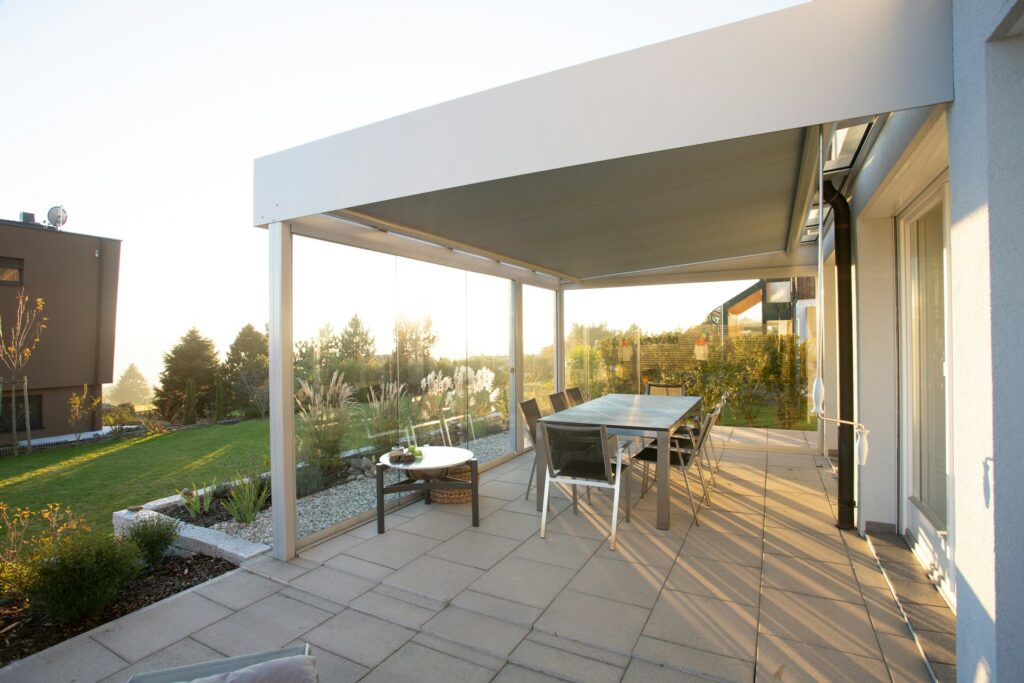
Shade should be part of the initial design rather than an afterthought. Pergola, covered patio, retractable awning, shade sail or strategically planted tree can help protect the dining area from intense sunlight.
It’s also worth thinking about the direction of the sun throughout the day. A space that looks wonderfully sunny on a design plan might become unbearably hot during dinner.
Weather protection doesn’t have to mean enclosing the entire area. Sometimes a combination of overhead shade, screening and appropriate furniture is enough to make the space comfortable for much longer.
Good outdoor lighting changes how often you can use the backyard. Without it, dinner ends when the sun goes down. With it, the space can remain inviting well into the evening.
Layered lighting works particularly well. Pendant-style fixtures or a statement light can provide illumination over the dining table, while wall lights, path lighting or subtle landscape lights can add softer ambient light around the rest of the yard. String lights are perfect for creating a cozy and romantic atmosphere, without the glare.
Avoid making every light excessively bright. The best outdoor dining spaces usually combine practical illumination with warmer, softer sources that create atmosphere.
Make sure switches or controls are easy to access. If turning on the lights requires walking across the yard to find a hidden switch, you’re adding unnecessary friction to something you want to use every evening.
Use Landscaping to Create Privacy and Atmosphere
Privacy can make an outdoor dining area feel dramatically more comfortable. Nobody wants to feel as though they’re sitting on display every time they eat dinner.
Plants can provide screening while providing natural beauty without making the space feel enclosed. Consider using:
Think about what you see while sitting down. Instead of filling empty corners with plants, use landscaping to create something worth looking at.

Outdoor furniture and finishes have to withstand considerably more abuse than many indoor pieces. Sun exposure, rain, humidity, dirt, spills and temperature changes all take their toll.
That doesn’t mean everything needs to be industrial or utilitarian. It means choosing materials based on how much maintenance you’re realistically willing to do.
Look for outdoor fabrics that resist moisture and fading, durable furniture frames and surfaces that can be cleaned without extensive effort. If you have young children or frequently entertain, practicality becomes even more important.
The same principle applies to the floor. Choose a surface that provides good traction, is easy to clean and complements the surrounding architecture. A gorgeous material that becomes slippery when wet or requires constant maintenance may quickly become frustrating.
Eating outside isn’t only about the meal. Some of our best evenings happen after dinner, when everyone stays outside talking instead of immediately clearing the table and heading indoors.
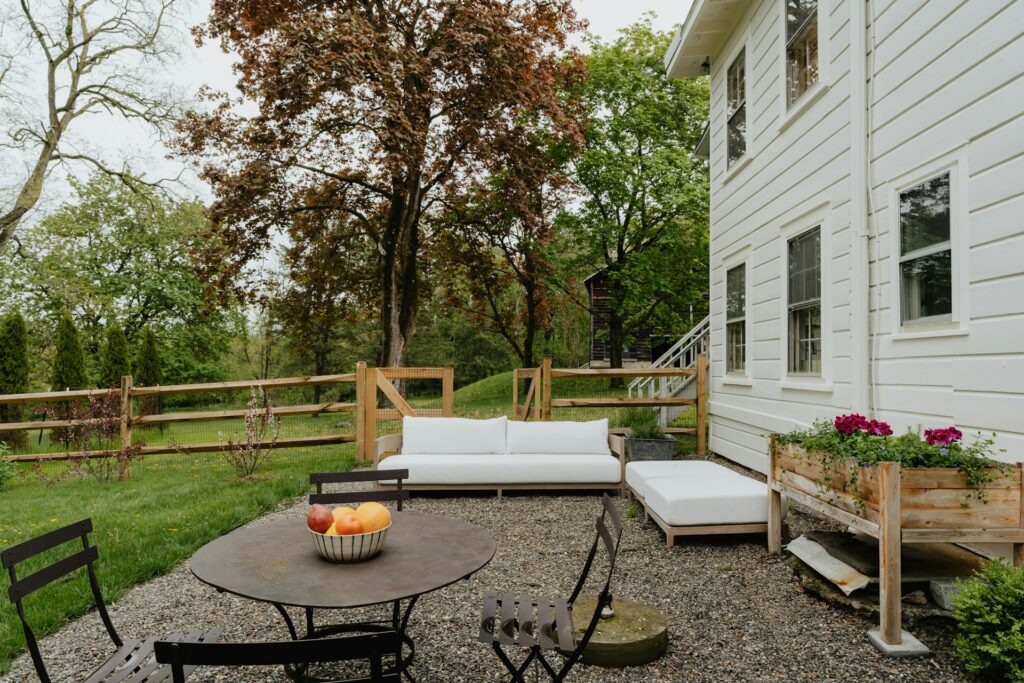
That’s why it helps to design the backyard as a complete living area rather than a dedicated dining spot. Add a comfortable lounge area nearby, perhaps with an outdoor sofa, armchairs or a few moveable seats.
Outdoor cushions, throws and occasional side tables can make the space feel much more inviting. If the temperatures drop in the evening, consider practical ways to extend the season, such as an appropriate outdoor heating solution or a covered area that provides protection from cooler breezes.
Designing a backyard for alfresco living is ultimately about making the outdoors easy to enjoy every day. When your dining area is comfortable, conveniently located, protected from the elements and surrounded by an exciting landscape, eating outside feels like part of your routine.