
We are reader-supported. When you buy through links on our site, we may earn an affiliate commission.
We are reader-supported. When you buy through links on our site, we may earn an affiliate commission.
Japanese knotweed strikes fear in the hearts of many homeowners, even more so than the common dandelion. Originally sold as an erosion-control plant in the 1800s, this resilient weed is nearly impossible to kill and spreads like, well, a weed. And despite some of the rumors about this plant being untrue or overblown, property values are still affected by it.
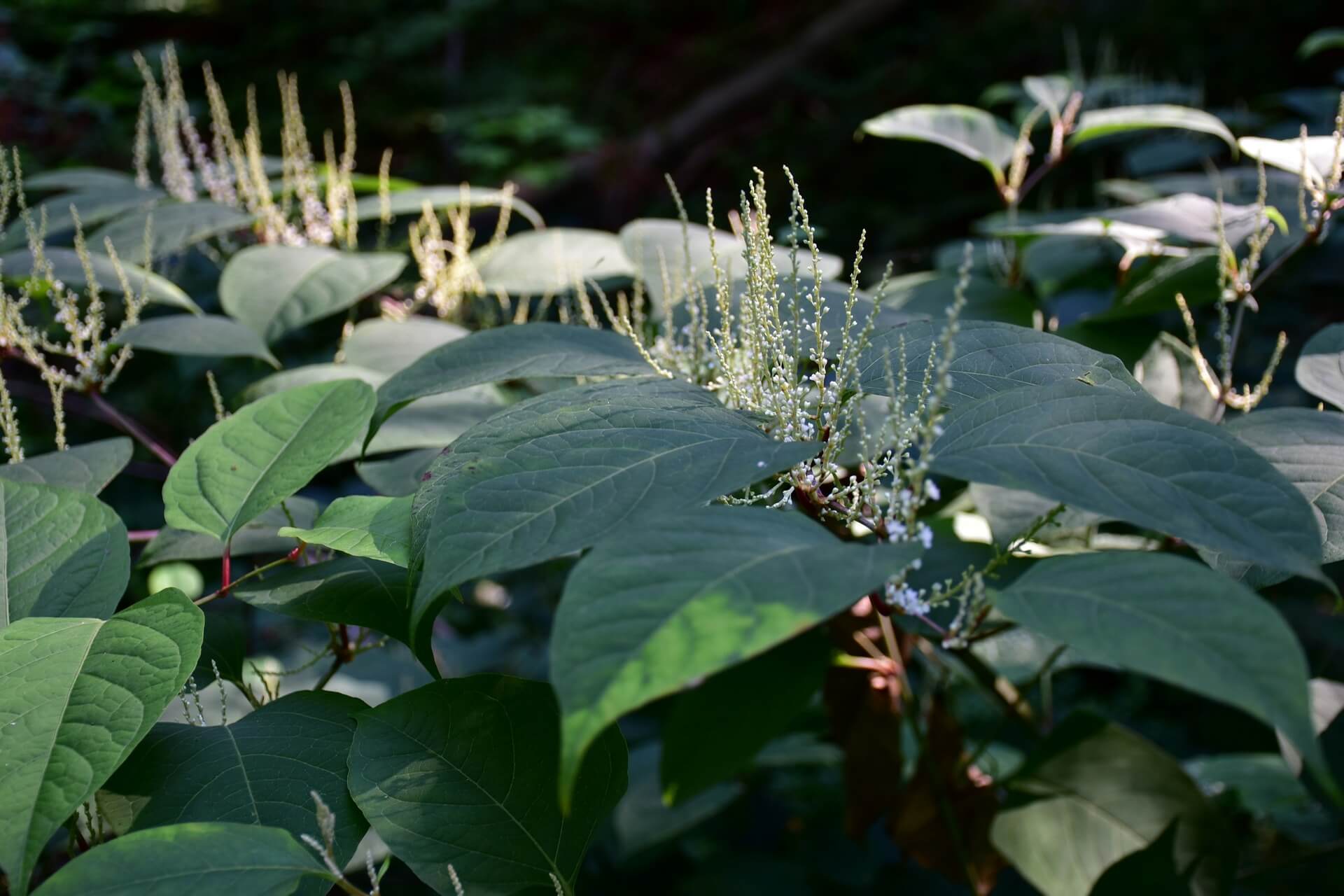
Japanese knotweed looks similar to bamboo, except it has wide and ovate purplish leaves. It produces small, white flowers in August or September and can grow six to 15 feet tall. It’s shrubbery in appearance, and you can find the plant in the U.S., Canada, Europe and Asia.
In fact, Japanese knotweed is native to Eastern Asia, including Korea, China and Japan. It was introduced to the U.S. as an ornamental plant in the late 1800s and was originally used for erosion control. By the 1930s, it became a problematic species. Its erosion-resistant properties have been debunked, with a Canadian study finding that the plant increases erosion.

Most invasive species wreak havoc on local ecosystems, and Japanese knotweed is no exception. However, this plant is a massive problem for humans, too.
Here’s why knotweed is bad:
Knotweed is a pest that can cause serious issues, but knowing how it spreads can lessen the stress. Unfortunately, this plant is incredibly easy to sprout.

In most cases, Japanese knotweed spreads through the dispersal of its stems, crown and rhizome fragments. Its fragments usually spread when water or soil migrates elsewhere. Since its seeds rarely germinate, it’s uncommon for knotweed to grow this way.
The transportation and sale of knotweed is illegal or prohibited in multiple countries, including Canada. Despite this, the plant has no problem taking over. This is because each Japanese knotweed plant is supported by an underground system that fuels its growth. This is why killing weeds down to the root is important to stop an infestation.
While it’s difficult to spread the weed through cross-breeding, contaminated boots and animal droppings can move the plant to another location. Removing it entirely from any country may be impossible, but for some homeowners, it’s a matter of saving money.

Killing Japanese knotweed will be very difficult, so calling a professional is best. But if you’re considering handling the removal process yourself, here is what to do.
Death by smothering, herbicide, digging up the roots and cutting it back are the four common methods of destroying knotweed. Depending on how you kill the weed, you may need pruners, a rake, a tarp, rocks, a shovel, a garden sprayer, rubber gloves, wood chips, plastic garbage bags and herbicide. For the herbicide, you may need a specific type of chemical.
The smothering method requires pruners, a bag, wood chips and a tarp:
This method can take many years, but you’ll know you’re done when the plant stops growing.
While this method doesn’t completely get rid of Japanese knotweed, it can contain it while you use other means to destroy the plant. All you’ll need is pruners and a garbage bag. Every week, prune the weeds back until they are short enough to walk over. Always put the weeds in a bag and remove them from the area when done. Do not use a lawn mower to cut the stems.
This method complements cutting the weed, as the only true way to destroy the plant is by targeting its roots. You’ll need a shovel and garbage bags. To start, break up the ground with a shovel and locate the plant’s rhizome clumps, which are thick, underground stems. Bag the rhizomes carefully for disposal. Any clump left behind could grow into another plant.
Herbicides can be dangerous, so wear protective clothing and read each chemical’s instructions carefully before use. Here is how you could treat Japanese knotweed with herbicide:
You may need to repeat the process several times until the weed stops growing.
Knotweed is an invasive weed that poses environmental, structural, legal and monetary risks to homeowners and governments. Getting rid of the plant is usually a good idea, especially if your government mandates it. Fortunately, there are many ways to remove Japanese knotweed, even though these methods can take a while. But for property values to increase, it’s necessary.